


Bambusa lako Seeds | Timor Black Bamboo Bonsai
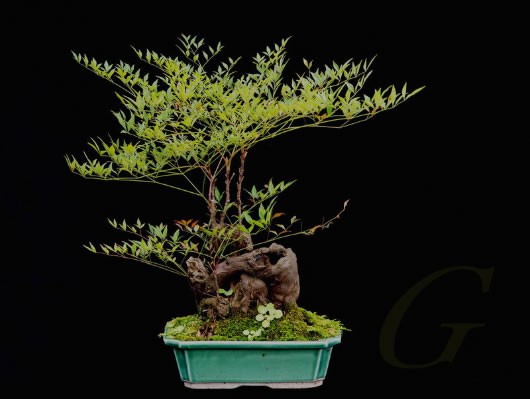
LATIN NAME: Bambusa lako
COMMON NAME: Timor Black Bamboo
Plant Profile
Unlike the running bamboos that invade a garden overnight, Bambusa lako is a clumping species, sending up new shoots from a tight base rather than racing along on underground runners. The canes are thick-walled and slightly zig-zag at the nodes, topped with a narrow crown of dark green leaves, and a mature clump stays where it is planted. That makes it a rare black bamboo safe for the small garden: you get the drama without the trench-war of containing a runner. In the wild it grows on the seasonally dry slopes of Timor, so it is tuned to a wet season and a pronounced dry season rather than year-round rain.
The blackening is a deposition of darkening wax and pigment in the culm wall as the cane lignifies, concentrated at the node rings where the grey stripes show most. The process ties to the plant’s seasonal rhythm: culms that harden through a dry season colour darkest, while shade-grown canes stay greener. Growers who want the deepest black give the clump full sun and a clear dry rest, letting the cane finish what the season started.
Planted as a screen, a clump of Timor black bamboo reads as a solid wall of dark stems within a few seasons, and it asks for none of the root barrier a runner demands. Cut culms become stakes, plant supports, and the raw material for furniture, flooring, and musical instruments across Indonesia. The young shoots are eaten in parts of Asia where the species is grown, though the ornamental forms are usually left to mature for the cane rather than the table.
Harvest a culm only after it has hardened and coloured, since a green cane splits and warps as it dries. A three-year-old stem is the sweet spot for craft, and the node rings make natural joints. For a mixed bamboo collection the lighter Bambusa and the tall Phyllostachys give contrast in both colour and growth form.
Science & Biotechnology
The worth of a bamboo culm is its fibre, and Bambusa lako is dense with cellulose bound in a high-lignin wall, which is what makes the stem both light and strong. The same anatomy is studied for pulp and for the engineered composites trade, where bamboo fibre reinforces board and panel. The leaf and culm carry the silica and the phenolic load typical of the grass family, a defence against chewing insects, and the node anatomy, with its solid diaphragm, is the structural detail that lets the culm span a gap as a post or a rail.
Uses & Benefits
Timor black bamboo earns its name twice over: the new culms rise green with faint grey-green stripes, then darken through the first dry season into a near-black, polished stem that looks varnished even when it is bone dry. The change is not a dye or a cultivar trick but the natural maturing of the culm wall, and it is why the plant is sought by anyone building a fence, a flute, or a piece of furniture that should look like ebony without the cost. A clump of Bambusa lako is a bold, architectural statement in the warm garden, and the culms are stiff enough to use as posts while staying fine enough to split for craft.
The genus Bambusa is mostly clumping, and the Bambusa multiplex and the Bambusa tuldoides share the hedge-and-craft use with a lighter look. For a running giant the Phyllostachys edulis (moso) and the Phyllostachys aureosulcata give timber canes of a different habit and a different colour plan.
Growing from Seed
Because seedlings of bamboo are slow and variable, clonal lines of the darkest form are multiplied by shoot-tip culture and by nodal culture on a cytokinin medium, holding the near-black colour and the clumping habit true. Somatic embryogenesis has been explored in Bambusa to scale clean stock, and the work matters because a black bamboo that reverts to green is worthless to the craft trade. The aim is a liner that will darken on schedule.
Bamboo seed is short-lived and unlike most grass seed in being large and hard, so it wants warmth and a sterile, free-draining mix rather than a cold drill. Sow the seed on the surface of a sandy medium kept evenly warm and moist, and give it bright, indirect light; the shoot appears when the weather holds warm, and there is no benefit in a cold rest for this tropical clumper. Because flowering is rare and seed scarce, most growers start from a division instead.
Keep the seedbed warm and shaded and never let it dry, since a shrivelled seed loses viability at once. Pot the seedling on by the height of the first culm, and grow it in a large container or the ground in full sun once it is sturdy. For the home garden a division of a mature clump is the faster, surer road to a black bamboo, and the seed route is for the collector who wants to start from scratch.
Our Take
I grow Timor black bamboo for the moment in late winter when last year’s green canes have turned to glossy black and the clump looks like wrought iron. It stays put, which is the trait I value most, and a few cut culms stock my plant supports for a season.
Related Reading
Gardeners who grow Timor Black Bamboo often pair it with these related subjects: