


Acacia stenophylla Seeds | River Cooba, Shoestring Wattle
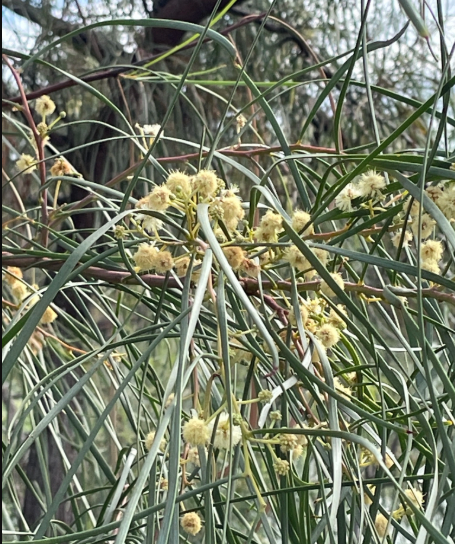
LATIN NAME: Acacia stenophylla
COMMON NAME: River Cooba, Shoestring Wattle
Plant Profile
River cooba is a floodplain wattle of the Australian inland, and its value lies in what it does to a river bank rather than in its flowers. It grows along the Murray, Darling, Lachlan, Murrumbidgee and Cooper systems, on country that is under water for weeks and then dry for a year, and it is one of the few woody plants that tolerates both extremes. The tree is fast growing and short lived by inland standards, reaching maturity in a decade and declining by thirty, with a dense canopy and a trunk that forks low. Each season it drops a heavy crop of pods, ten to twenty centimetres long and pinched between the seeds, which hang in clusters until the following spring. Those pods are the reason the species is easy to collect and sow, and the reason it has become a standard plant in river repair work across the basin. It is sometimes confused with the true myalls, which have similar weeping foliage but a very different water requirement.
Science & Biotechnology
Acacia stenophylla survives inundation because its roots can shift from aerobic to anaerobic metabolism for weeks, and because its phyllodes hang vertically, shedding water and reducing the area exposed to the sun after a flood. The species is a nitrogen fixer, nodulated by soil bacteria, and it is one of the first woody plants to colonise fresh silt after a flood, which is why it is treated as a pioneer rather than a climax tree. Its seed is hard-coated and can sit in the soil for a decade, germinating in the bare mud left by a receding flood; the pods float, which spreads the seed downstream. The wood is dense and dark, and the tree coppices after fire or cutting. In the southern part of its range it grows where the water table is saline, and it excludes salt at the root, which is why it has been planted in salinity interception belts. Its canopy is light enough for saltbush and grasses to grow beneath it.
Uses & Benefits
The tree is planted in tens of thousands along eroding river banks, where its roots bind the soil and its canopy shades the water, lowering temperature and improving habitat for native fish. It is also used in shelterbelts, in salinity interception and as paddock shade, since stock camp under it in summer and the grass beneath it stays green. The pods are eaten by sheep and cattle when they fall, and the phyllodes are browsed in dry times, though they are not a primary fodder. The wood is hard, dark and durable enough for fence posts and firewood, and it takes a fine finish for small turnery. The seed is harvested commercially, and direct seeding is the usual method on large sites, since seedlings transplant poorly. In a garden it is a fast, graceful weeping tree for a dry or periodically flooded site, but it is too large for a small block.
Growing from Seed
Strip the seed from the pods, then treat it with hot water, just off the boil, and leave it to soak overnight; untreated seed germinates over months and unevenly. Sow one centimetre deep in a sandy mix at 25 degrees, or direct-seed into the site in autumn. Germination takes one to three weeks and the seedlings are vigorous, so thin them to the strongest. The taproot goes down fast, which is why direct seeding works better than raising plants in tubes and planting them out. Choose a site in full sun, in deep soil, and water through the first two summers; after that the tree looks after itself. Clay, salt and weeks of flood water are all survivable; year-round wet feet are not. Protect young trees from rabbits and stock, and do not prune into old wood, which does not reshoot freely.
Our Take
A fast, weeping floodplain wattle that holds a river bank, shades the water and feeds stock in a dry year. Direct-seed it and stand back.
Related Reading
Gardeners who grow River Cooba often pair it with these related subjects: