Rare plant seeds, roots, stems, leaves flowers scientific research, biotechnology,

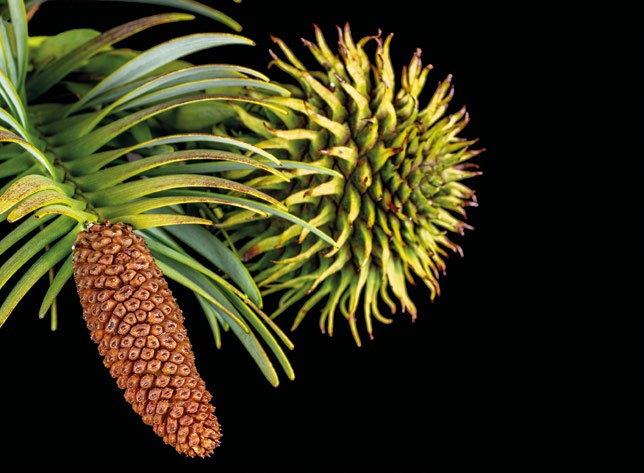
Wollemi Pine seed

Wollemi Pine seed

LATIN NAME: WOLLEMIA NOBILIS

COMMON NAME: Wollemi Pine, Wollemi Tree

The Wollemia nobilis, or Wollemi pine, is one of the most remarkable and famous of the living fossils, and its strange, bubbly bark, its feathery, bright-green, fern-like foliage and its prehistoric appearance have made it one of the most celebrated plants in the world since its discovery in 1994. It grows as a tall, evergreen tree of the araucaria family, reaching up to forty metres or more in the wild, with the strange, bubbly, dark-brown bark and the upright, branching stems bearing the feathery, bright-green, fern-like foliage which changes with the age of the tree, and bearing the male and the female cones on the same tree, the female cones being large and round and the male cones being smaller and more slender. It is a species of the conifer, known only from a few wild trees in a remote gorge in the Australia, while it has been propagated and cultivated widely across the world, and it is known as the Wollemi pine or the Wollemi tree.

Scientific Research & Plant Biotechnology

The Wollemi pine has a real and extraordinary place in research. It has been studied in the paleobotany and the evolution science, since the Wollemia nobilis was thought to be extinct for millions of years until its discovery in 1994, and the researchers have examined its fossil record, its relationships and its position in the evolution of the conifers, while the study of the living fossils has drawn attention in the international scientific press. The plant has also been studied in the conservation biology, since the wild population of the Wollemi pine consists of only a few trees in a remote gorge, and the researchers have examined its conservation, its propagation and its protection, while the study of the rare and endangered plants has been of continuing interest. The species has also been studied in the horticulture and the plant science, since the Wollemi pine has been propagated and cultivated widely across the world, and the researchers have examined its cultivation, its propagation and its hardiness, while the strange, bubbly bark and the feathery, fern-like foliage of the Wollemi pine have been of interest to the botanists and the gardeners. For a tree of such fame, the Wollemia nobilis has a rich and extraordinary record of research.

Ecological & Economic Value & Wide Applications

To grow the Wollemi Pine from seed, the Wollemi pine is a tall, evergreen tree of the remote gorges, bearing the strange, bubbly bark and the feathery, bright-green, fern-like foliage. Its cones provide a food for the wildlife of the gorge, and its strange, prehistoric appearance gives a unique presence in the garden and the collection, while its discovery as a living fossil has made it one of the most famous plants in the world. Its economic value is real: the Wollemi pine is prized as a rare, living-fossil tree for the garden and the collection, and its value has drawn attention in the international horticultural and scientific press, while the strange, bubbly bark and the feathery foliage have made it a favourite of the botanical gardens and the plant collections, and the tree is a fine addition to the large garden, the botanical garden and the collection. To raise the Wollemi pine, sow the seeds in pots of moist, open soil in a cool, bright place, keep them gently watered, and grow the little trees on in the light.

sow the seeds in pots of moist, open soil in a cool, bright place, keep the young wollemi gently watered, and grow the little trees on in the light.


Wollemi Pine (Wollemia nobilis) – A Mysterious and Rare Living Fossil


🌲 Characteristics

1. Tree Form and Growth Habit

  • Height: In its natural habitat, the Wollemi Pine can grow up to 40 meters (130 feet) tall, but in cultivated environments such as gardens and pots, it typically reaches 3 to 10 meters (10 to 33 feet).
  • Bark: The bark is one of its most unique features, with a dark chocolate-brown color and a “bubbled” texture resembling popcorn.
  • Branches and Leaves: The branches extend horizontally, with soft, glossy, deep green leaves arranged in a feathery pattern.
  • Growth Rate: The Wollemi Pine has a moderate growth rate, with an annual increase of approximately 30 to 50 centimeters (12 to 20 inches) under ideal conditions.

2. Propagation and Growing Conditions

  • Wollemi Pine is monoecious, meaning both male and female cones grow on the same tree, allowing it to self-pollinate.
  • It adapts well to various soil types but thrives best in well-drained, slightly acidic soil (pH between 5.5 and 6.5).
  • The tree is frost-tolerant and can withstand temperatures as low as -5°C (23°F).
  • It prefers partial shade or dappled sunlight and does not tolerate prolonged exposure to direct, intense sunlight.

🏡 Landscaping and Ornamental Uses

1. Feature Tree

The Wollemi Pine’s striking appearance and rarity make it a standout feature tree in landscaping projects.

  • It works well as a focal point in large gardens, parks, and botanical gardens.
  • Its vertical growth and elegant foliage add height and texture to mixed planting schemes.

2. Container and Patio Planting

  • When grown in a container, the Wollemi Pine can thrive on balconies, patios, and small gardens.
  • Its adaptable size and attractive foliage make it an ideal choice for decorative planting.

3. Educational and Conservation Value

  • Due to its ancient history and scientific significance, Wollemi Pine is often used in botanical gardens and educational programs.
  • Its rarity and survival story attract plant enthusiasts and visitors, making it a highlight in public gardens and arboretums.

🌿 Ecological and Environmental Benefits

1. Carbon Sequestration and Air Quality Improvement

Wollemi Pine contributes to reducing greenhouse gases by efficiently absorbing carbon dioxide through photosynthesis. Its dense foliage helps purify the air and create a healthier environment.

2. Pest and Disease Resistance

  • Wollemi Pine exhibits strong resistance to common pests and diseases, reducing the need for chemical treatments.
  • It supports biodiversity by providing shelter and food for birds and insects.

🌎 Conservation and Preservation

As one of the worlds rarest and most ancient plants, the Wollemi Pine is the focus of significant conservation efforts.

  • Less than 100 mature specimens are known to exist in the wild.
  • To protect the species from extinction, propagation and cultivation programs have been established worldwide.
  • Wollemi Pine saplings are now commercially available, making it possible for gardeners and institutions to contribute to its preservation.

💡 Cultivation and Care Guide

Light: Prefers partial shade or dappled sunlight. Avoid prolonged exposure to intense direct sunlight. ✅ Watering: Keep the soil moist but avoid waterlogging. Ensure the soil drains well. ✅ Soil: Use well-draining, slightly acidic soil enriched with organic matter. ✅ Temperature: Thrives in temperatures between 5°C and 25°C (41°F to 77°F). Protect from frost below -5°C (23°F). ✅ Pruning: Prune lightly in spring or autumn to maintain shape and promote healthy growth.


🌟 Conclusion

The Wollemi Pine is not just a fascinating botanical relic; it is a testament to the resilience and beauty of nature. Its ancient origins, distinctive appearance, and adaptability make it an exceptional choice for gardens, parks, and botanical collections. By cultivating and preserving the Wollemi Pine, we are not only safeguarding a piece of natural history but also enhancing the ecological and aesthetic value of our landscapes.

Prev:
Next: