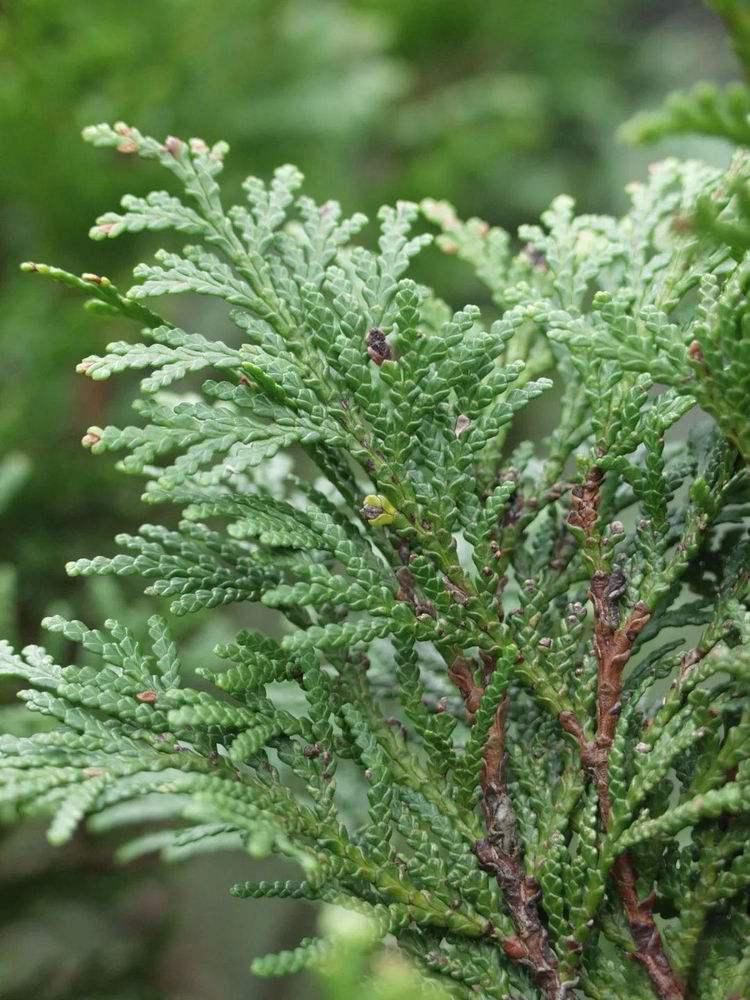
Thuja plicata seed

LATIN NAME: Thuja plicata
COMMON NAME: Western Red Cedar, Giant Arborvitae
The western red cedar is one of the great trees of the Pacific coast, a giant of the rainforest that has served people for thousands of years. It grows tall and straight, reaching fifty metres or more, with a trunk that tapers gently and often becomes fluted and buttressed at the base. The branches carry flat, lacy sprays of scale-like leaves, deep green above and marked with silvery-white lines beneath, and the whole tree has a fine, feathery texture. The bark is reddish-brown, fibrous and peeling in long strips, and the wood itself is famously fragrant, light and durable. It is a tree of remarkable beauty and usefulness.
The western red cedar belongs to the cypress family, Cupressaceae, and it is native to the Pacific coast of North America, from Alaska through British Columbia and into the northwestern United States, where it grows in the moist coastal rainforest. It is a hardy, long-lived tree that thrives in deep, moist soil and a cool, humid climate.
Positive & Encouraging Seed Germination Guide
Growing a western red cedar from seed is easy and gives excellent results. The small seeds sit inside the small, upright cones, which open to release them. The seeds germinate readily in cool, moist conditions, so sow them in pots of moist, free-draining compost in late winter or spring, cover them very lightly, and keep them cool, shaded and evenly moist. Germination usually begins within two to six weeks. Pot the seedlings on as they grow and keep them in a sheltered, shaded spot, protecting them from harsh sun and drying winds. Plant them out once well established, in deep, moist soil in a cool, sheltered position. A cedar you have raised from seed will grow into a magnificent, long-lived tree.
Scientific Research & Plant Biotechnology
The western red cedar has a distinguished record in forestry and botanical research. It is one of the most important timber trees of the Pacific coast, and foresters have studied its growth, its wood and its management for many decades, since its light, durable, fragrant timber is prized for construction, shingles and boat building. The tree is also of great cultural importance, as the coastal First Nations of the Pacific Northwest have used it for canoes, houses and carvings for thousands of years, and it has been studied in ethnobotanical research. Its resistance to decay is a subject of wood-science research, and scientists have studied the natural compounds that give the wood its durability. For a tree of such size, beauty and usefulness, the western red cedar has an exceptionally rich record of research.
Ecological & Economic Value & Wide Applications
Ecologically, the western red cedar is a keystone of the coastal rainforest. Its vast canopy gives food and shelter for countless species, its fibrous bark provides nesting material for birds, and it is one of the most important trees of one of the world’s great forests.
Its economic value is substantial. The wood is prized for construction, fencing, decking, shingles and many other uses, being light, durable and resistant to decay, and it has a major place in the timber industry of the Pacific Northwest. It is also grown as an ornamental conifer for hedging and specimen planting. For a grower, the western red cedar is a high-value timber and ornamental tree, and for a gardener it brings a fine, feathery evergreen with a long history of serving people.
Thuja plicata – Uses and Benefits
Thuja plicata, commonly known as Western red cedar, is a large evergreen conifer native to the Pacific Northwest of North America. It has been highly valued for centuries due to its durable wood, medicinal properties, and cultural significance, particularly among Indigenous peoples.
1. Timber and Commercial Uses
Western red cedar is renowned for its high-quality, aromatic wood:
-
Naturally rot- and insect-resistant
Ideal for outdoor construction and long-lasting structures. -
Lightweight and easy to work with
Suitable for hand tools, carving, and finishing. -
Common uses include:
-
Roof shingles and siding
-
Outdoor fencing and decking
-
Saunas, closets, and furniture (due to its insect-repelling scent)
-
Canoes, totem poles, and artisan crafts (especially in Indigenous traditions)
-
2. Medicinal Uses
Indigenous tribes and traditional herbalists have used Thuja plicata for generations:
-
Leaves, bark, and resin have been used for:
-
Coughs and bronchial issues (in steam or infusions)
-
Muscle and joint pain (as a poultice)
-
Fungal infections and skin conditions (e.g., ringworm, warts)
-
Disinfecting wounds
-
⚠️ Caution: The plant contains thujone, a compound that can be toxic in large amounts. It should not be consumed internally without medical supervision.
3. Essential Oils and Aromatherapy
-
Essential oils extracted from the wood and leaves are used for:
-
Aromatherapy (calming, air-purifying)
-
Natural insect repellent
-
Anti-fungal and antimicrobial products
-
-
The pleasant, long-lasting cedar aroma also makes it popular in wardrobes and storage areas to deter moths and pests.
4. Ecological and Ornamental Uses
-
Fast-growing and evergreen: Suitable for landscaping, windbreaks, and privacy hedges.
-
Wildlife habitat: Provides shelter for birds, squirrels, and insects.
-
Tolerates wet and cold climates: Thrives in temperate rainforests and northern gardens.
5. Cultural Significance
-
“Tree of Life” in many Pacific Northwest Indigenous cultures:
-
Used to make canoes, masks, clothing, rope, mats, and ceremonial items
-
Bark and inner fibers were woven into everyday tools and clothing
-
This deep spiritual and practical connection makes Thuja plicata a symbol of strength, protection, and sustainability in Indigenous traditions.
6. Toxicity and Precautions
-
Contains thujone, which can be neurotoxic in high doses.
-
Not recommended for internal use by pregnant or breastfeeding women or children.
-
Essential oil should always be diluted and used with care.