


Sinningia speciosa Seeds | Gloxinia
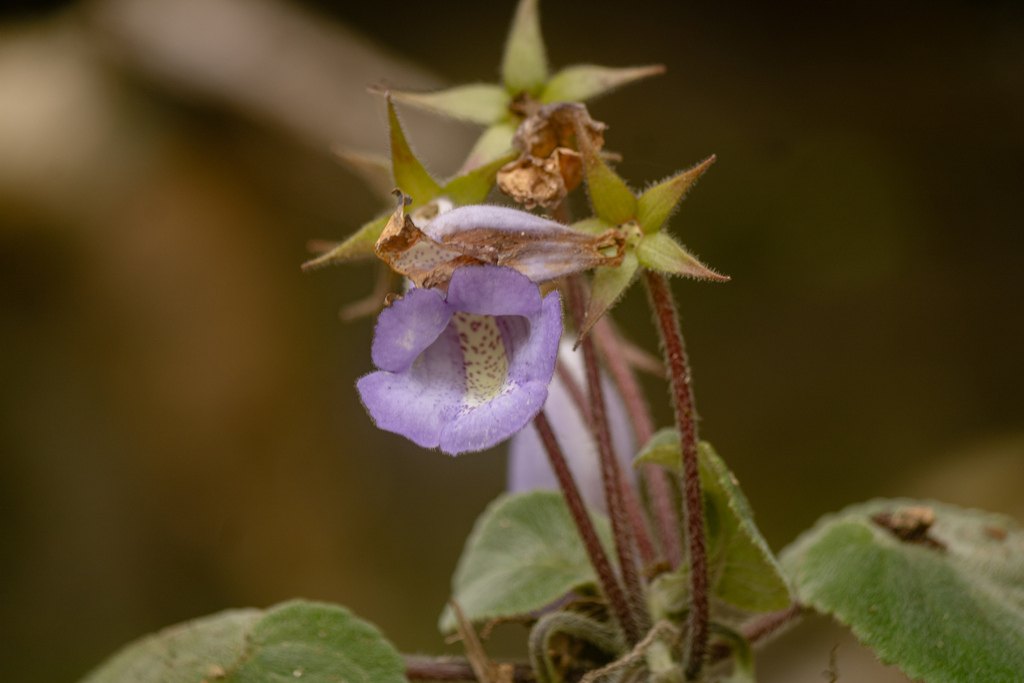
LATIN NAME: Sinningia speciosa
COMMON NAME: Gloxinia
Plant Profile
Sinningia speciosa has been misnamed in public for two centuries and is likely to stay that way. It entered cultivation in 1817 as a Gloxinia, was moved to Sinningia once the genus was reorganised, and is still sold as gloxinia by every florist in Europe.
It is a tuberous perennial with a flattened, slightly hairy tuber, a rosette of large, soft, deeply veined leaves, and bell-shaped flowers in velvet crimson, purple, white or with a white edge. The flowers are wide-mouthed and nodding, and a well-grown plant carries a dozen at once. The leaves are brittle as well as soft, and a plant knocked about in transit rarely recovers its shape.
The true Gloxinia now contains only rhizomatous species from the Andes, which look nothing like this plant. Florist’s gloxinia and Brazilian gloxinia are the names that distinguish it, and both are accurate about its origin, if not about its genus.
In the wild it grows on shaded rock and in leaf litter in southeastern Brazil, where the wet season and the dry season are sharply separated. That rhythm is built into the plant, and the tuber’s annual dormancy is the single fact that decides whether it thrives or dies on a windowsill.
Science & Biotechnology
Dormancy is the mechanism to understand. When flowering ends and the days shorten, the leaves yellow and die back and the tuber enters a rest period of two to four months, during which it must be kept cool and almost dry. Watering a dormant tuber is the classic way to lose it.
The tuber itself is a compressed stem rather than a root, carrying buds in its upper surface, so a plant can be restarted from a tuber that looks dead. New shoots emerge from those buds once warmth and moisture return, and the cycle begins again. A tuber watered during dormancy rots from the base, usually without warning until the expected shoot fails to appear.
It belongs to Gesneriaceae, the family of African violets and streptocarpus, and its cultural needs overlap almost completely with theirs: bright filtered light, a porous mix, careful watering at the rim, and no cold water on the foliage. The difference is that it wants more light and a real rest.
Uses & Benefits
As a houseplant it delivers more colour per pot than almost anything else in the family, and it does so in a short burst: six to eight weeks of flowering, then a long pause. That rhythm suits people who are happy to have a shelf empty for part of the year.
Records come almost entirely from cultivation and cluster in December and January, which is when forced plants reach living rooms in the northern hemisphere. In the southern hemisphere the same plants flower in their own summer, so the picture is one of a plant doing what its price tag demands.
Modern seed strains are sold as F1 hybrids and flower within five or six months of sowing, which makes them an annual in practice for most growers. The older named varieties are propagated by leaf cutting, and a leaf will produce tubers in a saucer of water within two months. Leaf cuttings are the only reliable way to keep a named form, since seed from a hybrid will not reproduce it. Its nearest neighbours on the list are Penstemon strictus, Penstemon digitalis and Veronica polita.
Growing from Seed
The seed is dust-fine, so sow it on the surface of a moist, sterilised mix, do not cover it, and cover the pot with glass or a plastic bag to hold humidity. Light is required, and a temperature of twenty to twenty-two degrees gives germination in two to three weeks.
Prick out the seedlings when they are large enough to handle, which is later than feels comfortable, and keep them in the same humid, shaded conditions. Water from below, never overhead, and feed weakly once a fortnight from the second month.
Let the plants make a tuber before you think about dormancy. The first season should be kept growing steadily, and the foliage allowed to yellow naturally at the end. Then lift the tuber, clean it, store it in dry peat at ten to fifteen degrees, and start it again in spring.
Our Take
Florist’s gloxinia is a plant people buy in flower and throw away when the leaves drop, which is a waste of a tuber that would have given five or six more years. The whole skill is recognising dormancy as a stage rather than a death.
If you can keep a tuber cool and dry for three months, you can keep this plant indefinitely. If you cannot resist watering a pot with nothing in it, buy it as an annual, enjoy the six weeks, and put it on the compost with a clear conscience.
Related Reading
More species in the same orbit as Gloxinia: