


Erysimum allionii Seeds | Siberian Wallflower
LATIN NAME: Erysimum allionii
COMMON NAME: Siberian Wallflower
Plant Profile
Erysimum allionii is a name that means two different plants. To a European botanist it is a yellow-flowered wallflower of the south-western Alps, described by Carlo Allioni. To the seed trade it is the Siberian wallflower, an orange-flowered hybrid of garden origin. The Alpine plant is a genuine species, though it is rarely grown.
The confusion is old. Nineteenth-century nurserymen applied the name to a plant they grew as Erysimum allionii, which was almost certainly the hybrid now called Erysimum × marshallii, and catalogue practice kept the error alive for a century. The hybrid name commemorates a nurseryman rather than a botanist.
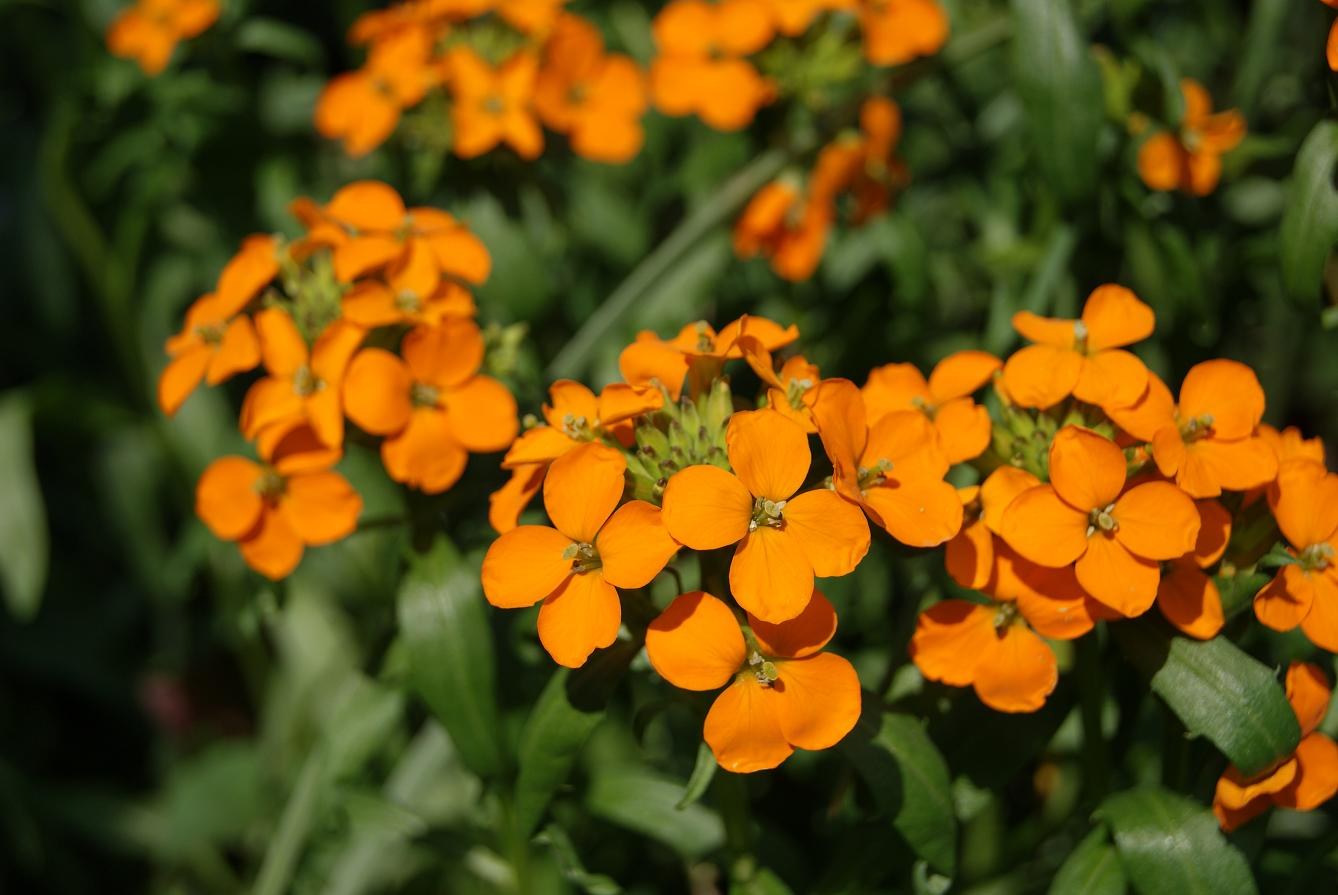
The garden plant is a short-lived perennial or biennial, usually grown as an annual, with narrow grey-green leaves and dense racemes of four-petalled flowers in orange, apricot or yellow. It reaches about thirty centimetres and smells faintly of honey. The scent is strongest in the evening and on warm, still days.
The genus is large, with more than two hundred species in Europe, Asia and North America, and it ranks among the few genera of the cabbage family that has been developed seriously as an ornamental. The wallflower and its relatives are the reason. The genus is centred on the Mediterranean and on southwest Asia. The same family turns up again in Aurinia saxatilis, Iberis umbellata and Diplotaxis erucoides.
Science & Biotechnology
The four petals in a cross, the six stamens with four long and two short, and the two-celled ovary are the family signature. The fruit is a long pod, called a silique, that splits from the base upwards to release flat winged seeds. The silique is the reason the family is called the mustard family in ordinary speech.
The genus name comes from the Greek erysimon, a name used by Dioscorides for a plant that was said to cure, and the same root has been read as a reference to helping or saving. The chemistry is more prosaic: mustard oil glycosides, including cheirolin. The glycosides break down to give the hot taste of mustard and cress.
The wallflower group has been bred for flower colour, scent and compact habit, and modern cultivars flower in their first year from an autumn sowing. The orange pigments are carotenoids, and they fade in strong sun as the flowers age. Scent in the wallflower is a blend of several volatile compounds.
Uses & Benefits
The plant is used for spring bedding, for walls and for the front of a border where its scent can be appreciated at close range. It flowers early, when little else is open, and it fills the gap between bulbs and summer perennials. It is at its best in a cool spring, and it fades quickly in heat.
It is also a good nectar source for early bees, and the seed pods that follow are decorative in their own right, turning from green to buff as they ripen. Cut the stems before they shatter if you want to save seed. The pods should be collected as they turn from green to buff.
There is no medicinal use worth recording, though the mustard oils of the family have a long history in poultices. The plant is not edible and should not be treated as a salad green. The plant is grown for ornament and for nothing else.
Growing from Seed
Sow in late summer or early autumn for flowers the following spring, or in early spring for a later, smaller display. Surface-sow, because light helps, and thin the seedlings to twenty centimetres apart. Autumn sowing gives sturdier plants than spring sowing every time.
The plant needs full sun and sharp drainage, and it dies in wet, heavy soil or in the humidity of a hot, still summer. In mild climates it will seed itself into walls and gravel, which is the best place for it. Grit and sharp sand at the planting hole improve the odds in clay.
Cut the plants back after flowering to encourage a second flush, and replace them every year or two, because they become woody and leggy with age. Take cuttings in late summer to keep a named form going. Old plants can be lifted and divided, though they seldom recover well.
Our Take
A plant with a wrong name, a hybrid origin and a scent that justifies the whole exercise: that is a fair summary of the Siberian wallflower. The nomenclatural confusion is a nuisance, and the plant is worth the nuisance. The name on the packet is the least reliable part of the transaction.
Sow it, smell it in April, and do not worry about what the label says. Labels in this genus have been wrong for a very long time. The plant has been mislabelled for so long that the error is now traditional.
Related Reading
Gardeners who grow Siberian wallflower often pair it with these related subjects: