


Aurinia saxatilis Seeds | Basket of Gold
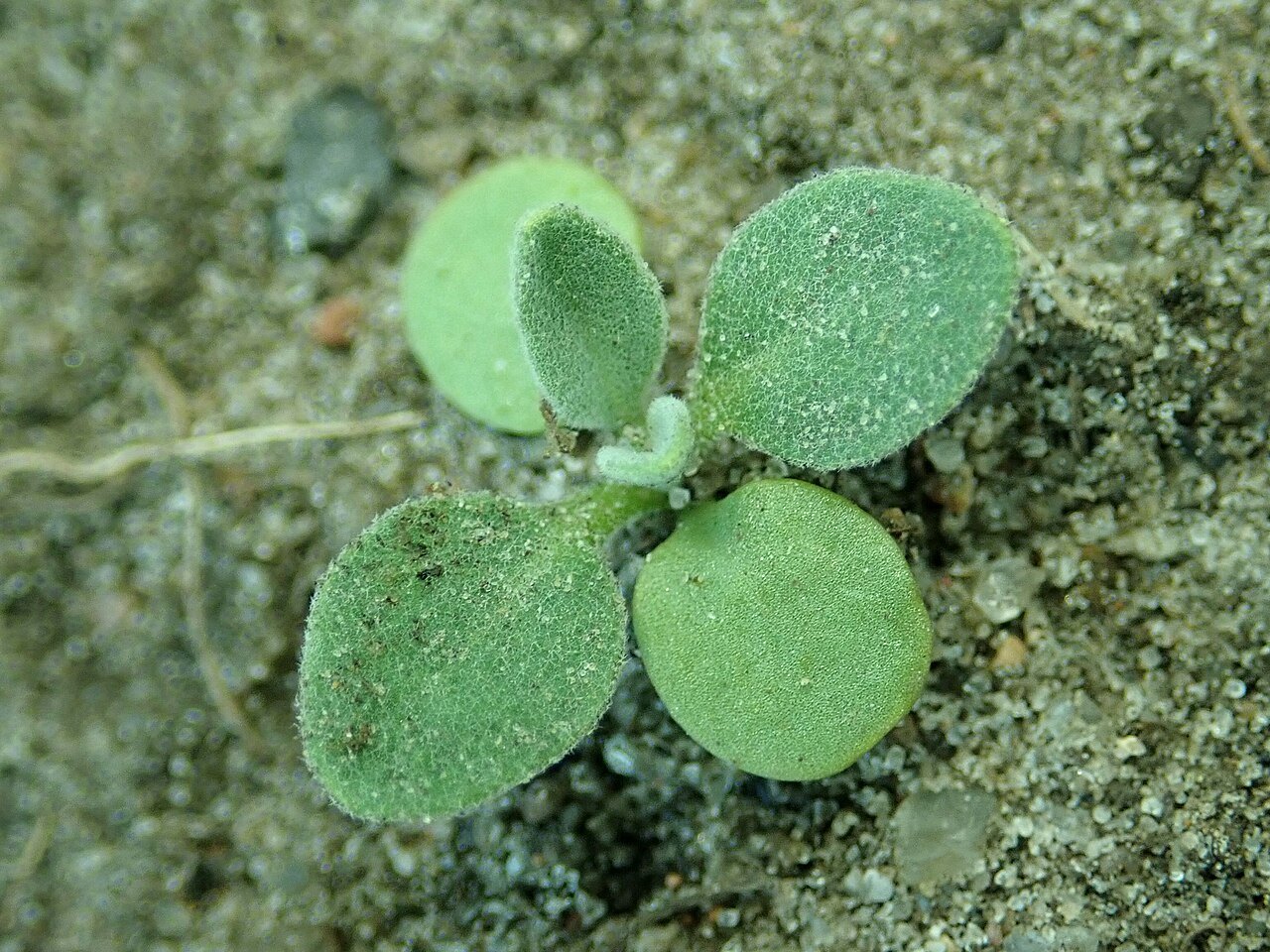
LATIN NAME: Aurinia saxatilis
COMMON NAME: Basket of Gold
Plant Profile
Basket of gold is a small, rounded, evergreen perennial, 10 to 30 cm high and up to 50 cm across, forming a mound of grey-green spoon-shaped leaves. It is a brassica, which shows in the four-petalled flowers and in the flat, oval seed pods that follow them.
The flowers are clear yellow, in dense heads that cover the plant completely in mid to late spring, so that for a fortnight there is more yellow than leaf. The named forms extend the range into white, cream, lemon, peach and gold. It is a plant that flowers once and then does nothing for the rest of the year, which is a fair description of most rock garden plants and the reason they are planted in groups rather than singly. The grey foliage carries the rest of the season.
It was long sold as Alyssum saxatile, and the old name still appears on packets and in older books. The common names run through the same confusion: golden alyssum, goldentuft, rock madwort, basket of gold. All of them refer to the same plant and to the sheet of yellow it makes in April.
Science & Biotechnology
Its native ground is rocky, mountainous country in central and southern Europe, from the Alps and the Balkans to the mountains of Greece, on thin soil over limestone. That origin explains the two requirements that decide whether it lives: full sun and drainage. Everything else it tolerates.
The Royal Horticultural Society has given it an Award of Garden Merit and listed it among its Plants for Pollinators, having found it robust in trial, with stable colour and form. In practice it ranks among the few spring-flowering perennials that is genuinely useful to early bees, because it opens when there is little else in flower.
The RHS also classes it with the plants it calls indestructible, which is a compliment with a sting: it adapts to a wide range of soils and survives neglect, but it dies in a wet winter as surely as it lives through a dry summer. Poor drainage is the only problem the literature records, and it is the one that kills most plants. The rest of the Brassicaceae here runs to Aubrieta deltoidea, Malcolmia maritima and Lobularia maritima.
Uses & Benefits
It is a rock garden plant, a wall plant and a path-edge plant, and it is at its best spilling over a retaining wall or edging a raised bed, where the mound can hang rather than sit. It also works in a trough or at the front of a large pot, under a shrub that will leaf out later.
The cultivars are worth choosing between. Citrina is paler than the type, Dudley Neville is described as biscuit, a golden yellow tinged with tan, and Variegata has cream-margined leaves that are better than the flowers for the other fifty weeks. The plain species is cheap and good, and the named forms are better.
It is also grown as an annual for a spring display in places where it does not overwinter reliably, sown in autumn and planted out in March. That is an expensive way to buy six weeks of yellow, but it works, and it avoids the winter wet that kills the perennial.
Growing from Seed
Sow in autumn, on the surface, at 15 to 20 °C. The seed needs light and germinates in two to three weeks. Autumn sowing gives plants big enough to flower in their first spring; spring sowing gives small plants that flower in the second, which is a year of patience for no advantage.
Prick out into gritty compost and grow them cool and bright, without heat, or they stretch into weak stems that fall over. Plant out in late summer or early autumn, 10 cm apart, into soil that has been opened with grit or sand. Water in and then leave them; feeding produces leaf and fewer flowers.
Shear the plants over with shears or clippers immediately after flowering, taking off the spent heads and about a third of the growth. This keeps the mound compact and stops it opening in the middle. Do not cut into old wood with no leaves on it, because that wood will not reshoot.
Our Take
It ranks among the reliable pleasures of spring and it costs almost nothing, which is a combination that ought to be more common. The yellow is clean rather than brassy, it arrives when the garden is still mostly brown, and the bees find it.
Grow it on a slope, a wall or a trough, shear it in May, and keep the winter rain off its crown. Do that and it will be there in ten years. Plant it in a damp border and it will be a gap by the second spring, and no amount of goodwill will change that.
Related Reading
Readers interested in Basket of Gold frequently explore these as well: