


Malcolmia maritima Seeds | Virginia Stock
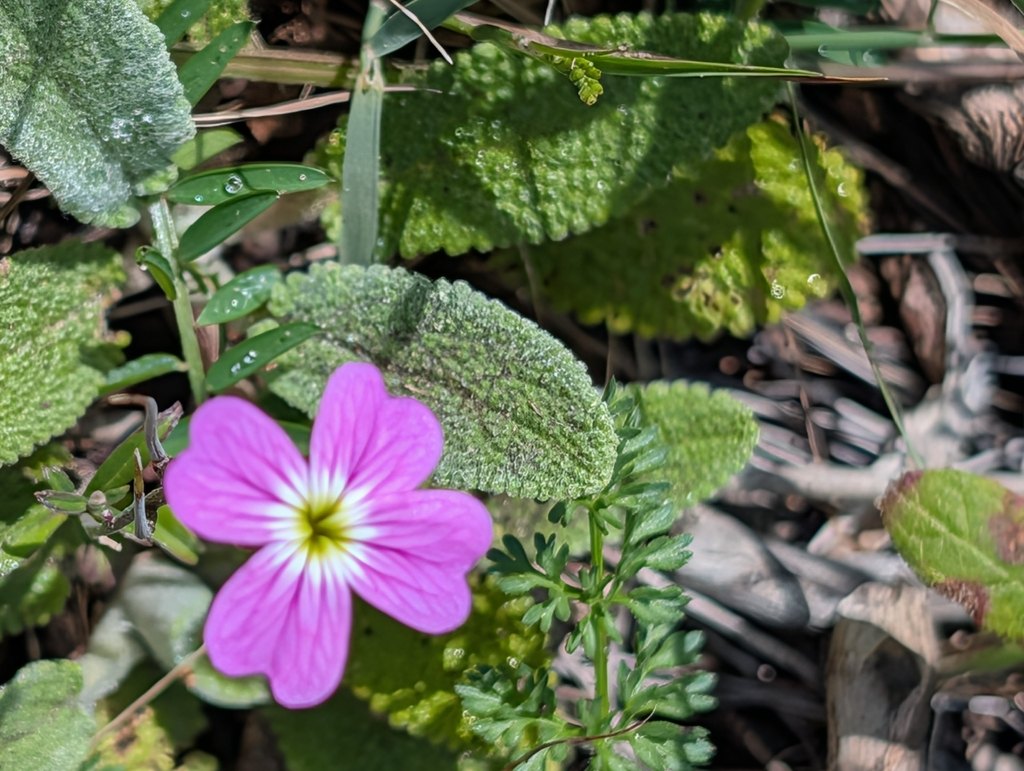
LATIN NAME: Malcolmia maritima
COMMON NAME: Virginia Stock
Plant Profile
Virginia stock is a small annual of the cabbage family from the coasts of Greece and Albania, and it has been grown in gardens for so long that it now turns up along roadsides and in waste ground across Mediterranean Europe. The name is a puzzle: the plant has nothing to do with Virginia, and the usual explanation, that the seed came to England through the American trade, is not supported by anything in the records.
It grows 15 to 30 cm high in a loose tuft of narrow, slightly fleshy leaves, with clusters of four-petalled flowers 1.5 cm across. The colour runs from white through pale pink to lilac and violet, and a single plant often carries all of them, which gives a sowing the soft, mixed look of a watercolour rather than the flat block of a bedding scheme.
The scent is the reason it has never gone out of fashion. It is sweet, faintly clove-like and closest to stock, strongest in the evening and strongest of all on a warm night after rain. A row along a path will scent the whole garden after dark, which is more than most lilies manage.
Science & Biotechnology
The scent comes from a mixture of volatile compounds, dominated by the same benzenoid and terpenoid notes found in stocks and wallflowers, so the two are often confused by nose alone. The plant releases them most strongly in the evening, when the air is still and the temperature drops, a pattern that in other species is associated with moth pollination.
Malcolmia is a small genus of about 30 species, centred on the eastern Mediterranean and southwest Asia, and it sits in the Brassicaceae close to the stocks. The four-petalled cross-shaped flower and the long, narrow silique are the family’s signatures, and the fruit of Virginia stock splits into two valves to release a row of small brown seeds.
The species is self-fertile and sets seed without help, so a single plant can populate a path within two seasons. It is also a tetraploid, with 2n = 28, and that extra set of chromosomes may explain its vigour and its tolerance of poor, dry, stony ground, where a diploid annual would struggle. Other Brassicaceae on the list: Diplotaxis erucoides, Erysimum allionii and Aubrieta deltoidea.
Uses & Benefits
This is an edging plant, and it is best used as one: along the front of a border, between paving stones, in the cracks of a gravel path, in a window box, in the gap between the path and the lawn. It is light enough to weave rather than to block, and it looks wrong in a formal bed where a straight line is wanted.
It is also one of the quickest annuals in cultivation. Six weeks from sowing to flower is normal, and in warm weather it can be five. That speed makes it the standard filler for a gap left by a failed sowing or a late frost, and it is cheap enough to sow by the packet rather than by the plant.
It is not a cut flower; the stems are too short and too soft. The leaves are edible in the way that most brassicas are, which is to say not worth eating, and the plant has no medicinal use. It is grown for scent and for speed, and it does both better than almost anything else.
Growing from Seed
Sow direct where the plants are to flower, from early spring to midsummer, at 15 to 20 °C. The seed needs light, so scatter it on the surface and water it in rather than covering it. Germination takes 7 to 14 days, and thinning to 10 cm apart is the only care it needs.
Succession sowing is the trick. A sowing in March flowers in May; a sowing in May flowers in July; a sowing in late August flowers in October, and in a mild autumn it will keep going until the first frost. Three packets, three sowings, and scent for six months.
It transplants badly because of the taproot, so modules are a waste of time unless you sow into deep cells and move the plants while they are tiny. Let the last sowing go to seed and it will come back on its own next year, often in the best places, which are the cracks you would never have thought to sow.
Our Take
Virginia stock is the cheapest scent in the catalogue. A packet costs less than a bunch of cut flowers, and it will fill a path with perfume for two months. It is not a plant that impresses visitors in daylight; it is a plant that makes them stop on the way to the car after dinner and ask what that smell is. Sow it thickly, in the places you walk past, and do not fuss. It will do the rest, and it will probably do it again next year without being asked.
Related Reading
If Virginia Stock appeals to you, these related plants are worth a look: