


Erysimum cheiri Seeds | Wallflower
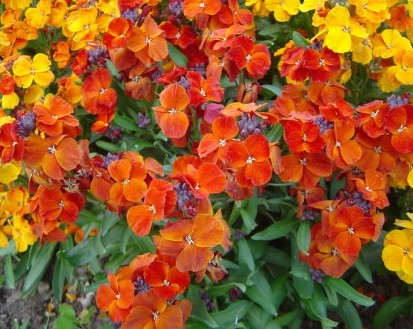
LATIN NAME: Erysimum cheiri
COMMON NAME: Wallflower
Plant Profile
The leaves are narrow, pointed, and grey-green, with a slightly fleshy feel that helps the plant shrug off dry spells. After flowering it forms a long, slender seed pod called a siliqua, the typical fruit of the cabbage family, packed with flat seeds that scatter as the pod dries.
As a member of the Brassicaceae the wallflower is a crucifer, kin to cabbage and mustard, yet it behaves like a wall plant, rooting into the thin soil of old stone and mortar. Its common name records exactly that habit: it lights up a sunny wall in early spring when little else is flowering.
Wallflower flowers in the gap between winter and the main spring rush, in shades of orange, gold, rust, brown, and occasional purple. Grown as a biennial it makes a low mound of colour at the front of a border or along a path edge.
The attractive seed pods are not a snack. Because of the cardiac glycosides, the seeds should be kept away from children and pets, and the plant is best enjoyed with the eyes and nose rather than the mouth.
Gardeners who grow it for cutting should still treat the seed pod with the same caution they would give any toxic ornamental, and simply snip the spent flower before it sets seed if the plant is near where children or pets play.
For all its toxicity, the wallflower is not a plant to fear in a normal garden; it is a plant to respect. Sited where it can be seen and smelled but not eaten, it gives weeks of early scent and colour with almost no care, which is exactly why it has stayed in gardens for so long.
Science & Biotechnology
The seeds and, to a lesser extent, the foliage carry cardenolide cardiac glycosides, chief among them cheirotoxin and related erysimin-type compounds. These are the same broad class of molecules that gives foxglove its heart effects, and they are the reason the plant demands respect rather than casual nibbling.
Like its mustard relatives, the wallflower builds glucosinolates that break down into pungent compounds when tissue is damaged. This chemistry is part of the family defence toolkit and explains the bitter, cabbage-adjacent note in crushed leaves.
The perfume is a blend of small aromatic molecules dominated by linalool-like and benzyl-type notes, released most strongly in warm, still air. Breeders of scented strains select for exactly this volatiles profile, because the eye buys the plant but the nose keeps it in the garden.
Uses & Benefits
There are few garden smells as heady as a wallflower warming in spring sun. The four-petalled flowers throw a clove-and-vanilla scent that carries on still air, and a bank of them can perfume a whole courtyard. That fragrance, not the colour, is the plant’s signature and the reason it has been kept in gardens for centuries.
The scent comes from volatile compounds released by the flower through the warm part of the day, strongest when the bloom is fresh. It is this perfume that once made wallflower a favourite for cutting and for the nosegay, long before modern bedding plants existed.
The stiff stems carry well in a small vase and the scent fills a room, which is why wallflower has a long history as a cut flower for the cottage posy. A few stems in water release more perfume than many showier blooms manage.
Growing from Seed
Wallflower is usually grown as a biennial: seed one season, flower the next. The seed is fine and is pressed into a calm, moist bed where the young plants can make a small rosette before the cold closes in.
The seedlings are moved to their flowering site once they carry three pairs of leaves and a sturdy root, so they establish before winter. A firm, freedraining spot against a warm wall gives the best spring show and the least losses.
The one thing wallflower will not tolerate is a wet, cold foot, so a lean, sharp soil against a sunny wall is ideal. Good drainage through the dormant season is what carries the plant from its first year into the bloom.
In a cold, wet winter the crown can rot where soil sits heavy, so a raised spot or a wall base that sheds rain is worth choosing over a low, flat bed. A light gritty top dressing around the neck also helps the plant come through to spring undamaged.
Our Take
Wallflower is the early-spring scent I would not trade, but I keep the seed pods away from the children. It sits naturally with other spring performers such as Matthiola stock, bitter candytuft, aubrieta, and Sweet William.
Related Reading
Gardeners who grow Wallflower often pair it with these related subjects: