


Lavandula angustifolia Seeds | Provence Blue Lavender
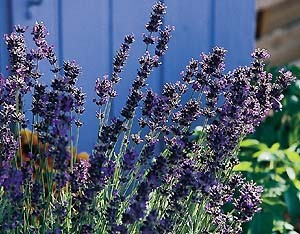
LATIN NAME: Lavandula angustifolia
COMMON NAME: Provence Blue Lavender
Plant Profile
‘Provence Blue’ is a selected English lavender valued for a long mid-summer bloom and a softer, silvery blue flower colour that reads as cooler than the deep violet of ‘Hidcote’. Like all true Lavandula angustifolia, it is a compact evergreen shrub with narrow, linear, grey-green leaves on short woody stems, and it carries its violet-blue, two-lipped flowers in short dense spikes at the stem tops. The cultivar is a little later and longer-flowering than the early ‘Munstead’, which makes it useful for stretching the lavender season across a border when the two are planted together for a continuous show.
As a true angustifolia, ‘Provence Blue’ belongs to the lavender group whose essential oil is defined by high linalool and linalyl acetate with only minor camphor and 1,8-cineole. That low-camphor, sweet profile is what distinguishes English lavender oil from the more bitter, eucalyptus-noted oils of some wild Mediterranean species and from the lavandin hybrids, which typically carry heavier camphor loads. Steam distillation of the fresh flowering spikes recovers the oil used across perfumery and cosmetics, and the cultivar’s placement in the angustifolia chemotype class is what gives it the rounded, gentle scent that dries well in sachets.
Science & Biotechnology
Propagation follows the genus: semi-hardwood cuttings from non-flowering shoots root readily and keep the cultivar identical, while documented micropropagation methods supply clean mass stock. Breeding across Lavandula tracks oil chemotype and bloom timing, and selections like ‘Provence Blue’ are maintained for both flower colour and a dependable essential-oil signature, since seed-grown lavender can swing toward a coarser, higher-camphor oil that perfumers reject.
Uses & Benefits
The flower structure is classic labiate: a two-lipped corolla with a wide lower lip for bee landing and the stamens and style held forward so visiting insects brush the pollen as they probe the nectar at the base of the tube. A single spike is thus a small, efficient pollinator station, and a row of them is a sustained nectar source that keeps honeybees returning through the warm weeks of the season.
In the garden ‘Provence Blue’ makes a soft, fragrant hedge, a path edge, or a specimen mound, and its extended bloom is welcome in a mixed border where most lavenders have already faded. The cut spikes dry for sachets and potpourri, and the flowers flavour sugar, honey, and shortbread. As a pollinator plant it is outstanding, drawing bees through the long flowering window, and the dried flower heads also feature in herbal wreaths and everlastings that keep their colour through the indoor season.
Planted in quantity, the long bloom of ‘Provence Blue’ supports honeybees through the warm weeks and yields the sought-after lavender honey where apiaries sit near the fields. Like its kin it belongs in the herbes de Provence blend, and its later, longer flowering makes it the better choice when a border must stay blue after the early cultivars have faded and been cut back. Specimen plants in pots let a small garden borrow the bee show, and the cut spikes hold colour in dried work better than many pastel flowers because the calyces stay grey-blue after the corolla drops.
Growing from Seed
Raise plants from cuttings taken from non-flowering side shoots, which root in a gritty, free-draining medium and hold the cultivar true; seed is possible but slow and variable, so cuttings are the dependable route for a named form. Set out rooted plants about 35 to 45 cm apart in a row for a hedge, or wider for mounds, once they show several pairs of true leaves and a strong root system. ‘Provence Blue’ needs full sun and a sharply drained, neutral to alkaline soil; it resents heavy, wet clay, where the base rots, so improve drainage with grit or grow it on a raised bed. Water to establish, then cut back because the shrub is drought tolerant once settled. Trim the spent flower spikes soon after they fade and give a light spring clip, but avoid cutting into old leafless wood, which may fail to regrow. Watch for lavender shoot blight and for poor colour in shade or wet ground, and favour a site with winter dryness.
Our Take
I pair ‘Provence Blue’ with the earlier ‘Munstead’ so the border stays blue for weeks; both come true from summer cuttings. For more in the genus compare English Lavender, Munstead Lavender, and Grosso Lavender.
Related Reading
Readers interested in Provence Blue Lavender frequently explore these as well: