


Pinus tabulaeformis Seeds | Chinese Red Pine
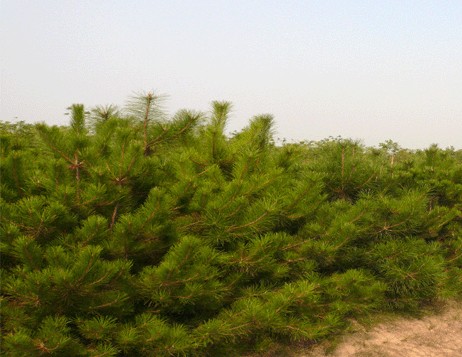
LATIN NAME: Pinus tabulaeformis
COMMON NAME: Chinese Red Pine
Plant Profile
The name tabulaeformis means table-shaped, and it refers to the cones: unlike the rounded cones of many pines, the scales of Pinus tabulaeformis lie almost flat, giving the fruit a distinctly squared-off, plate-like look. That small architectural quirk is the easiest way to tell the Chinese red pine from its neighbours, and it is a neat reminder that pine identification often lives in the cone, not the needle. The tree itself is a hardy, straight-boled conifer built for cold continental winters.
Because the species is planted at huge scale for soil protection, breeders select for straight growth, cold tolerance and good form. Provenance trials across north China have mapped which seed sources suit which site, and vegetative propagation of elite trees fixes those gains. Micropropagation from mature-tree buds has been explored to multiply superior genotypes without waiting on seed.
Science & Biotechnology
The needles store a volatile oil rich in monoterpenes, led by alpha- and beta-pinene with supporting limonene, the same family of compounds that gives pine its scent and its place in cleaning and fragrance. The resin carries diterpene acids such as abietic acid, the basis of traditional rosin. Research has screened needle extracts for antioxidant activity, and the essential-oil profile is a chemotaxonomic marker that helps separate this pine from its look-alikes.
Uses & Benefits
The species is native to north and north-east China, the Korean peninsula and parts of Mongolia, where it grows on sunny slopes and rocky ridges through hard freezes and dry continental air. It is a two-needled pine, the paired needles bundled in a short sheath and held for several seasons, and the bark is a remarkable orange-red that flakes in broad plates as the tree ages. It stands the cold, the heat of the short summer and the poor, dry soil better than most warm-climate pines.
It is close to Pinus densiflora, the Japanese red pine, but tabulaeformis keeps a tighter crown, a flakier red bark and the flatter cone the name promises. The wood is coarser and the tree more tolerant of alkaline, dry ground than its island cousin. Japanese black pine is the coastal, salt-hardy opposite number, while lacebark pine trades the red bark for a mosaic of green, grey and cream.
The orange-red, plate-flaking bark is more than pretty: it signals the resin canals that run through the tree. Like other pines, P. tabulaeformis bleeds oleoresin from wounds, and in its home range that resin has long been tapped for turpentine and rosin. The wood is a useful softwood for construction, poles and paper pulp, and the tree is a backbone species of north Chinese afforestation on formerly bare mountains.
The Chinese red pine is a restoration workhorse: it stabilises slopes, shelters crops as a windbreak and rebuilds forest on land stripped by centuries of cutting. In the garden it is a stately specimen for cold, dry sites where finer conifers struggle, and its red bark glows against winter snow. It also feeds seed-eating birds and hosts a range of native pollinators on its pollen cones.
The male cones release yellow pollen in spring, a brief but heavy resource for the early insect fauna, and the winged seed that ripens later feeds birds and small mammals through the lean months.
Beyond the mountains, P. tabulaeformis is a backbone of northern Chinese townscapes, planted in avenues and parkland because it shrugs off the alkaline, dry urban soil that defeats finer conifers. Its red, plate-flaking bark reads as a feature through the snow, and the straight young bole suits a formal row. Afforestation programmes have set it on millions of hectares of formerly bare land, turning eroded hillsides back into productive forest, which is why it is as much an ecological symbol as a timber tree in its home range.
Growing from Seed
The seed is winged and dormant, so sow after a period of moist chilling to break the rest. Sow into a deep tray of free-draining, slightly acidic mix, covering the seed lightly, and keep it cool and even until the soil warms. Seedlings emerge as the season lifts; thin them once the first true leaves show, and move them to individual pots when they stand about fifteen centimetres with a sturdy stem.
Plant in full sun and any well-drained soil, spacing trees three to five metres in a shelterbelt or six to eight metres as specimens. Water the first season and mulch to hold moisture, then the pine asks only for light. For variety in a cold collection, Masson’s pine and Yunnan pine are close Asian relatives worth the row.
Our Take
I grow this pine for the bark alone in winter, and the flat cones are a quiet delight when you finally spot them. Chill the seed well or it sulks, give it sun and dry feet, and it will outlast most of what you plant around it. The red plates only get better with age.
Related Reading
Continue exploring with these related plants: