


Delonix regia Seeds | Royal Poinciana Tree
LATIN NAME: Delonix regia
COMMON NAME: Royal Poinciana, Flamboyant, Flame Tree
Plant Profile
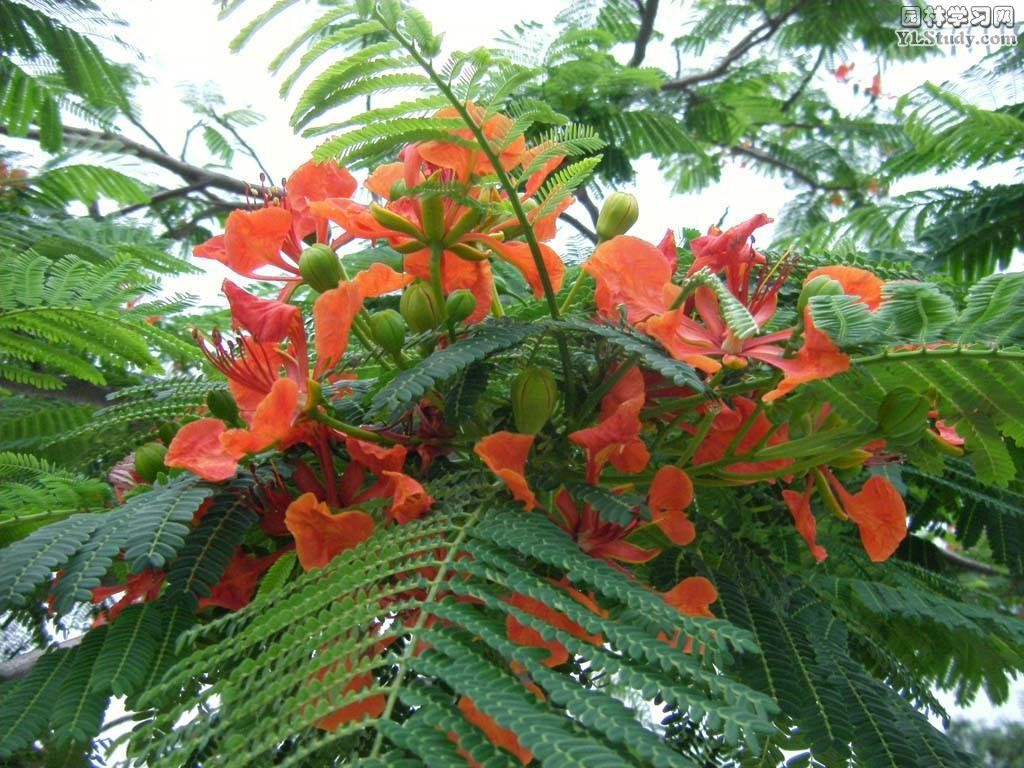
For a few weeks each warm season, Delonix regia turns a street into a burning cloud. The flower is not a single bloom but a great mass of five-petalled, flame-red and orange flowers, each with a paler, sometimes yellow-edged standard, flung across a wide, flat crown so dense it hides the leaves. In its home range of Madagascar and across the tropical cities where it has naturalised, the flamboyant is the undisputed showpiece of the hot-season avenue, and whole festivals time themselves to its bloom.
The species is endemic to Madagascar, where it grows in the dry deciduous forests of the west coast, a clue to its toughness: it likes heat and a distinct dry spell. It is a wide-spreading, briefly deciduous tree reaching twelve metres or more, with a broad, flat-topped crown and smooth grey bark. The leaves are twice-pinnate and feathery, closing at night and in dull weather, which gives the tree a restless, breathing quality even when it is not in flower.
It belongs to the Caesalpinioideae, the same subfamily as the cassias and sennas, and the family resemblance shows in the pea-type flower and the long pod. Golden shower drops yellow pendant racemes; flamboyant answers with red, and its pod is broader, woodier and persists on the bare tree through the year. The flat crown and the ferny leaf are the quick field marks once the flowers fall.
The flamboyant’s real job is shade and spectacle: it lines boulevards, shades schoolyards and frames temple forecourts across the tropics. The light, ferny crown lets enough sun through for grass below while cutting the worst of the heat, and the brief leaf-drop tidies the ground in the dry season. It is also a bee and hummingbird magnet in flower, though the nectar is modest compared with the show.
The tree sheds its leaves for only a short spell, and the persistent pod means there is almost always something to look at, which is part of its value as a year-round street tree rather than a one-week wonder.
Science & Biotechnology
The vivid flower pigments are anthocyanins laid over carotenoids, the combination that gives the red-to-orange range without any blue shift. The leaves and bark store tannins and a suite of flavonoids, and extracts have been screened for antioxidant and antimicrobial behaviour in keeping with the Caesalpinioideae profile. The seed also carries the lectins and storage proteins typical of the family, though it is not eaten.
Uses & Benefits
After the bloom the tree carries long, flat, dark-brown pods that can hang for months, even on the leafless winter crown, a feature that helps identify it out of season. Each pod holds several hard, oblong seeds, and the pod wall is so tough that it rattles rather than opens, which is why the seed stays protected through the dry months. The pods are a minor fodder and a craft material where the tree is common.
Though native only to Madagascar, the flamboyant has naturalised across tropical Asia, the Caribbean and northern Australia, where escaped trees line roads and riverbanks on their own. The light, soft wood is of little timber value, which is why the tree is grown purely for shade and show, and the long pods rattle through the dry season without harming the crown. In some cities it is so common that residents mistake it for a local native, a sign of how completely it has adopted the warm-world avenue as its second home.
Growing from Seed
Because seedling trees vary in flower colour and form, municipalities and nurseries use vegetative propagation and shoot-tip culture to hold chosen cultivars true. Somatic embryogenesis has been reported for Delonix, offering clean stock for the avenue plantings that cities want identical and predictable. The home grower more often starts from the woody pod and accepts the variation.
The seed coat is hard, so sow after scarification or a hot-water soak that you let cool on its own. Sow into a warm, free-draining mix with the seed just covered, and keep the medium evenly moist and warm. Seedlings emerge as the heat builds; thin them once the first true leaves unfold, and pot them on when they stand about twenty centimetres with a firm stem and a few feathery leaves.
Plant in full sun and well-drained soil, spacing trees six to eight metres where an avenue is intended, because the crown spreads wide. Water through the first dry season and prune only to shape a single leader when young. Pink shower and candle bush make fine Caesalpinioideae companions in a hot garden. Scarify well, give it heat, and the flame will come.
Our Take
I grow flamboyant for the two weeks that stop traffic, and I forgive it the rest of the year. Soak the seed hard or it sits, give it full sun and dry feet in winter, and do not expect a straight trunk without training. The wooden pod on the winter tree is its own quiet ornament.
Related Reading
Gardeners who grow Royal Poinciana often pair it with these related subjects: