


Lagerstroemia indica Seeds | Crape Myrtle Tree
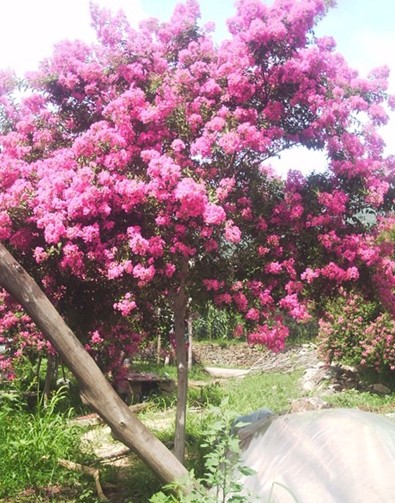
LATIN NAME: Lagerstroemia indica
COMMON NAME: Crape Myrtle, Crepe Myrtle
Plant Profile
Most flowering trees finish by midsummer, but Lagerstroemia indica is just waking up. From the height of summer into early autumn it carries huge upright clusters of crinkled, five-petalled flowers in white, pink, rose, lavender and near-purple, and a single panicle can hold hundreds of blooms that open in a rolling wave. That long, hot-season show is why it is the signature street tree of warm regions, and why a well-sited crape myrtle can out-flower a whole mixed border by itself.
The species is native across subtropical and tropical Asia, from India and China through South-East Asia to the Himalayas, where it grows as a deciduous shrub or small tree reaching eight metres or more. It likes heat, sun and a distinct warm season, and it tolerates a range of soils as long as they drain. In cooler climates it is grown as a multi-stemmed shrub, while in the deep south it forms a single-trunk tree with a smooth, peeling trunk.
It is the small, garden-scale member of the genus; queen’s crape myrtle is the bigger, bolder relative with larger leaves and bigger panicles on a taller frame. Both share the peeling bark and the crinkled petal, but indica is the one bred into the rainbow of named cultivars. The smooth, mottled bark in grey, tan and cinnamon is the year-round giveaway once the flowers fall.
Beneath the summer flower the tree offers a second ornament: the bark sheds in thin sheets to reveal a patchwork of grey, tan, cinnamon and pink on the trunk and branches. This exfoliation is why crape myrtle is valued even in winter, when the bare, sculptural stems glow against a dark hedge. The habit of shedding also keeps the trunk clean and is part of the tree’s charm in formal avenues.
Science & Biotechnology
The showy flowers and the bark store tannins and a suite of flavonoid glycosides, including quercetin and kaempferol derivatives, alongside the ellagitannins that mark the Lythraceae. The bark in particular has been used traditionally as an astringent, and extracts have been screened for antioxidant activity that fits the tannin load. The crinkled petal texture comes from the way the tissue folds as it expands, a developmental quirk rather than a chemical one.
Uses & Benefits
The uses are mostly ornamental but broad: avenue tree, specimen, hedge and large patio container all suit it. The flowers draw bees and butterflies through the lean late-summer lull, and the even autumn leaf colour in orange and red is a quiet bonus. In warmer cities it is planted by the kilometre for the reliable bloom and the low maintenance once established.
The older seedling types can grey over with powdery mildew, but the modern cultivars were selected against it, so choosing a named resistant form spares the gardener the spray. Good air flow and full sun are the cultural half of the answer.
In the warm parts of the United States the crape myrtle earned the nickname lilac of the south, because it supplies the long panicle bloom that the true lilac can only manage in colder spring. Southern towns planted it by the mile along boulevards and frontages, and breeding programmes in the region produced many of the mildew-resistant cultivars now sold worldwide. The tree’s comfort in heat and humidity, where lilacs fail, is the reason the name stuck and the plant became a regional signature rather than a passing novelty.
Growing from Seed
A century of selection has produced cultivars in a wide colour range, many chosen for disease resistance and repeat bloom. Because seedlings scramble the colours, the named forms are held by cuttings and micropropagation from shoot tips, which keeps a ‘Natchez’ white or a ‘Muskogee’ lavender true. Tissue culture also cleans stock of the powdery mildew that can trouble the older types.
The seed is fine and wants a cold, moist rest, so sow after a period of chilling or sow where the cool season passes naturally outdoors. Surface-sow into a fine, free-draining mix and press the seed in lightly without burying it, then keep the medium evenly moist. Seedlings emerge as the soil warms; thin them once the first true leaves appear, and move them to individual pots when they stand about fifteen centimetres with a sturdy stem.
For a specific flower colour, take softwood cuttings in early summer and root them under mist, because seed will not hold the cultivar. Plant specimens three to five metres apart in full sun and well-drained ground, prune in late winter to open the crown, and water the first season. For a different take on summer flower, golden shower and black locust both bring their own show to the warm garden.
Our Take
I grow crape myrtle for the months nothing else will bloom, and the peeling bark earns it a place even in winter. Chill the fine seed or take a cutting for the colour you want, give it full sun and air, and do not fear the winter prune. The late-summer panicle is the longest show in the garden.
Related Reading
If Crape Myrtle appeals to you, these related plants are worth a look: