


Wisteria sinensis Seeds | Potted Plants Chinese Vine
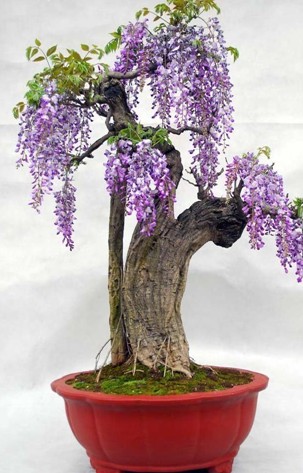
LATIN NAME: Wisteria sinensis
COMMON NAME: Chinese Wisteria
Plant Profile
Wisteria sinensis is a deciduous woody climber that scrambles over trees in the wild and, in gardens, needs a heavy pergola or steel frame to carry its mature weight. Old vines develop gnarled, muscular trunks that twist on themselves, a sculpture effect much admired in Japanese gardens where trained specimens can live for centuries. The alternate leaves are pinnate, usually with nine to thirteen oval leaflets, and the plant clings purely by twining, without tendrils or discs.
Chromosome counts place the species at 2n = 16, a diploid level that contrasts with some polyploid relatives and helps breeders keep hybrid lines straight. In the wild it colonises sunny edges of moist forests and river valleys across central and southern China, regions with summer rain and cold but not arctic winters.
The flower buds of W. sinensis are compound raceme buds that form one year and open the next, which is why careless pruning is so punishing: cutting back in late winter removes the very wood carrying the display. Each bud produces clusters of short racemes, typically fifteen to thirty centimetres long, densely packed with pea-shaped, faintly sweet violet flowers. After bloom come the flat, velvety pods, which twist as they dry and split suddenly to fling out the seeds. Every part of the plant is toxic if eaten.
Zi Teng has been grown in Chinese courtyards for centuries, shading pavilions and draping over trellises in scholar gardens, and its hanging violet racemes recur in classical painting and poetry. The vine reached Europe through Canton in the 1810s, carried by traders of the East India Company, and quickly became the aristocratic climber of Victorian pergolas. Today it remains the classic choice for large structures: an arch, a covered walk, or a wall given strong horizontal wires.
Science & Biotechnology
The seeds and pods contain wisterin, a saponin responsible for most poisoning cases, along with lectins that irritate the digestive tract. Two or three chewed seeds are enough to sicken a child, so pods are best removed after flowering in gardens used by families. The compounds also interest researchers studying natural lectins as laboratory tools for probing cell-surface sugars.
There is a curious footnote in the food literature: in parts of China the seeds have a folk record of roasting and grinding as a coffee substitute, a practice that only makes sense after full roasting destroys the toxins. Pharmacologists, meanwhile, study wisteria lectins and saponins for their effects on cell membranes, though nothing from the plant reaches the clinic. Gardeners should treat every organ of the vine as strictly non-edible and handle seed cleaning with gloves.
Uses & Benefits
Its scent is sweeter and rounder than that of W. floribunda, and it pairs well in the spring garden with late tulips, walled-fruit gardens and early-flowering trees. On smaller properties it should be reserved for a single, well-built feature rather than allowed to tackle live trees, because a mature vine can smother and eventually topple a weakened host. Wholesale suppliers list the seed alongside other long-lived climbers for the landscape trade.
Growing from Seed
Fill deep pots with a free-draining mix of two parts loam to one part coarse sand and compost. Soak the seeds in warm water overnight, then sow them about two centimetres deep. Keep the pots moist and cool-bright rather than warm and dark, and expect shoots over the following weeks rather than on a fixed schedule.
Move seedlings to individual containers once the first true leaves expand, and plant out when they stand around thirty centimetres tall in full sun and deep, fertile soil, spacing plants four to five metres apart. Train one strong leader up the structure and cut lateral whips back to five or six buds in late summer, then again to two or three buds in winter, which converts shoots into flowering spurs. Feed modestly; excessive nitrogen grows leaves at the expense of racemes. Watch for scale insects, aphids and, in damp clay, root rots, and never prune while the vine is bleeding in early spring.
Our Take
A wisteria is a forty-year commitment, so build the frame for the vine it will become, not the one you plant. If you want to compare twining habits at home, set a young Wisteria floribunda alongside it and let each find its own spiral. For more spring drama on sturdy frames, the golden racemes of Laburnum alpinum and the huge scented flowers of Magnolia denudata make fine companions. Take your time with the winter pruning; it is the single habit that separates an abundant display from a green tangle.
Related Reading
Continue exploring with these related plants: