


Tectona grandis Seeds | Teak Tree Teak Wood
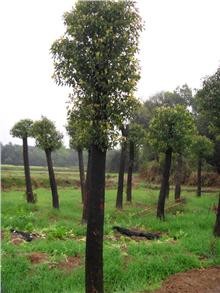
LATIN NAME: Tectona grandis
COMMON NAME: Teak
Plant Profile
Teak is the one timber that shipwrights and deck-builders reach for when the wood must outlast salt, sun and rain. The heartwood carries natural oils and a dense lattice of silica that resists rot, insects and warping, which is why centuries-old teak beams in Indian temples and Burmese palaces are still sound. That durability, not mere beauty, is what built the tree’s reputation, and it is why a single mature log can be worth more than the land it grew on.
In the wild Tectona grandis ranges across South and South-East Asia, from India and Myanmar through Thailand, Laos, Indonesia and the Malay Peninsula. It is a deciduous tree of seasonal monsoon forest, dropping its broad leaves in the dry season and flushing new growth with the first rains. It reaches thirty metres or more on good ground, with a straight bole and a wide, branched crown, and it demands a distinct wet-and-dry rhythm that greenhouse growers often fail to copy.
Modern classification places teak in the Lamiaceae, the mint family, on the strength of its four-angled twigs and the chemistry of its oils, a move that surprised growers raised on the old Verbenaceae label. The leaves are large, rough and golden-brown beneath, and the small white flowers open in loose branching heads. The round, woody, felt-covered fruit that follows is a key field mark, distinguishing it from the many look-alike timber trees of the region.
The even grain and moderate hardness let carvers cut crisp detail without splitting, which is why teak figures in both temple sculpture and modern design. The natural oil means a finished piece needs little more than a wipe, and it ages to a silver-grey if left in the weather.
Science & Biotechnology
The secret of teak lies in its heartwood chemistry. The wood stores a mix of terpenoid extractives, chiefly tectoquinone and related naphthoquinones, together with the natural oils that give it a leathery smell and a golden colour. The silica deposited in the grain dulls saw blades but arms the timber against termites and marine borers. These actives are why teak needs no preservative treatment, a point that the sustainable-plantation trade now stresses.
The leaves and bark carry flavonoids and tannins, and the foliage has been screened for antioxidant and antimicrobial activity in line with its terpene-rich profile. Teak also holds compounds of interest to wood-protection science, since the natural extractives are themselves a model for non-toxic preservatives. Breeding programmes measure these extractive loads alongside growth rate, because a fast tree with poor oil is a poor teak.
Uses & Benefits
Beyond boats, teak is the classic material for outdoor furniture, joinery, flooring and carved panels, prized where weather would destroy lesser wood. The species also anchors reforestation in the tropics, fixing soil and offering shade, though it is a slow earner compared with fast fuelwood species. In the home landscape, where climate allows, it is an imposing specimen with autumn leaf-fall that clears the ground for the dry season.
Plant in full sun and deep, well-drained soil, spacing trees three to four metres in a timber row. Stake young trees to a single leader and prune competing stems, because a clean bole is the whole value of the crop. Water through the first dry season, then the tree settles into its monsoon rhythm. For a faster tropical timber neighbour, Acacia mangium fills the same role more quickly, and queen’s crape myrtle shares the ornamental-timber double act. Chinese red pine is the conifer analogue where the ground is cooler.
Growing from Seed
Because seed trees vary so much in oil, colour and straightness, plantations use clonal forestry: superior mother trees are propagated by rooted stem cuttings and micropropagation to fix the traits. Tissue-culture protocols for Tectona grandis are well established, and they let a single elite genotype cover hectares of uniform, high-value stand.
Teak has been cultivated for so long that some standing plantations in Myanmar and India were set out by colonial forest departments and managed on rotation cycles measured in decades rather than years. That continuity produced a body of silvicultural knowledge, on spacing, thinning and the timing of the dry rest, that modern growers still consult. The tree’s value is precisely its slowness: a bole worth milling takes far longer than a fast fuelwood, but the heartwood it finally yields has no easy substitute for marine and outdoor use.
The fruit holds a hard stone that benefits from a cold, moist rest, so sow after a period of chilling or sow where the cool season passes naturally. Remove the fleshy calyx and sow the stone into a deep, free-draining mix, covering it lightly. Seedlings emerge as the soil warms; thin them once the first true leaves unfold, and move them to individual bags when they stand about twenty centimetres with a firm, straight stem.
Our Take
I grow teak where the summers are long and wet, and I treat the dry rest as non-negotiable. Seed is slow to size, so patience is the crop. Chill the stone, stake the leader, and let the oils do the preserving.
Related Reading
Continue exploring with these related plants: