


Zelkova serrata Seeds | Japanese Elm Bonsai
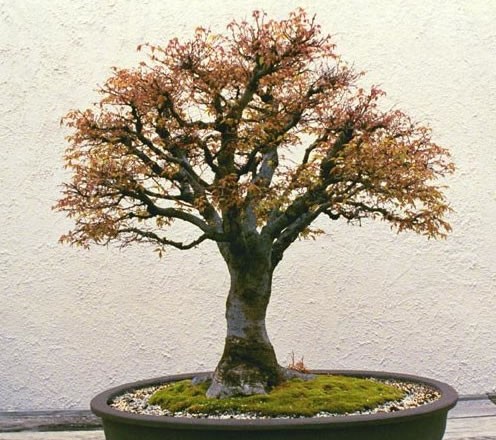
LATIN NAME: Zelkova serrata
COMMON NAME: Japanese Zelkova, Japanese Elm, Keyaki
Plant Profile
Keyaki timber is dense, stable and beautifully figured, which made it the traditional choice for the posts and lintels of Japanese houses and for the fine chests and dining tables of later craft. The boles of old trees are prized for a straight, knot-free length that turns on a lathe without tearing. Because the wood is slow to season and slow to work, it carries a price that reflects the wait, and replica pieces in lesser woods rarely match the grain.
No other use defines the species like bonsai: Z. serrata is a classic subject, its fine branching and small leaves responding to clipping with a dense canopy. In the open garden it is a boulevard and park tree of the first rank, and in autumn it lights a border with colour that holds for weeks. It also tolerates pollarding and hard renovation, which keeps it useful where overhead space is tight.
The species back-buds freely from old wood, so a mis-cut branch is rarely a disaster, and the trunk thickens quickly under good light. That forgiving nature is why it is often the first elm-like tree a new bonsai grower is handed.
In Japan the keyaki is more than timber: it is the traditional street and shrine tree, lining canals in old castle towns and standing as a protected landmark where a venerable specimen anchors a village identity. The wood’s status is such that historic boles are sometimes enclosed in protective structures, and the tree appears in regional crests and place names. That cultural weight is why Japanese nurseries maintain so many named forms, selected less for speed than for a crown shape and autumn colour suited to a formal townscape.
Science & Biotechnology
The foliage and bark store a mix of flavonoid glycosides, including quercetin and kaempferol derivatives, alongside tannins that give the young shoots an astringent bite. These compounds are the subject of screening work for antioxidant activity, and the tree’s general hardiness has made it a model for urban-tolerance studies among the Ulmaceae. None of this is harvested at scale, but it explains why the leaves resist most chewing insects.
Uses & Benefits
When Dutch elm disease swept through Europe and North America, gardeners looked for a look-alike that would not die, and they found Zelkova serrata. Its vase-shaped habit, toothed leaves and yellow-to-red autumn colour echo the elm, but it carries real resistance to the fungus that felled the originals. In Japan it is the keyaki, a tree so valued that old specimens stand protected in temple grounds and along canals, and its wood has built furniture for centuries.
The species grows across Japan, Korea, Taiwan and eastern China, favouring riverbanks, moist hillsides and the margins of mixed forest. It is deciduous, reaching twenty-five metres or more with an upright, graceful trunk and a broad, spreading crown of slender branches. It tolerates urban conditions better than most elms, shrugging off compacted soil and summer heat, which is why it lines so many streets in its home range.
The easiest mark is the fruit: elms carry a round, winged samara, while zelkova bears a small, dry, nut-like drupe with no wing. The leaves are alternate, oval, pointed and sharply toothed, turning yellow, orange and red in autumn, and the bark is smooth and grey, flaking slightly with age. Chinese elm shares some tolerance but keeps smaller leaves and a flakier trunk.
Growing from Seed
Nurseries raise selected forms from softwood cuttings and from shoot-tip culture, holding named cultivars true where seed would scramble them. Somatic embryogenesis has been reported for Zelkova, offering a route to clean, disease-free planting stock for city programmes that need hundreds of identical trees.
The dry drupe needs a cold period to wake, so sow after a spell of moist chilling or sow outdoors where the winter does the work. Use a deep container because the root runs straight down, and cover the seed lightly in a free-draining mix. Seedlings emerge in the warming soil; thin them once the first true leaves appear, and move them to individual pots when they stand about fifteen centimetres with a sturdy stem.
For a named form, take softwood cuttings in early summer and root them under mist, or use Chinese zelkova seed where a tougher, closely related tree fits the site. Plant specimens six to eight metres apart in full sun and well-drained ground, water the first two seasons, and prune to a single leader while the crown is young. Siberian elm is the faster but coarser cousin if you need speed over refinement.
Our Take
I keep keyaki as my elm stand-in, and after a Dutch-elm yard it is a relief to grow something that shrugs off the disease. Start from seed for a street tree, but take cuttings if you want the exact form you admire. Give it sun, drain the soil, and thin the branches young for that clean Japanese line.
Related Reading
Gardeners who grow Japanese Zelkova often pair it with these related subjects: