


Senna siamea Seeds | (syn. Cassia )
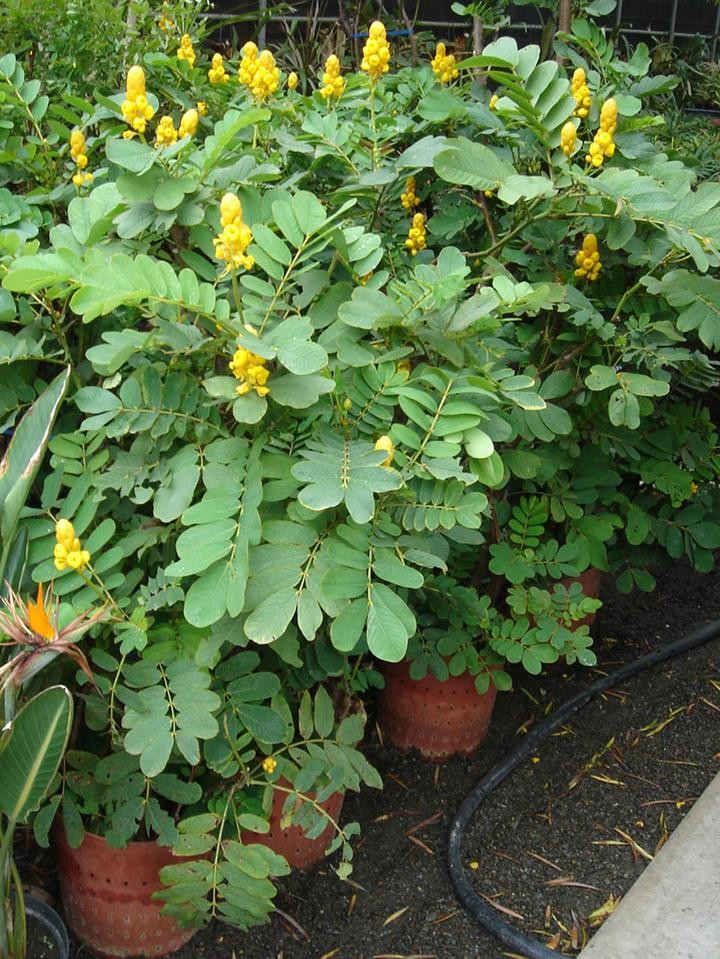
LATIN NAME: Senna siamea (syn. Cassia siamea)
COMMON NAME: Kassod Tree, Popcorn Tree
Plant Profile
Crush a fresh leaf of Senna siamea and the scent is uncanny: warm, buttery, almost exactly like popcorn. That odd, kitchen-like aroma is the tree’s best party trick and the source of one of its common names, the popcorn tree. In Thailand and Cambodia it is a familiar roadside and temple shade tree, planted in straight rows because it grows fast, casts a dense crown and asks for little in return. The smell is the first thing visitors notice, long before the flowers open.
Botanists once filed this species under Cassia, and the old seed lists still read Cassia siamea. Modern taxonomy moved it into Senna on the strength of its flower structure, the sterile uppermost stamen and the form of the anthers setting it apart from true cassias. The reclassification is more than a label: it places the kassod tree among the senna group used worldwide for foliage and pod chemistry, a point worth knowing before you cross-reference old books.
It is a larger, more tree-like plant than most senna shrubs, reaching fifteen metres with a rounded, evergreen crown in the tropics. The leaves are pinnate with many oval, glossy leaflets, and the upright clusters of bright yellow flowers sit above the foliage rather than hidden in it. Golden shower drops its flowers in long pendant racemes; kassod holds shorter, denser panicles that read as a yellow haze from a distance.
Because seedlings vary in form and pace, plantation programmes select for straight boles and quick early height. Vegetative propagation from stem cuttings and root suckers holds those lines true, and tissue-culture protocols using nodal explants have been reported for Senna species, giving clean material for uniform shelterbelts.
Science & Biotechnology
The leaves carry anthraquinone glycosides and a suite of flavonoids, compounds shared with the wider senna group and responsible for the traditional laxative reputation of many Senna species. The pod and seed also store these actives, though kassod is milder than the pharmaceutical Senna alexandrina. Research has screened leaf extracts for antioxidant and antimicrobial behaviour, and the popcorn-scented volatiles have drawn interest as a natural leaf flavourant in some cuisines.
Uses & Benefits
The dense wood burns hot and slow, so it is a valued fuelwood where cooking fuel is scarce, and the leaves are browsed by livestock once they are accustomed to the taste. In its home range it lines temple courtyards and village roads, a living bit of civic furniture that also feeds bees. The heartwood is durable enough for posts and light construction, though it is heavier work than its soft reputation suggests.
The long flowering window makes kassod a steady nectar source, and beekeepers site hives beneath the rows. The honey carries a light, slightly floral note that pairs well with the tree’s own leaf scent in the imagination if not the jar.
Beyond its shade and fuel, kassod is planted as a living fence and a soil anchor on sloping ground, because its root system binds the surface and its leaf litter builds a quick, weed-suppressing mulch. Smallholders often thread it through fields of annual crops so the legume’s fixed nitrogen leaks to the neighbours, and the regular lopping for fodder keeps the row dense and low. That multi-job role, shade plus fodder plus soil care, is why development projects hand out kassod seedlings by the thousand across the tropics.
Growing from Seed
As a legume it nodulates and returns nitrogen to the soil, which is why smallholders tuck it into field edges and between crops. The shade it casts lowers ground temperature for tea, coffee and vegetables, and the leaf litter builds a quick mulch. Trials across the tropics have measured meaningful biomass and fuelwood yields, making it a staple of agroforestry manuals even where its timber is only a secondary product.
The seed coat is tough, so sow after scarification or a hot-water soak that you let cool naturally. Sow into a warm, free-draining mix with the seed just covered, and keep the medium evenly moist but never waterlogged. Seedlings emerge as the warmth builds; thin them once the first true leaves unfold, and pot them on when they stand about twenty centimetres with a firm stem.
Plant in full sun and any well-drained soil, spacing trees three to five metres where a shade or fuelwood row is wanted. Inoculate at sowing where legume nodulation is untested, and water through the first dry stretch. Black locust makes a colder-climate nitrogen-fixing analogue if your ground freezes. Trim the lower branches for a clean trunk and the crown will broaden on its own.
Our Take
I grow kassod for the scent and the shade, and I warn friends that the popcorn smell is addictive. For more showy Caesalpinioideae relatives, pink shower and candle bush are both worth a row. Soak the seed, give it sun, and the buttery smell will find you in the first season.
Related Reading
Gardeners who grow Kassod Tree often pair it with these related subjects: