


Ocimum basilicum Seeds | Cinnamon Basil
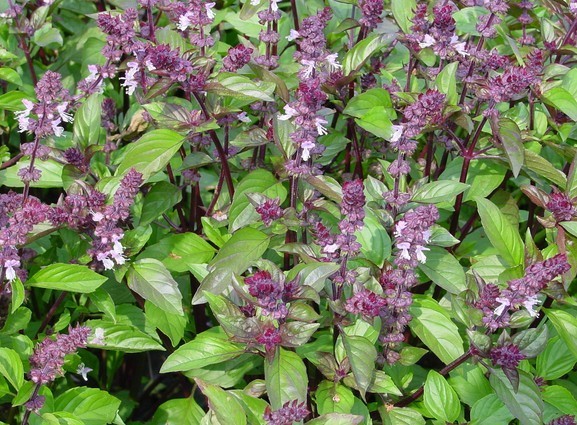
LATIN NAME: Ocimum basilicum
COMMON NAME: Cinnamon Basil
Plant Profile
Cinnamon basil is a selection of sweet basil with a scent that has almost nothing to do with the basil most kitchens know. The leaves carry methyl cinnamate, which the nose reads as cinnamon bark crossed with clove, and the same compound gives the plant its other signatures: purple stems, purple veins and pink flower spikes instead of white.
Plants are compact, usually 45-60 cm, with glossy, slightly narrow leaves and a tidy upright habit that suits pots. Flowering begins early and continues until cold, and the spikes are worth leaving on the plant for the bees as much as for the seed.
Basil itself is a tropical Asian annual of the mint family, domesticated so long ago that its wild ancestor is still argued over. Cinnamon basil sits within Ocimum basilicum, the same species as Genovese and Thai basil, so the differences are chemical rather than botanical, and crosses between the types occur freely if they flower together.
Science & Biotechnology
The distinguishing chemistry is straightforward: where Genovese basil is dominated by linalool and eugenol, cinnamon basil carries methyl cinnamate as its main volatile, with eugenol and smaller amounts of caryophyllene alongside. Methyl cinnamate is the compound behind cinnamon’s warm note and is used in flavour work on its own.
Basil is also unusually vulnerable to downy mildew, Peronospora belbahrii, which arrived in Europe and North America in the 2000s and now travels with seed. The first sign is yellowing between the veins on the upper leaf and a grey felt underneath; affected plants should go in the bin, not the compost. Purple-leaved and cinnamon types show somewhat better field tolerance than the large-leaved Italian sorts, though none is immune.
Uses & Benefits
In Southeast Asian cooking the cinnamon note fits where European basil would clash. It goes into Thai stir-fries, Vietnamese noodle broths and Laos-style minced meat dishes, and it holds its flavour better over heat than Genovese does. The flowers are edible and make a pale pink garnish that survives a hot plate.
The stems infuse well in vinegar or vodka, and a handful of leaves pushed into a jar of honey gives a spiced sweetness that lasts for months. In the garden the pink spikes are a late-summer nectar stop for small bees. Cinnamon basil also crosses readily with other basils, so keep it apart from seed crops you want to keep pure.
Growing from Seed
Sow from March at 20-25°C, barely covering the seed, as light helps it along. Germination in five to ten days is normal on a warm windowsill. Basil sulks below 12°C, so do not rush it into cold ground; plants set out too early sit still for weeks and often rot at the base.
Space plants 30 cm apart in full sun and rich, well-drained soil, and pinch out the top pair of leaves at the fourth node to start branching. Water at the base rather than over the leaves, and feed lightly; too much nitrogen gives lush leaf with less scent. Pick regularly from the top to keep it from flowering, or let a few spikes open for the bees and collect seed from the earliest dry heads.
Our Take
A basil for cooks who want spice rather than anise, and one of the few herbs that looks as good in a border as it tastes in a wok. Grow two plants: one to strip for dinner, one to flower for the bees.
Related Reading
Readers interested in Cinnamon Basil frequently explore these as well: