


Ocimum basilicum Seeds | Italian Large Leaf Basil
LATIN NAME: Ocimum basilicum
COMMON NAME: Sweet Basil, Big Leaf Basil
Plant Profile
Basil is a fast, soft annual that goes from a seed to a plant you can harvest in eight weeks, and then declines the moment it sets seed. Ocimum basilicum comes from tropical Asia, most likely India, and reached the Mediterranean by way of the spice trade; the Genovese types that define Italian cooking are a later selection of that arrival.
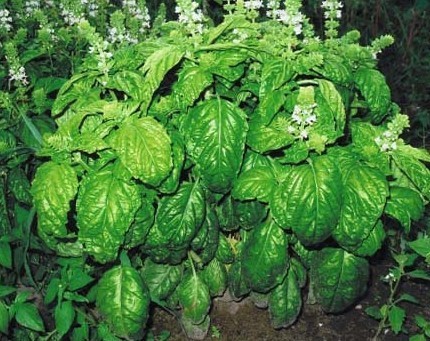
The plant grows 30-60 cm, with square stems, opposite leaves and a habit that branches freely if the growing tip is pinched. Leaf size varies enormously between cultivars, and the big-leaf types in the seed trade are the ones selected for single large leaves rather than for compactness. The flowers are white, small and carried in terminal spikes; letting them open is the beginning of the end for leaf quality.
Science & Biotechnology
Basil oil is one of the most studied in the culinary herb group, and the reason is that its composition shifts dramatically between cultivars. Sweet basil is dominated by linalool and estragole, holy basil by eugenol, lemon basil by citral, and cinnamon basil by methyl cinnamate. The same species, four different oils, and the differences are largely genetic rather than environmental.
Eugenol and linalool, the two compounds most associated with the genus, both show antimicrobial and antioxidant activity in laboratory work, and eugenol is the reason clove oil and basil oil were used as dental analgesics long before the mechanism was understood. The more practically useful finding for growers is that basil responds to water stress by increasing oil concentration while reducing leaf yield, which is why the same cultivar can taste markedly stronger in a dry summer.
Uses & Benefits
Basil is the defining herb of two cuisines at once. In Italy it goes into pesto, into tomato sauces at the very end of cooking, and onto sliced tomatoes raw; in Southeast Asia, Thai basil and holy basil are cooked hard with chilli, fish sauce and meat, where the aniseed or clove note survives heat that would destroy the sweet type.
In the garden it is a companion plant with a real function, since the flowers are worked by bees and hoverflies over a long period, and it grows happily between tomatoes and peppers in a polytunnel. The one thing it will not tolerate is cold: below about 10°C the leaves blacken, and a single cold night undoes a whole season’s growth.
Growing from Seed
Basil seed needs warmth and light, and it germinates poorly below 18°C. Surface-sow onto a fine, moist mix, press the seed down and leave it uncovered, then hold the tray at 20-25°C. Germination takes five to fourteen days depending on temperature, and the seedlings emerge with two small round cotyledons that look nothing like basil.
Prick out when the first true leaves appear, and pinch out the growing tip above the second pair of leaves, which is what turns a single stem into a bushy plant. Repeat the pinch every time a shoot makes four pairs of leaves. Water at the base rather than overhead, keep the plants warm and feed lightly; a high-nitrogen feed gives lush leaves with diluted flavour, which defeats the purpose.
Our Take
If you grow one herb from seed, make it basil: it is fast, generous and the difference between garden basil and supermarket basil is larger than for almost anything else. Grow more plants than you think you need, and sow a second batch in midsummer to carry you through autumn.
Related Reading
Readers interested in Sweet Basil frequently explore these as well: