


Ocimum basilicum Seeds | Sweet Basil
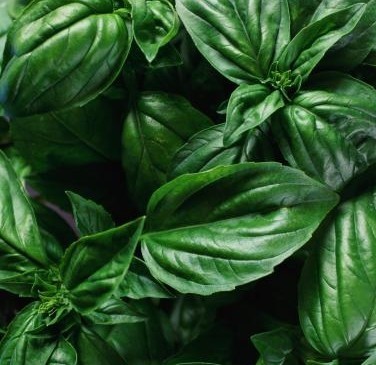
LATIN NAME: Ocimum basilicum
COMMON NAME: Sweet Basil
Plant Profile
What we call “basil smell” is not one smell but a set of essential-oil chemotypes that breeders have fixed into named forms. The classic sweet or Genovese basil is dominated by linalool and linalyl acetate, the soft, sweet, almost floral notes that define pesto. A different chemotype leans on estragole (methyl chavicol), which gives a sharper anise-like lift, while a third carries eugenol, the clove compound also found in clove oil, hence the “clove basil” types. The plant is an annual with square stems, opposite ovate leaves, and terminal racemes of small white two-lipped flowers; left to bloom it shifts energy from leaf to seed, so growers pinch the flower spikes to keep the foliage tender.
Among culinary cultivars the ‘Genovese’ type is the benchmark for Italian cooking, with broad, puckered, deep-green leaves and a high linalool profile suited to pesto and Caprese. Other named lines such as ‘Dark Opal’ trade flavour for purple anthocyanin foliage, and ‘Cinnamon’ basil carries more eugenol, showing how much the leaf chemistry varies within one species. This variation is the reason breeders sort lines by gas-chromatography profiling of the leaf volatiles rather than by eye, since two green plants can smell entirely different.
Science & Biotechnology
Because the oil is the product, much of the agronomy research on basil targets chemotype stability. Hydrodistillation and steam distillation of the aerial parts are the standard ways to recover the essential oil, and supercritical carbon dioxide extraction is used where a cleaner, solvent-free oil is wanted for perfumery. Breeding work sorts true-to-type lines by the volatile profile, and the chemotype labels on seed packets reflect that screening rather than guesswork.
On the biotechnology side, basil is a routine subject for shoot-tip culture and somatic embryogenesis studies, and researchers have used it to test elicitor-driven accumulation of phenolics such as rosmarinic acid and the flavonoid orientin. Some work also points to antifungal activity in the oil against food-spoilage fungi, an applied angle that fits basil’s role as a fresh culinary herb and guides its use as a natural post-harvest treatment.
Uses & Benefits
Use the leaves fresh: torn into tomato salads, blended with olive oil, pine nut, garlic, and hard cheese for pesto, or layered with mozzarella. The flower spikes, if you let a few form, are edible and make a pretty vinegar. Dried basil loses the volatile linalool quickly, so the dried herb tastes flatter than the fresh and is best added early in long cooking rather than at the table. In the garden basil is the companion of tomato, both in the bed and on the plate, and a pot on a sunny step keeps a summer kitchen supplied with a steady handful.
Sweet basil also anchors Southeast Asian cooking where the related Thai basil (O. basilicum var. thyrsiflora) is preferred for its anise note, and the sacred holy basil Ocimum tenuiflorum is kept strictly apart as a different culinary and cultural plant. Knowing which basil you grow matters: the linalool-rich Genovese type wilts fast in a long-simmered curry, while the sturdier tropical types hold their flavour through heat.
Growing from Seed
Sow the seed shallow, covered by about 3 mm of fine compost, into warmth, and keep the medium evenly moist but not wet. Transplant seedlings once they carry four to six true leaves, setting them about 20 to 25 cm apart in a row after the danger of cold nights has passed, because basil is strictly tender. It wants full sun and a fertile, well-drained loam kept steadily moist; dry soil turns the leaves bitter and the plants woody. Pinch the central shoot and later flower spikes to branch the plant and prolong leaf production. Feed lightly every few weeks with a balanced liquid feed, and in cool climates grow it in a container you can move under cover at the first hint of chill. Watch for downy mildew in humid air and give the foliage room and morning sun to dry, removing affected lower leaves before the problem spreads.
Our Take
I grow ‘Genovese’ for the pesto bowl and a purple type for the border, and I never let either flower if I can help it. For more basil chemistry try Lime Basil, Dark Opal Basil, and Cinnamon Basil.
Related Reading
Continue exploring with these related plants: