


Ocimum basilicum Seeds | Dark Opal Basil
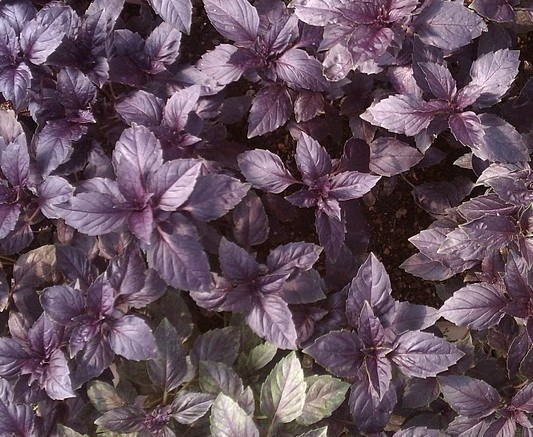
LATIN NAME: Ocimum basilicum
COMMON NAME: Dark Opal Basil
Plant Profile
Dark Opal is not just a coloured novelty. It was introduced as an All-America Selections winner in 1962, one of the few herbs ever to take that ornamental honour, because its deep-purple, slightly ruffled leaves hold their colour through heat that bleaches lesser purple basils. The pigment is the same chemistry that makes blackberries blue: anthocyanins, principally cyanidin-based glycosides stored in the leaf and stem, which also push the leaf’s measured antioxidant capacity above that of ordinary green basil in side-by-side lab comparisons. The built-up colour is what lets the leaf tint oil and vinegar without any added dye.
Crush a leaf and the perfume is classic sweet basil with a spicier edge. The essential oil is a blend of linalool, eugenol, methyl chavicol, methyl cinnamate and geraniol, and the exact ratio is what sets basil cultivars apart. Dark Opal runs higher in the clove-like eugenol note than the lemon or cinnamon basils, which is why it suits tomato and vinegar work rather than dessert pairings. The eugenol also gives the leaf a faint warmth that survives light cooking, so a purple pesto tastes noticeably richer than a green one.
As with all basil, the scent is stored in microscopic glandular trichomes dotting the leaf surface, visible as tiny glistening points. The purple anthocyanin sits in the vacuoles of the epidermal cells, so a leaf is pigmented from the top down and the oil glands ride on top of the colour. Breeders select for both a dense dot count and a deep hue, because the two traits together drive both flavour and visual saleability, and a pale-leafed plant simply will not sell as Opal.
Science & Biotechnology
Breeders and food chemists have profiled Dark Opal specifically for its anthocyanin load, and the cultivar is a recurring subject in studies comparing antioxidant activity across basil germplasm. The interest is practical: a pigmented leaf that also tastes right can double as a natural colorant for oils, vinegars and pesto, replacing artificial dye. The methyl chavicol content is noted but kept in perspective, since culinary use is small-scale rather than extract-level, and the leaf is eaten fresh far more than it is distilled. A handful of cut leaves steeped in warm oil will stain the whole jar violet within a day.
Uses & Benefits
Use the leaves fresh in salads, caprese and tomato dishes, or steep them in white wine vinegar and mild oil to tint both. A Dark Opal pesto keeps its violet hue if the leaves are blended without prolonged heat, and the purple stems make a striking herb butter. The pink flowers are edible and attractive to bees, so let a few stems bloom for pollinator value while you keep the rest cut for leaf. Chopped finely, the leaf also colours a soft cheese or a rice dish without changing the texture.
In the border Dark Opal reads as a foliage plant: the bronze-purple mass contrasts with silver lavender and chartreuse herbs, and it pairs naturally with tomatoes as a companion planting where gardeners value the scent for confusing some pests. It is grown as a half-hardy annual everywhere winters dip toward freezing, and it stands up better to heat than many green basils once established. A row of it makes a tidy low edging that doubles as a harvest, and the colour deepens in strong light rather than fading.
Growing from Seed
Press the fine seed into the surface of a warm, moist seed mix and keep it above roughly twenty degrees Celsius until the seedlings appear, then move them on once they carry two true leaves. Harden the young plants and set them about twenty-five centimetres apart only after the last cold nights pass, in full sun and a fertile, drained soil. Pinch the growing tip at ten to fifteen centimetres tall to force branching, and keep cutting the tops so the plant stays leafy instead of flowering. Water at the base to keep foliage dry and reduce fungal spotting, and feed lightly; rich, wet ground dilutes the oil and the colour together. The first flower buds should be removed to keep the leaf coming, and a fortnightly pinch keeps the bush full.
Our Take
Dark Opal sits among a broad basil bench worth exploring: the standard sweet basil, the large Italian Large Leaf and the spicy cinnamon basil. For a true Mediterranean pairing try Greek oregano.
Related Reading
Continue exploring with these related plants: