


Salvia viridis Seeds | Painted Sage
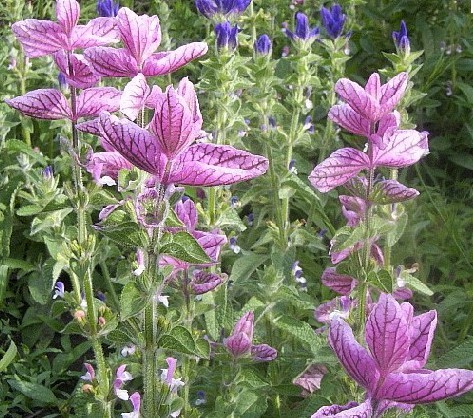
LATIN NAME: Salvia viridis
COMMON NAME: Painted Sage
Plant Profile
Painted sage, also called clary or annual clary in older books, is a bushy annual of the mint family from the dry hillsides of the Iberian Peninsula and southern Europe. It carries upright spikes of hooded, two-lipped flowers, but the visual drama comes from the large, coloured bracts that cradle each flower pair and last far longer than the corolla itself.
The plant grows as a branched, upright annual reaching forty to sixty centimetres, with oval, toothed, softly hairy leaves in a grey-green tone. It is a plant of open, sunny, well-drained ground and it completes its life in a single season, which makes it easy to fit into a rotating annual border or a cutting garden without committing permanent space.
The small flowers are typical sage: a hooded upper lip and a spotted, three-lobed lower lip that guides bees to the nectar. What sets the species apart is the bract, a modified leaf that turns vivid pink, rose, purple, or green and stays decorative long after the flower has dropped. The result is a spike that reads as colourful long before and after it is technically in bloom.
Because the bracts hold colour and shape when dried, painted sage is a staple of the everlasting flower garden. Cut the spikes as the first bracts colour up, strip the lower leaves, and hang them in a dry, airy place. They keep their tone for months and mix well with grasses and other dried material in winter arrangements.
The species has a long place in European gardens as a historic border plant, valued for giving bright, airy colour through the height of summer. It earns its keep twice over: as a fresh cut flower and as a dried one, and it draws bees to the open garden while it is still standing.
Science & Biotechnology
As a Salvia, the plant carries rosmarinic acid, the phenolic known across the genus for antioxidant activity, and the leaf has a mild, sage-like scent when crushed. The compound is of interest to researchers studying the lab defence chemistry of the mint family, even though painted sage is grown far more for ornament than for the medicine shelf.
Uses & Benefits
The plant was already grown in English gardens by the late sixteenth century, and John Gerard figured it in his 1597 Herbal under the name clary, noting the showy bracts that gardeners prized then as now. That four-hundred-year presence in the border is why painted sage feels like a heritage plant even though it is, botanically, a simple Mediterranean annual.
Growing from Seed
Modern seed strains widen the natural range with cultivars in pink, rose, violet, and white-green, sometimes mixed in one packet. The variation is genetic rather than a response to soil, so the colour you sow is the colour you get, which makes painted sage a dependable choice for a planned scheme where predictable tone matters.
Sow the seed in spring where it is to flower, or start it in modules once the soil has warmed. Cover it lightly with fine compost, because the seed is small but not surface-tiny, and keep the bed weed-free so the young plants are not smothered. Thin the seedlings early so each has room to branch into a full spike.
If started in trays, move the seedlings when they show two pairs of true leaves into individual pots, then harden them off before setting them out. Space the plants twenty to twenty-five centimetres apart in full sun and on lean ground; rich soil pushes soft, floppy growth at the expense of the sturdy coloured spike.
Cut the first flush of spikes for drying as they colour, and the plant will often respond with a second, later show. Once the season ends, clear the spent annual to keep the bed tidy, since painted sage will not return from the same root the following year in most climates.
Our Take
Painted sage is the easiest way to add lasting colour to a dried-flower scheme. Grow it with English sage for leaf contrast, Queen Rose sage for a longer-lived border spike, and the taller clary sage behind it.
Related Reading
Gardeners who grow Painted Sage often pair it with these related subjects: