


Calliandra californica Seeds | Baja Fairy Duster
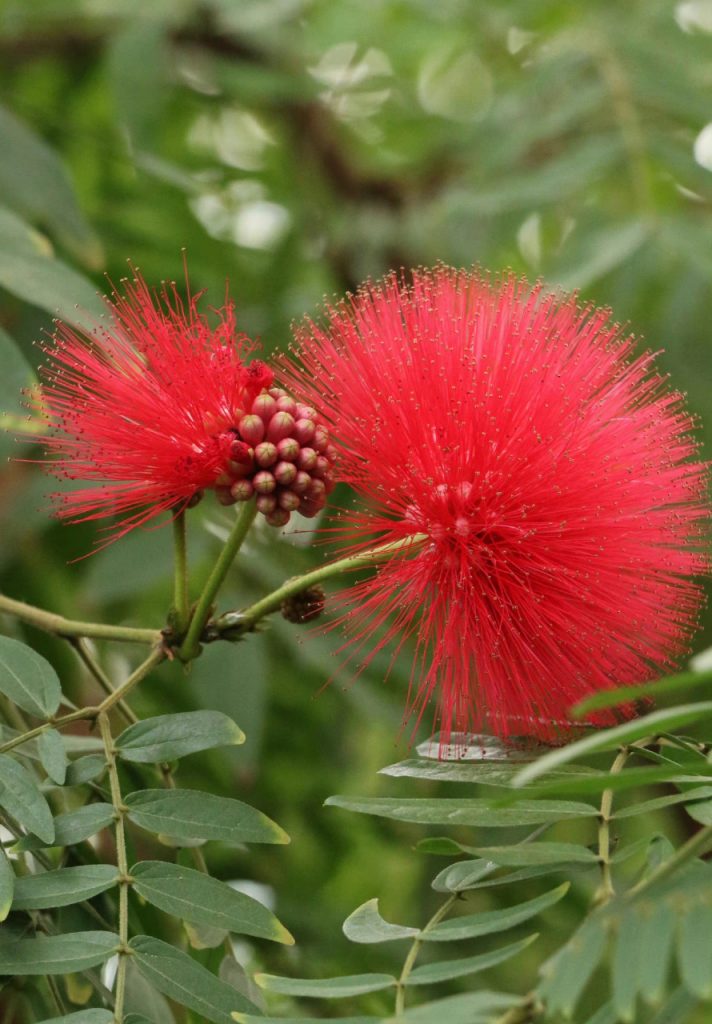
LATIN NAME: Calliandra californica
COMMON NAME: Baja Fairy Duster
Plant Profile
Baja fairy duster is a small evergreen shrub of the pea family from the deserts of Baja California and Sonora, growing one to one and a half metres with fine, bipinnate leaves and a loose, open habit. Its flowers are its reason for being grown: tight, spherical heads of long red stamens that look like powder puffs or tiny shaving brushes, opening through spring and again after summer rain. The leaves are sensitive and fold at night, and the plant drops them in drought, which makes it look dead until the next rain. Hummingbirds work the flowers constantly, and the plant is one of the best hummingbird plants for a hot, dry garden. The seed pods are narrow and brown, and they burst open when ripe, throwing seed a metre or more.
Science & Biotechnology
Calliandra californica is a woody legume in the mimosoid clade, the group that includes Acacia and Mimosa, and its showy stamens are the pollinator reward: the petals are small and inconspicuous, and the colour and nectar are carried by the long filaments. The genus is New World, with several hundred species, and it is being studied for its relationships within the mimosoids, a group whose classification has been rewritten repeatedly on molecular evidence. The species is drought-deciduous, losing its leaves within days of a dry spell and replacing them within a week of rain, a strategy that lets it keep flowering when other shrubs are dormant. Its seed is hard-coated and germinates after scarification, and the seed bank persists in the soil. It is cold-tender, damaged below minus four degrees, and it regrows from the base after frost.
Uses & Benefits
The shrub is planted in desert gardens for its flowers, its hummingbird visitors and its tolerance of heat, drought and poor soil. It is also used as a low screen, a foundation plant and a container specimen, and it grows well in a large pot where it can be moved under cover for winter. Its flowers are long-lasting on the plant and are used in floristry. It fixes nitrogen, so it improves the soil around it, and its seed is eaten by birds. It has no culinary or medicinal use. In the garden it needs full sun and sharp drainage, and it should be watered only to establish; regular irrigation makes it soft, short-lived and shy to flower.
Growing from Seed
Scarify the seed by nicking the coat or soaking in hot water, then sow one centimetre deep in a gritty mix at twenty-five degrees. Germination takes one to three weeks. The seedling grows fast and should be potted on before the roots circle. Grow on in full sun with sharp drainage, and water sparingly. Plant out after the last frost into sandy or gravelly soil, or keep it in a large pot and move it under cover before the first frost. Prune lightly after flowering to keep it bushy, and cut back hard after frost damage. Do not feed, and do not mulch heavily, which keeps the crown too wet.
Our Take
A desert shrub with red powder-puff flowers and a hummingbird attached to each one. Hot, dry, sharp-drained, and it wants a frost-free site.
Related Reading
Readers interested in Baja Fairy Duster frequently explore these as well: