


Mentha requienii Seeds | Corsican Mint
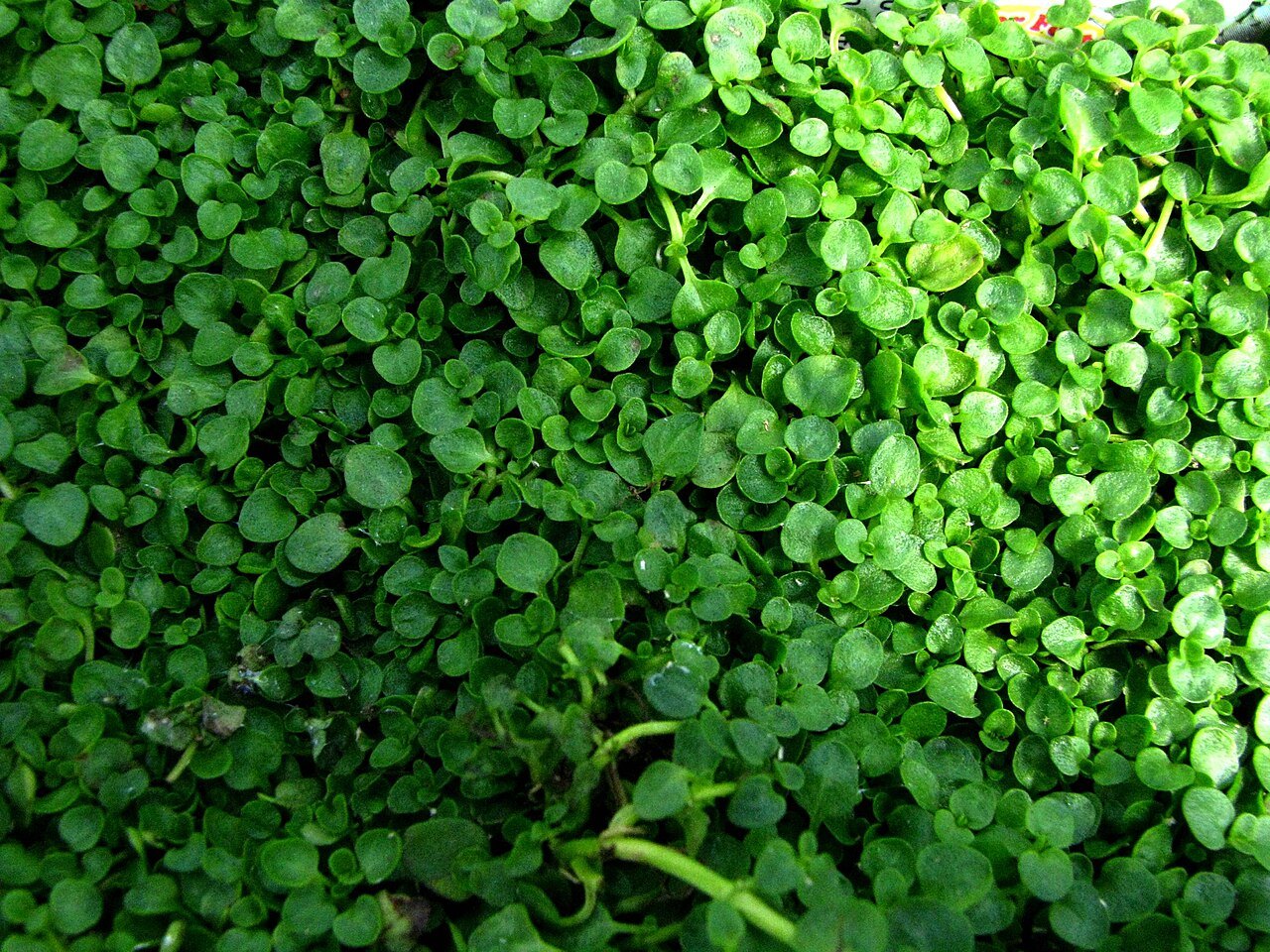
LATIN NAME: Mentha requienii
COMMON NAME: Corsican Mint
Plant Profile
Corsican mint is one of the smallest members of the mint family: 3 to 10 cm tall, with tiny oval leaves 2 to 7 mm long, forming a dense, bright green, moss-like mat. The tiny mauve flowers appear in July and August, but you will have to look for them; the plant is grown for its foliage and its smell.
And the smell is the plant. Crushed underfoot it gives a strong, clean peppermint scent, strong enough that a path planted with it announces every visitor. It is native to Corsica, Sardinia and the island of Montecristo, and it has naturalised in Portugal and the British Isles, where it creeps into damp paving and churchyard paths.
It is a plant of damp, shaded cracks at home, and it carries that preference into cultivation: shade tolerant, moisture loving, and completely intolerant of standing water. That narrow window is the whole difficulty of growing it, and everything below is about holding that line. It is also perfectly hardy in the ground, which surprises people who have lost it in a pot.
Science & Biotechnology
The aroma is menthol carried in oil glands visible as dark specks on the leaf, and in this species the oil is present at high concentration in very small tissue, so a leaf the size of a lentil still smells like a field of mint. The same oil is the flavouring in crème de menthe, where its use is commercial and old.
In traditional medicine the plant has been used as an antiseptic, a carminative and a febrifuge, and the smell of mint is disliked by rats and mice, so it was historically strewn on floors as a rodent deterrent. A three-centimetre herb as a pest control is charming rather than effective, but the record tells you how strong the oil is.
Its ecology explains its fussiness. On Corsica and Sardinia it grows in seepages and stream margins that are moist because water moves through them constantly, not because water sits. That is cool, moving, oxygenated moisture, which a garden path rarely provides; a saucer of stagnant water is the opposite and kills it in a fortnight.
Uses & Benefits
Its use is between paving stones, at the edge of a path, in a shaded trough, or as a scented groundcover in a cool corner. It can be walked on without dying, which is rare, and each footstep releases the scent, which makes it one of the few plants that improves with use.
It stays diminutive where most mints run wild, and it thrives in shade, which most mints merely tolerate. That combination makes it the standard choice for the crack between stepping stones in a shaded garden, where the alternative is usually moss or nothing.
Where it is too fragile, baby’s tears, Soleirolia soleirolii, is used as a substitute: similar texture, similar habit, no scent. The two are often confused in garden centres, and the test is the leaf, since baby’s tears is scentless and slightly fleshier. Other Lamiaceae on the list: Mentha arvensis, Mentha × piperita and Mentha canadensis.
Growing from Seed
The seed is dust-fine and short-lived in storage. Sow on the surface of a moist, fine mix, do not cover it, water from below, and keep at 15 to 20 °C out of direct sun. Germination takes one to three weeks and is patchy; the seedlings are barely visible at first, so leave the tray alone and do not weed it for a month.
Grow the seedlings on in shade, keep the compost moist but never sodden, and pot small clumps on together rather than pricking out singles; the plant moves faster as a mat than as isolated rosettes. In most gardens it establishes faster from pieces than from seed, and any fragment with a root node will take.
Plant out 15 cm apart into soil that holds moisture but drains, in part shade, and water in dry spells without letting the surface stay wet overnight. The rule that works is moist by day, dry by morning, and the way to get it is a gritty surface over moisture-holding soil.
Our Take
It is a specialist plant with one perfect use, and the use is worth it. A shaded path that smells of peppermint every time it is walked on is a garden memory that outlasts most flowers, and nothing else in the trade does it at 3 cm tall.
Expect to lose it occasionally, and buy or divide again without resentment. Between stones in damp shade it is unbeatable; in a pot on a hot patio it is a slow way to learn about drainage. Give it the crack, the shade and the moisture, and it will do the rest.
Related Reading
Gardeners who grow Corsican Mint often pair it with these related subjects: