


Mentha × piperita Seeds | Peppermint
LATIN NAME: Mentha × piperita
COMMON NAME: Peppermint
Plant Profile
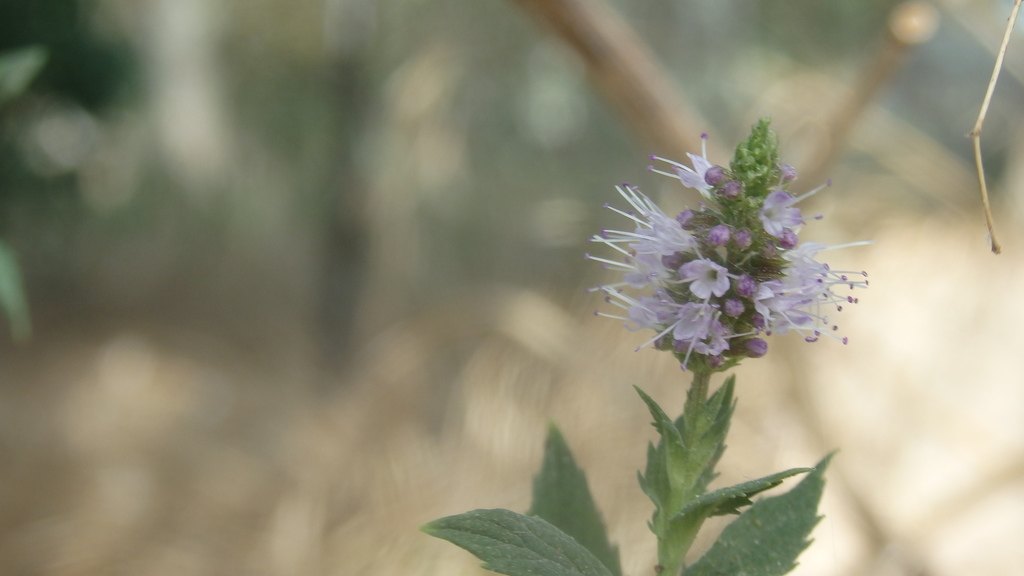
Peppermint is a herbaceous, rhizomatous perennial of 30 to 90 cm, with smooth square stems and leaves 4 to 9 cm long, dark green with reddish veins, sharply pointed and coarsely toothed, slightly fuzzy to the touch. The purple flowers, 6 to 8 mm with a four-lobed corolla about 5 mm across, sit in whorls around the stem to form thick, blunt spikes from mid to late summer.
It is a hybrid between watermint and spearmint, and spearmint itself is considered by some authors a hybrid of M. longifolia and M. suaveolens, which makes peppermint a hybrid of a hybrid. The genus Mentha holds more than 25 species, and this one is the most widely used of them all.
The discovery story is precise: it was first identified in Hertfordshire, England, by a Dr. Eales, and John Ray published the find in 1696 in the second edition of his Synopsis Methodica Stirpium Britannicarum. The plant entered the London Pharmacopoeia in 1721 under the name Mentha piperitis sapore, and Linnaeus named it Mentha piperita in Species Plantarum in 1753, treating it as a species.
Its chromosome counts run from 2n 66 to 120, another fingerprint of mixed parentage. Being a hybrid it is usually sterile, producing no seeds and spreading only by runners, and where it was formerly grown for oil, feral colonies persist; it is considered invasive in Australia, the Galápagos, New Zealand and the American Great Lakes region, where it was noted as early as 1843.
Science & Biotechnology
The chemistry is the crop. Dried peppermint carries 0.3 to 0.4 percent volatile oil, within which menthol runs from 7 to 48 percent and menthone from 20 to 46, with menthyl acetate, menthofuran and 1,8-cineol filling out the profile; the distilled oil itself averages 41 percent menthol and 23 percent menthone. Flavonoids such as eriocitrin, hesperidin and kaempferol 7-O-rutinoside ride along.
Menthol works by activating cold-sensitive TRPM8 receptors in skin and mucosal tissue, so peppermint oil feels cold without changing temperature at all. The oil also repels some pest insects, mosquitoes included, and its natural pesticide fraction, pulegone, sits mostly in its relative Mentha canadensis rather than in true peppermint.
The medical file is unusually solid for a herb. Peppermint oil capsules are licensed as a medicine in the United Kingdom for irritable bowel syndrome, on the strength of trials that remain preliminary in scale. High oral doses, around 500 mg, irritate the mucosa and mimic heartburn, and the oil is applied topically for muscle pain, nerve pain and itching. Trials on blood pressure were still in early human stages in 2026.
Uses & Benefits
In the kitchen it runs from peppermint tea, alone or in mixed infusions, through ice cream, candy and fruit preserves to chewing gum, toothpaste and alcoholic drinks, and out to soaps, shampoos and skin care. Western peppermint is this hybrid; Chinese peppermint, or bohe, comes from the fresh leaves of M. haplocalyx, and both are recognised sources of menthol and menthone.
World production in 2023 was 35,547 tonnes, led by Morocco with 78 percent and Argentina with 20. In the United States, Oregon and Washington grew most of the crop in 2020, their leaves distilled for the flavouring oil that ends up mainly in chewing gum and toothpaste. The tops are cut as soon as the flowers begin to open, then wilted briefly or taken straight to the still.
The cultivar list is long and oddly personal: Chocolate Mint, whose flowers open from the bottom up and whose flavour recalls a certain after-dinner confection; Candymint with reddish stems; the Citrata group of eau de cologne, grapefruit, lemon and orange mints; Crispa with wrinkled leaves; Lime Mint; Variegata in mottled green and pale yellow. It shares the family with Mentha longifolia and Coleus scutellarioides.
Growing from Seed
Honesty first: seed of a usually sterile hybrid is a contradiction, and what seed packets offer is open-pollinated stock that varies around the type. Sow it barely covered on moist compost in spring, keep it at ordinary warmth, and expect a spread of characters; the named oil cultivars are maintained by runners and cuttings, not by seed, and that is a fact of the plant rather than a fault of the packet.
In the ground it wants moist, shaded positions and expands by underground rhizomes. Old practice dibbles young shoots in about half a metre apart, and the runners cover the ground quickly wherever the soil stays permanently moist. Give it a steady water supply without waterlogging and partial sun to shade, and consider a container, which is the standard way home gardeners keep its ambition in check.
Verticillium wilt is the major constraint in commercial peppermint, and the resistant lines have a strange history: Todd’s Mitcham came out of a mutation breeding and test programme at Brookhaven National Laboratory in the mid-1950s, and Refined Murray and Roberts Mitcham are also products of mutation breeding. Avoid replanting mint family crops where wilt has appeared.
Our Take
Peppermint is the clearest case in the seed trade where the plant outruns its own propagation: the flavour everyone knows belongs to clones, and every packet is a lottery ticket around that standard. The lottery is still worth a ticket.
Plant it where its runners can be enjoyed rather than endured, keep the water coming, and cut the tops as the flowers open. The cooling you feel in the tea is a receptor being switched on, and your garden did that.
Related Reading
Continue exploring with these related plants: