


Schizanthus pinnatus Seeds | Poor Man’s Orchid
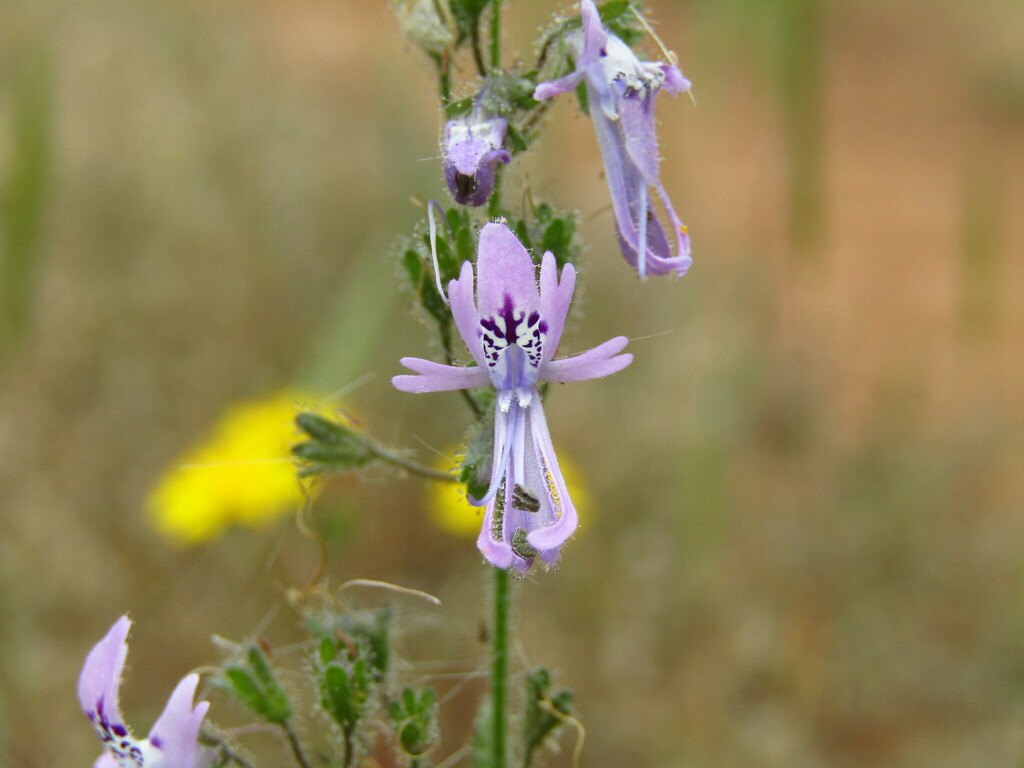
LATIN NAME: Schizanthus pinnatus
COMMON NAME: Poor Man’s Orchid
Plant Profile
Poor man’s orchid is the name the trade settled on, and it flatters neither the plant nor the orchid. Schizanthus pinnatus is a Chilean annual of twenty to fifty centimetres, sticky to the touch and faintly rank, and in its own country it is called mariposita, the little butterfly, which describes the flower far better.
The leaves are the first surprise. They are pinnatisect, two and a half to three centimetres long, cut into six to eight pairs of oblong-linear segments that are sometimes entire and sometimes further divided, and the whole plant carries glandular hairs that leave a resinous film on the fingers long after you have let go.
The flowers are two to three centimetres across, white, pink or violet, and carried in panicles that occasionally fork into two equal branches. The fruit is a globular capsule of about five millimetres holding a few wrinkled seeds, and a dry capsule rattles when shaken, which is the simplest test of ripeness there is.
The genus name divides into schizo and anthos, cut flower, a reference to a corolla split almost to the base. Schizanthus pinnatus holds the Royal Horticultural Society’s Award of Garden Merit, and it is the species behind most of the seed on offer, though the packets have absorbed genes from its relatives for a century.
Science & Biotechnology
Solanaceae is a family of regular, wheel-shaped flowers, and Schizanthus is one of its few genuine exceptions. The corolla is bilabiate, three lobes below and two above, and the stamens are gathered against the upper lip instead of ringing the centre. That single rearrangement changes which insects can reach the nectar and how they must stand to take it.
The flower is built for long tongues. A visitor landing on the lower lip follows a pair of markings up the throat, and the anthers are set to dust its back as it pushes in. In Chile the pollinators are bees and, for some relatives, hummingbirds. Under glass the plant sets very little seed unaided.
The genus holds about a dozen species, all South American and most of them Chilean. Garden material is a hybrid swarm in which S. pinnatus, S. hookerianus and S. grahamii have all taken part, so colour varies so widely inside one packet and why no two seedlings in a row are quite the same. The Solanaceae thread continues with Browallia speciosa, Solanum texanum and Petunia hybrida.
Uses & Benefits
In cold climates it is a greenhouse plant; in mild ones a winter annual. The value lies in timing rather than in any quality of the flower itself. Sown in late summer it opens from February to May, when the glasshouse holds little else and the light is still too weak for most annuals to do anything but stretch.
Cut, the stems last four or five days and shed the lowest flowers first, so it is not a florist’s flower and never will be. It is a plant to look at close up, in a cold frame or a conservatory, where the comparison with an orchid stops being a marketing line and becomes a fair description.
It is neither food nor medicine, and any catalogue that lists it under either is wrong. Like most of its family it carries alkaloids, though nothing in the toxicological record marks it as a serious risk. The sticky surface deters most grazers, so treat it as ornamental and wash your hands afterwards.
Growing from Seed
Sow in August or September for winter flowers, at seventeen to twenty degrees, on the surface of a free-draining compost and barely covered. The seed is small, needs light, and fails under a heavy covering more often than for any other reason. Germination is spread over two to four weeks rather than arriving all at once.
Seedlings are thin and prone to damping off, so ventilate from the moment the first true leaves show and water from below. Prick them out when they can be handled, into a mix with a third grit by volume, and keep them cool. Warmth at this stage produces soft growth that never firms up.
Pinch the leading shoot once to make a bush, stake the taller selections with a single twig rather than a cage, and keep the house cool and moving. Above about twenty-five degrees the buds abort and the leaves curl, and the plant is finished by June whatever you do afterwards.
Our Take
Poor man’s orchid earns the name in the best sense: it delivers what people actually want from an orchid, which is an improbable flower at eye level in the dead of winter, for the price of a packet of seed and a windowsill nobody else wanted. Nothing about it is rare, and that is precisely the point.
Sow it too early and it sulks through the darkest weeks; sow it too late and it flowers into the heat and dies in flower. That narrow window is the whole craft of the plant, and once you have learned it the rest is a watering can, a cool room, and a little patience through February.
Related Reading
If Poor Man’s Orchid appeals to you, these related plants are worth a look: