


Nolana paradoxa Seeds | Chilean Bellflower
LATIN NAME: Nolana paradoxa
COMMON NAME: Chilean Bellflower
Plant Profile
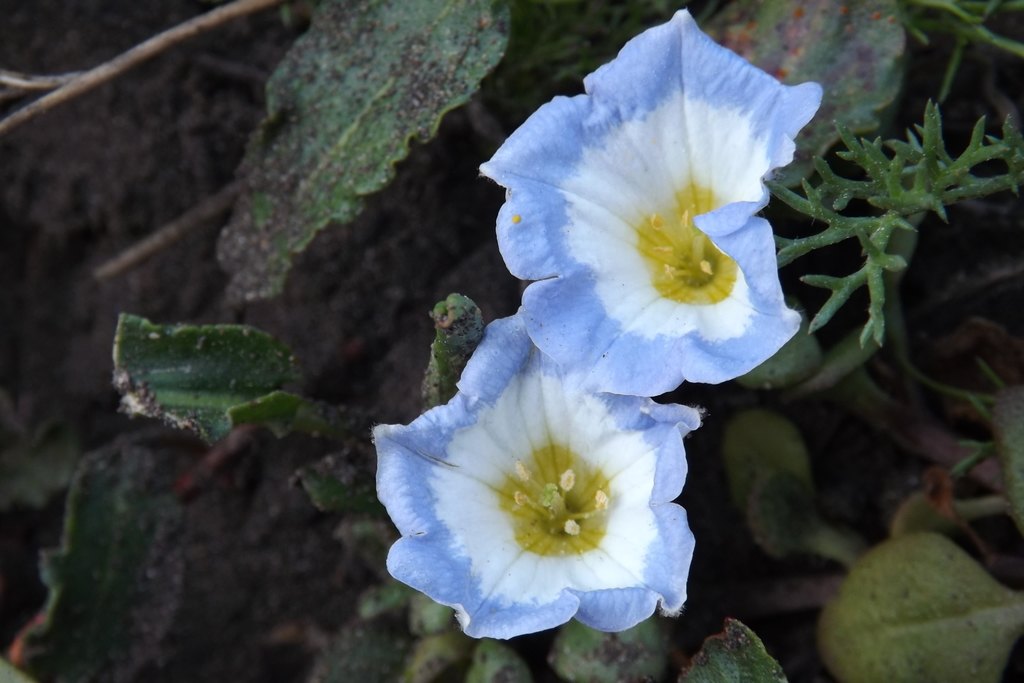
Chilean bellflower is a name that has been borrowed for several plants and fits none of them better than this one. Nolana paradoxa is a spreading annual or short-lived perennial from the coast of central and southern Chile, reaching about twenty-three centimetres, with blue trumpet flowers that mimic a morning glory convincingly enough to fool most visitors.
The mimicry is real and misleading. The flower looks like Convolvulus, but the plant is in the potato family, and the family relationship shows in the foliage, which is fleshy, slightly sticky and arranged without the twining habit of a bindweed. It makes a flat mat rather than a climber.
John Lindley described the species in 1826, and the epithet paradoxa means unexpected or contrary, which suits a plant that has been rearranged repeatedly. The genus was placed in its own family, Nolanaceae, and later moved into the Solanaceae on molecular evidence, where it now sits without argument.
In the garden it is an edger and ground cover for full sun, half-hardy and quick from seed, and the selection ‘Blue Bird’ is the form most often sold. It is also, less famously, a model species in the study of flower colour, where its blue has been analysed in some detail.
Science & Biotechnology
The fruit is the reason botanists have argued about it. Solanaceae normally carries berries or capsules with a superior ovary, but in Nolana the ovary is deeply lobed and the fruit separates at maturity into several one-seeded nutlets, a structure so unusual that the genus was given family rank for a century.
The blue of the flower has been used as a model system for studying colour production, because the pigment chemistry is accessible and the colour is stable. The blue is a delphinidin-based anthocyanin modified by cell conditions, which is the same general mechanism as the blue of a delphinium and quite different from the structural blues of a morning glory.
Its habitat is the Chilean coastal strip, where fog rather than rain supplies much of the year’s moisture, and the plant grows on sand and rock within reach of the sea. Records run from Chile into Peru and Bolivia, and the genus is essentially Andean, with a handful of species reaching the coast. It sits among Nicotiana alata, Salpiglossis sinuata and Schizanthus pinnatus, all Solanaceae.
Uses & Benefits
The use is edging, and it does the job in a specific way: a low mat of grey-green foliage carrying blue flowers over a long season, needing no support and no deadheading to look finished. In a mild, dry climate it will seed itself lightly at the edge of a path and stay where it is useful.
It is not edible and has no medicinal record, and the plant is not listed as toxic, which places it in the ordinary middle ground of ornamentals. The sticky foliage deters most small grazers, and nothing in the literature marks it as a pest or a disease host of note.
As a study plant it has done more than its garden following suggests. The genus supplied part of the argument over family limits that ended with Nolanaceae folded into Solanaceae, and its flower colour has been studied as a case of pigment production by an unusual route. Both stories are in the literature and neither is in the catalogues.
Growing from Seed
Sow in early spring at eighteen to twenty degrees, on the surface and barely covered, because the seed is small and light helps. Germination runs ten days to three weeks, and it is improved by a period of cool stratification, so an autumn sowing in a cold frame is the reliable route in mild climates.
The seedlings are small and slightly brittle, and they should be pricked out early into individual cells rather than left in a mass. Grow them cool and bright; warmth produces soft growth that never recovers, and the plant is at its best when grown hard.
Plant out after the last frost, at twenty-five centimetres, into the poorest, sharpest, sunniest spot available. Water to establish and then leave it; feeding produces leaf at the expense of flower, and a plant in rich soil will sprawl and rot in a wet August.
Our Take
This is a plant for the dry edge and the gravel bed, and it is unforgiving of the wrong conditions in a way that seed catalogues rarely admit. In a cool, dry, sunny summer it ranks among the best blue edging annuals available; in a wet one it is gone by July.
The morning-glory resemblance is the marketing, and the nutlet fruit is the science. Both are worth knowing, but the plant itself is simpler than either: a low Chilean annual that wants the coast and tolerates everything else on sufferance, flowering its best in the years when the summer is dry and the nights are cold enough to suit it.
Related Reading
If Chilean Bellflower appeals to you, these related plants are worth a look: