


Cerastium arvense Seeds | Field Mouse-Ear
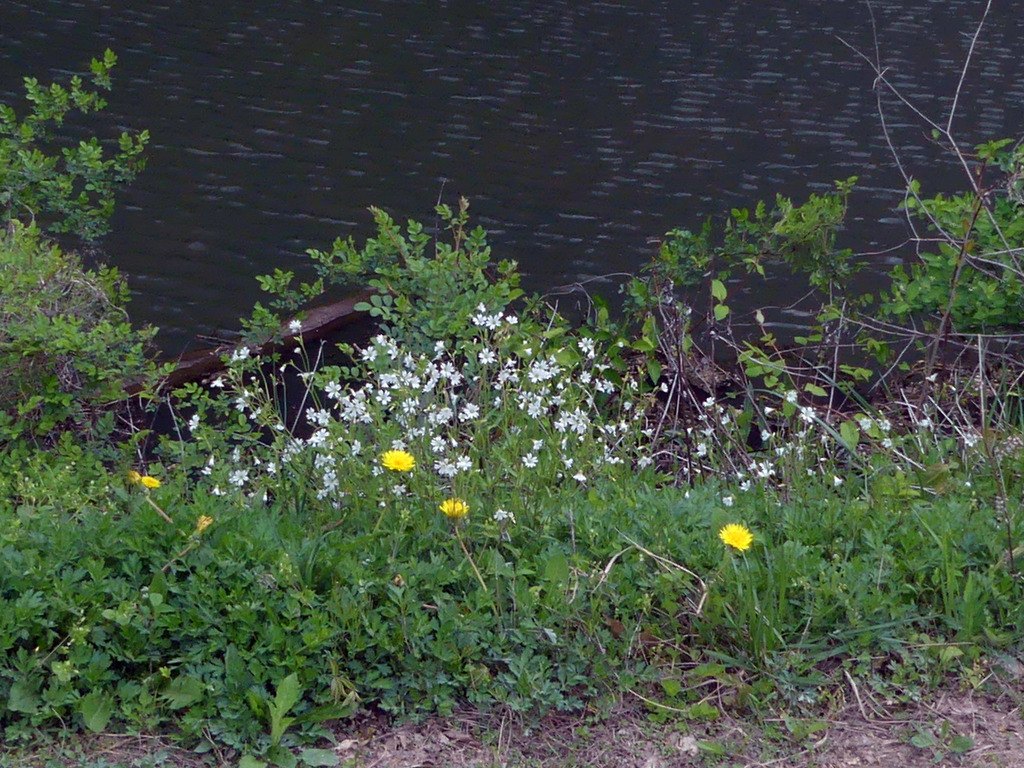
LATIN NAME: Cerastium arvense
COMMON NAME: Field Mouse-Ear
Plant Profile
Field mouse-ear is a perennial of many postures: the same species can make a low mat, a tidy clump, a creeping carpet or an upright flowering stem, and it may start life from a stout taproot or from a tangled system of rhizomes. Height rarely passes forty-five centimetres, and most plants sit far below that.
Every green part is clothed in hair, often glandular, which gives the foliage the soft grey-green look that earned the mouse-ear name. The leaves are linear to oblong, a few centimetres long, and they sit in opposite pairs that crowd toward the stem tips just below the flowers.
The flowers are classic chickweeds: five white petals, each cut into two lobes so deeply that a quick glance counts ten, set above five hairy green sepals. A stem may carry a single bloom or a dense cluster of many, and on a sunny day the whole patch looks dusted rather than in flower.
The fruit is a cylindrical capsule up to a centimetre and a half long, opening at the tip through ten tiny teeth to shake out several brown seeds. The species runs across Europe, North America and parts of South America, and it varies so much that botanists still argue over how many subspecies deserve names and what defines them. It shares the family with Cerastium snow, Cerastium tomentosum and Lychnis × arkwrightii.
Science & Biotechnology
That argument is the scientific story here. Populations on mountains, islands and coastlines have been split, merged and re-split for two centuries, and modern treatments prefer a broad species with local forms. For a seed grower the practical lesson is honesty: plants raised from a mixed wild collection will not all look alike, and that is the species being itself.
The two-lobed petal is a family signature with a function. From a pollinator’s view a white corolla of ten shallow landing strips is more visible in low light than five broad ones, and the notch channels small bees toward the centre. The hairy sepals beneath keep nectar from diluting in rain, a small engineering detail repeated across the pinks.
Below ground the species offers two strategies. A deep taproot anchors plants on dry banks and cliffs; rhizomatous forms run sideways through lean grassland and stitch loose soil together. Both versions favour calcareous or slightly sandy ground, poor in nutrients, where competition is thin enough for a small carpeter to hold its own.
Uses & Benefits
No flower in the rock garden canon divides opinion quite so sharply. Louise Beebe Wilder, the most quoted advocate of alpine gardening in America, recommended against this species in the strongest terms, judging its vigour a threat to choicer neighbours and its bloom too plain to excuse the spread.
Other authorities took the opposite view. C. W. Wood in Britain and Claude A. Barr on the American prairie both argued that a plant selected for compact habit and generous flowering had a real place in gardens, above all as a groundcover in difficult, dry, half-shady corners where nothing choicer survives. Both were right; they were simply describing different plants.
For wildlife the patch earns its keep early. The white flowers open in late spring and feed small solitary bees and hoverflies when little else in a lean border is blooming, and the dense mats give shelter to ground beetles. Seedheads add little ornament but are harmless if left.
Growing from Seed
Seed wants a cold spell to germinate evenly. Sow on the surface in autumn, or refrigerate the packet for a few weeks before a spring sowing, and press the seed in without covering, because light helps. Germination is unhurried and uneven, which is the species’ way of hedging its bets.
Young plants knit fast. Pinch them once to force branching, space them twenty-five centimetres apart if you want a carpet by midsummer, and shear lightly after flowering to keep the foliage tight. Mature clumps can be divided in early autumn, and every rooted piece of rhizome becomes a new plant without complaint.
Site it in full sun or the lightest shade, in soil so lean that lush competitors struggle. It will take dry banks, gravel edges, wall joints and the thin ground at the foot of a south-facing wall. In rich moist soil the same plant becomes an aggressive spreader, so poverty is part of the design.
Our Take
Field mouse-ear is a test of taste rather than of skill. Grown carelessly it is a weed with white flowers; grown in the right lean, stony, sun-baked spot it is a dependable grey-green carpet that flowers honestly every spring and asks nothing back.
Take the advice of both camps at once: refuse the sloppy, over-fertile form and hunt down a compact selection, then plant it where its ambition has poor soil to slow it down. The argument between Wilder and Wood was never really about the species, only about the ground each gardener gave it.
Related Reading
Readers interested in Field Mouse-Ear frequently explore these as well: