


Euphorbia marginata Seeds | Snow-on-the-Mountain
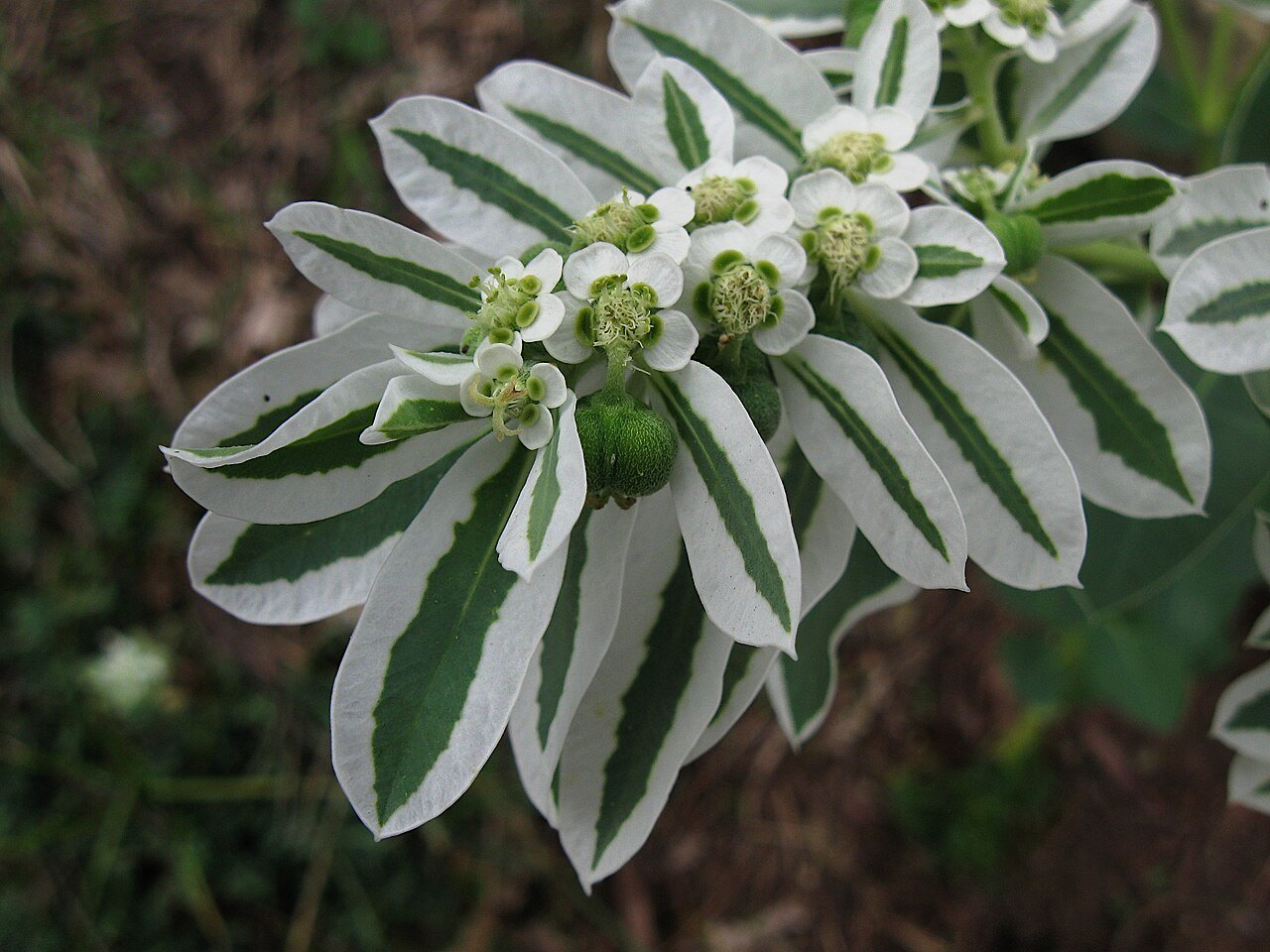
LATIN NAME: Euphorbia marginata
COMMON NAME: Snow-on-the-Mountain
Plant Profile
Euphorbia marginata is an annual of the North American Great Plains, from Minnesota and the Dakotas south to Texas and New Mexico, where it grows on prairie, in rocky ground and along roadsides. It is a small spurge, 60 to 90 cm tall, with upright stems and oval, grey-green leaves.
The upper leaves are the point. As the plant comes into flower in midsummer, the bracts at the top of each stem develop broad white margins, and the whole top of the plant turns white, which is the origin of the name. The effect is not a flower but a change of leaf colour, and it lasts for six to eight weeks.
The true flowers are tiny and greenish, held in cyathia, the cup-like structures that are characteristic of the genus. Each cyathium contains a single female flower and several male flowers, and the whole thing looks like a small flower because of the white glands around the rim.
Science & Biotechnology
Euphorbia is one of the largest genera of flowering plants, with over 2,000 species, ranging from tiny weeds to the cactus-like succulents of southern Africa. The unifying feature is the cyathium, a highly reduced inflorescence that looks like a single flower and functions as one.
The milky sap, or latex, is produced in specialised cells called laticifers and contains a mixture of terpenes, alkaloids and proteins. In E. marginata the main irritants are ingenane and tigliane diterpenes, the same class of compounds found in the notorious E. tirucalli and in castor oil’s cousin, the spurge family’s chemical signature.
The white margins are produced by air spaces in the leaf tissue rather than by a white pigment, the same structural mechanism that makes a white petal white. The bracts reflect light across the spectrum, so they look brighter than a white flower and why they hold their colour in shade better than a pigmented petal would.
In Europe it is grown as a half-hardy annual and sold in mixed seed packets for bedding, where its white tops are used to lighten blocks of red and blue. It is also one of the few annuals that will grow and flower on pure sand, so it appears in prairie plantings and in gravel gardens where little else survives. Near kin on the list are Euphorbia larica, Euphorbia myrsinites and Euphorbia polychroma, all Euphorbiaceae.
Uses & Benefits
It is grown for height and contrast in the late-summer border, where its white tops light up a planting of dark foliage and its upright habit gives structure without weight. It combines well with dahlias, cannas and ricinus, all of which share its taste for heat and its tolerance of poor soil.
It is also a good cut flower, with one caveat: the stems bleed a milky sap that irritates skin and stains fabric, so they must be seared with a flame or dipped in boiling water before they go in the vase. Treated that way, they last a week and hold their white colour.
The plant is toxic, and the sap is the dangerous part. It contains diterpene esters that cause severe skin irritation and, if it gets in the eye, temporary blindness. Wear gloves when cutting it, and keep it away from children and pets.
Growing from Seed
Sow indoors six to eight weeks before the last frost at 21 to 24 °C, covering the seed lightly. Expect germination inside three weeks, and unevenly. The seed is small and the seedlings are delicate at first, so handle them carefully.
Prick out into individual pots as soon as they can be handled, and grow on at 18 °C in bright light. Plant out after the last frost, 45 cm apart, in full sun. The plant tolerates poor, dry soil and needs no feeding; rich soil produces soft growth and fewer white bracts.
The plant self-sows freely, and in a mild climate it will come back every year without being sown. Seedlings appear late, often in June, when the soil has warmed, so do not hoe the bed too early. Wear gloves when handling the plants, and wash your hands afterwards.
Our Take
Snow-on-the-mountain is a plant for people who like white in the garden and are prepared to wear gloves. The effect in August, when the tops turn white and the border is otherwise full of hot colours, is worth the trouble, and the plant asks for nothing except sun.
Grow it at the back of a border, where its height and its white tops can be seen, and cut it for the house if you sear the stems first. Keep it away from the front path, where a child might brush against it.
Related Reading
Readers interested in Snow-on-the-Mountain frequently explore these as well: