


Euphorbia polychroma Seeds | Cushion Spurge
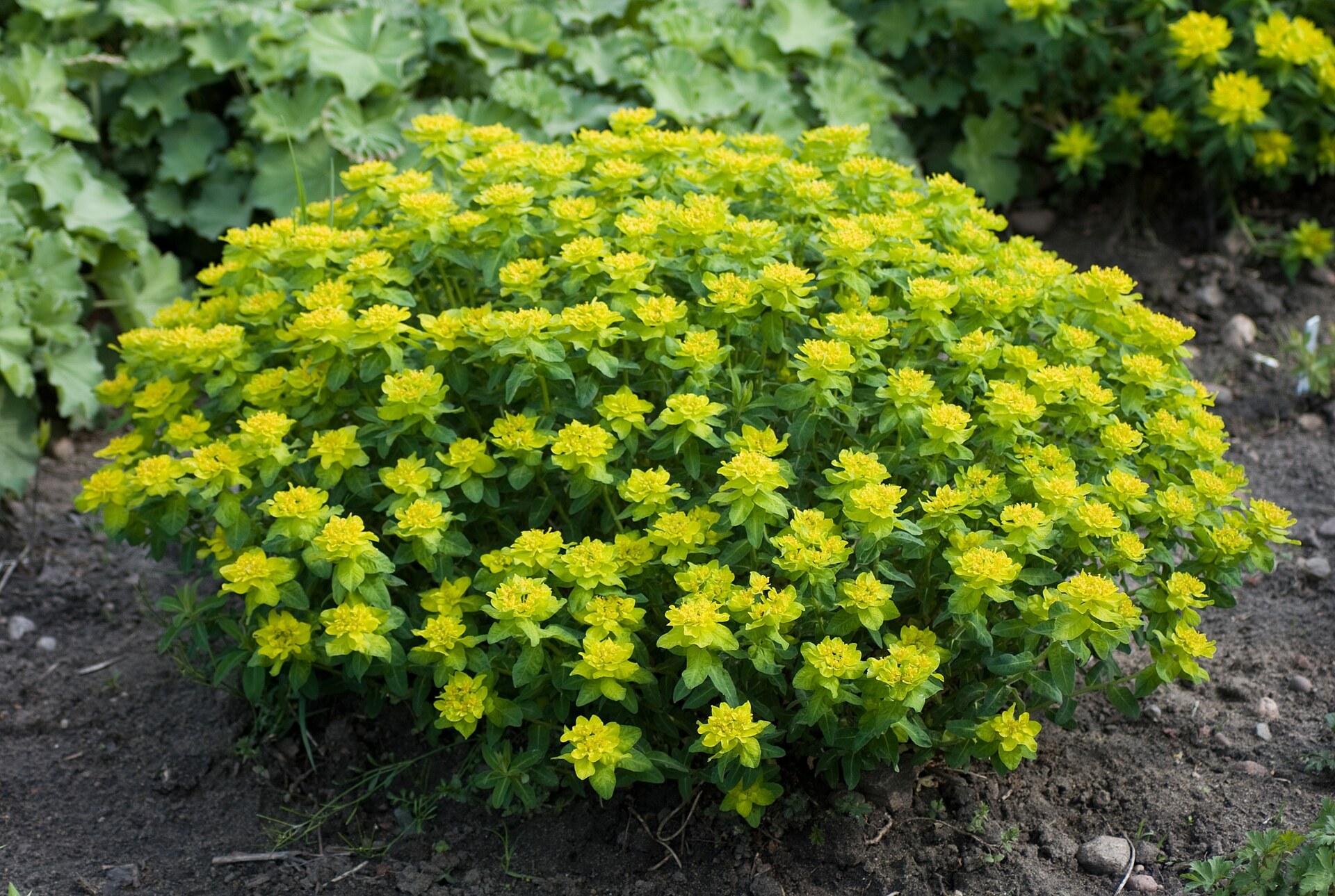
LATIN NAME: Euphorbia polychroma
COMMON NAME: Cushion Spurge
Plant Profile
Euphorbia polychroma is the name gardeners use for the cushion spurge, and Euphorbia epithymoides is the name botanists use, because Linnaeus described it first and Kerner’s later name has no priority. The plant is the same: a rounded mound that turns acid yellow in April and orange-red in October. Both names are in the trade.
It grows forty to fifty centimetres high and rather wider, from a woody base and a deep taproot. The stems are clothed in lance-shaped leaves that are fresh green in spring and take on colour in autumn. The flowers are not flowers: they are cyathia, small cup-like structures surrounded by yellow-green bracts that do the work of petals.
The wild plant grows in dry woods, scrub and rocky places from central Europe to Ukraine and the Balkans, on limestone and on thin soil over rock. It is a plant of sunshine and sharp drainage, and it disappears from wet ground. In the garden it wants a position at the front of a border or on a bank, in full sun.
The epithet polychroma means many-coloured, and it refers to the autumn foliage rather than to the spring display. The spring colour is a single acid yellow-green; the autumn colour is a range from orange to dull red. Kerner named it in 1867, more than a century after Linnaeus had described the same plant as E. epithymoides.
Science & Biotechnology
The cyathium is the defining structure of the genus: a cup of fused bracts holding a single female flower on a stalk and five groups of male flowers, each reduced to one stamen. The rim of the cup carries nectar glands, and in this species they are crescent-shaped and yellow. One cyathium looks like a flower and is a whole inflorescence.
All euphorbias carry latex under pressure in specialised cells, and the milky sap of this species is a strong skin irritant. It contains diterpene esters, the same class of compound as the active principle of croton oil, and they promote tumours when applied repeatedly to skin. The sap is less a poison to swallow than a hazard to eyes.
The cushion shape comes from repeated three-way branching after flowering, which produces a dome of stems of equal length. That architecture is why the plant looks like a mound rather than a spike, and why it holds its shape through the season. Cutting the stems after flowering destroys the shape but produces a second, smaller flush.
Uses & Benefits
It is a spring border plant, and its value is the colour at a moment when little else is out. The acid yellow-green sits well with tulips, with dark foliage and with the blue of forget-me-nots. It is also good on a bank or in gravel, where the drainage suits it and the dome can be seen from below.
The plant self-sows modestly in gravel and in thin grass, and seedlings can be moved while small. It is drought-tolerant once established, rabbit-resistant and deer-resistant, and it needs no feeding. The taproot makes it difficult to move, so choose the position carefully. A plant in the wrong place is there for good.
It is not edible and the sap is hazardous. Wear gloves when cutting and keep the sap away from eyes; a squirt from a cut stem is painful and can cause a chemical burn. The plant is not suitable for a garden where small children play unsupervised, and it should not be composted in quantity. Those are real cautions. The same family turns up again in Euphorbia pekinensis, Euphorbia myrsinites and Euphorbia marginata.
Growing from Seed
Sow in autumn or early winter and leave the pots outside, because the seed needs cold to break dormancy. Germination comes in spring, in two to three weeks at fifteen degrees, and it is uneven. Alternatively sow in spring after four weeks in the refrigerator. Fresh seed germinates better than stored, and self-sown seedlings are easiest.
Transplant seedlings while they are small, because the taproot makes older plants resent movement. Set them in full sun and thin soil, and water only until they are established. Space them forty centimetres apart. They will flower in their second year, and the first spring display is smaller than the ones that follow.
Cut the stems back to the base after flowering if you want fresh growth and a tidier plant, or leave them for the autumn colour. Division is rarely worth it because of the taproot; take basal cuttings in spring instead, and root them in grit in a cold frame. The plant lives for many years and needs no attention beyond that.
Our Take
Cushion spurge is one of the best spring plants in the catalogue and one of the most dangerous to handle casually. Those two facts do not cancel out. The colour is brief, three weeks at most, and the autumn foliage is better than most people expect. What it asks for is sun, drainage and respect for the sap.
Plant it at the front of a dry border, leave the taproot alone, and wear gloves when you cut it. The name on the packet may be polychroma or epithymoides and the plant will be the same. It is a plant for the edge of things, in more than one sense.
Related Reading
If Cushion Spurge appeals to you, these related plants are worth a look: