


Aster novi-belgii Seeds | New York Aster
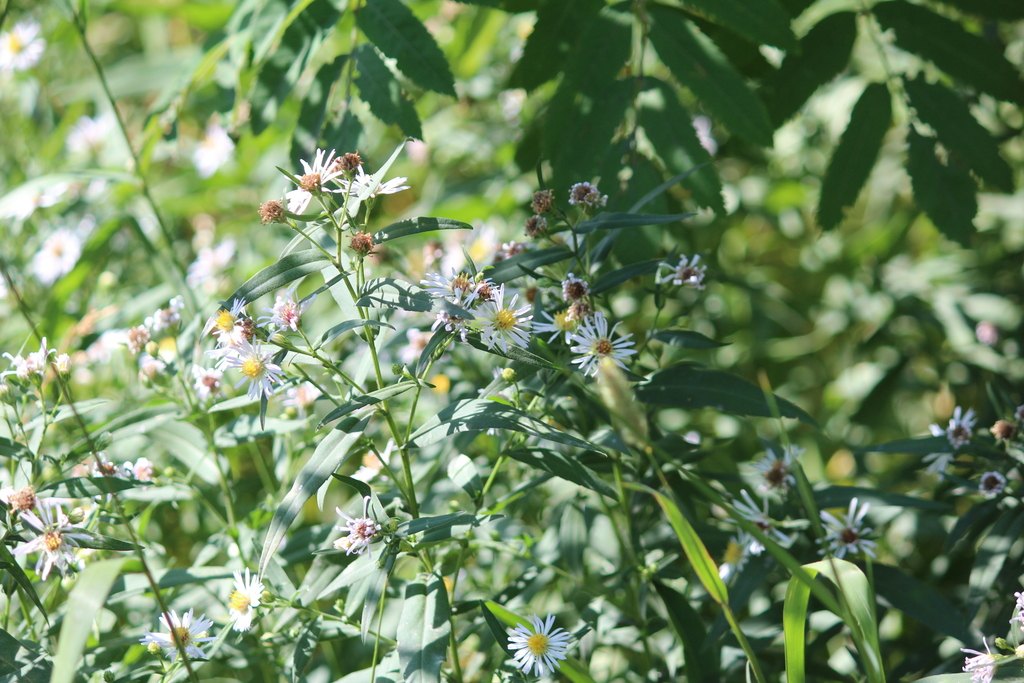
LATIN NAME: Aster novi-belgii
COMMON NAME: New York Aster
Plant Profile
New York aster, now formally Symphyotrichum novi-belgii and sold for centuries as Aster novi-belgii, is the type species of its reclassified genus and the best-known of the Michaelmas daisies, blooming around September 29, St Michael’s Day. The flowers come in shades of blue, pink and white over a yellow centre.
The Latin epithet novi-belgii, literally New Belgium, does not refer to modern Belgium but to the seventeenth-century Dutch colony of New Netherland, on the land now occupied by New York state; Belgica Foederata was the Latin term for the United Netherlands at the time. The name is a fossil of Atlantic colonial geography.
It grows in abandoned fields and wet meadows in eastern Canada and the northeastern United States, with habitat notes of damp thickets, meadows and shores usually within a hundred miles of the sea. Hardiness is rated USDA zone 4 to 8, and it has naturalised in Britain and across much of European gardening ground.
This is the largest group of Michaelmas daisies, with over a thousand named cultivars, valued for their late-season colour when the border is otherwise finished. The cultivars Coombe Fishacre and Fellowship hold the Royal Horticultural Society’s Award of Garden Merit, two flags among a very large fleet.
Science & Biotechnology
The reclassification is the molecular story of the New World asters: DNA work showed the old genus Aster was a bundle of unrelated lineages, and the American species moved into Symphyotrichum while the European type stayed behind. Seed catalogues still say Aster, botanists say Symphyotrichum, and the plant answers to either.
Its known weakness is fungal: the species and its cultivars are susceptible to fungal infections, especially where conditions are not ideal, and mildew on the lower leaves by August is the classic symptom of crowding, drought stress and still air. Space and airflow are the practical controls, more reliable than any spray.
The wet-meadow origin explains its garden preferences: consistent moisture and tolerance of heavier soils than most asters accept. Naturalisation records across Europe show how readily it escapes damp gardens, and in some regions it is tracked as a casual invader of riverbanks, which is a fair description of a wetland plant given water and seed. Three more Asteraceae sit in the same catalogue: Aster alpinus, Doronicum orientale and Achillea ptarmica.
Uses & Benefits
Its garden role is the late-season border, where it supplies blue, pink and white exactly when most perennials have stopped: the last major nectar standing of the year, worked heavily by bees and butterflies preparing for winter. A block of Michaelmas daisies is audible on a warm September afternoon.
With a thousand cultivars the choice is by height and colour rather than species character: dwarfs for the front, mid-border staples, and tall old forms that need staking. Species seed, by contrast, gives a variable, natural-looking stand that suits wilder schemes and wet meadow plantings better than any named clone.
It fits the wet end of the garden where most asters fail, tolerating heavier ground and occasional flooding, and it combines classically with grasses and with the Rudbeckia and Solidago of its home meadows. The fungal caution means one thing in practice: plant it in the open, not against a wall.
Growing from Seed
Sow in spring on the surface of moist compost, barely covered, at ordinary warmth; germination is reliable and the seedlings grow steadily. Note that seed of cultivars does not come true, so species seed for naturalistic plantings and bought plants for named colours is the honest division of labour.
Set out 30 to 45 cm apart into full sun and soil that holds some moisture, and resist crowding, since airflow is the mildew defence. Water in the first season and during dry Augusts, which is precisely the month the flower buds are set and the month most gardens forget to water.
Seed-raised plants flower from their second year and clump up quickly. Lift and divide every three years or so, discarding the exhausted centre, and the stand renews indefinitely. Taller forms can be cut back once, hard, before midsummer to keep them self-supporting without stakes.
Our Take
New York aster is the season’s last word, named for a colony that became a city, and still doing its one job: a wall of blue on the day the border otherwise folds. Its thousand cultivars exist because the species has never needed improving, only sorting.
Sow the species, give it room and moist ground, and expect mildew only where you cheated on spacing. The September display forgives a great deal of spring negligence, and the bees arrive as if they had the date circled. Divide the clump every third year and the stand will outlast the garden plan that planted it.
Related Reading
If New York Aster appeals to you, these related plants are worth a look: