


Taraxacum laevigatum Seeds | Red-seeded Dandelion
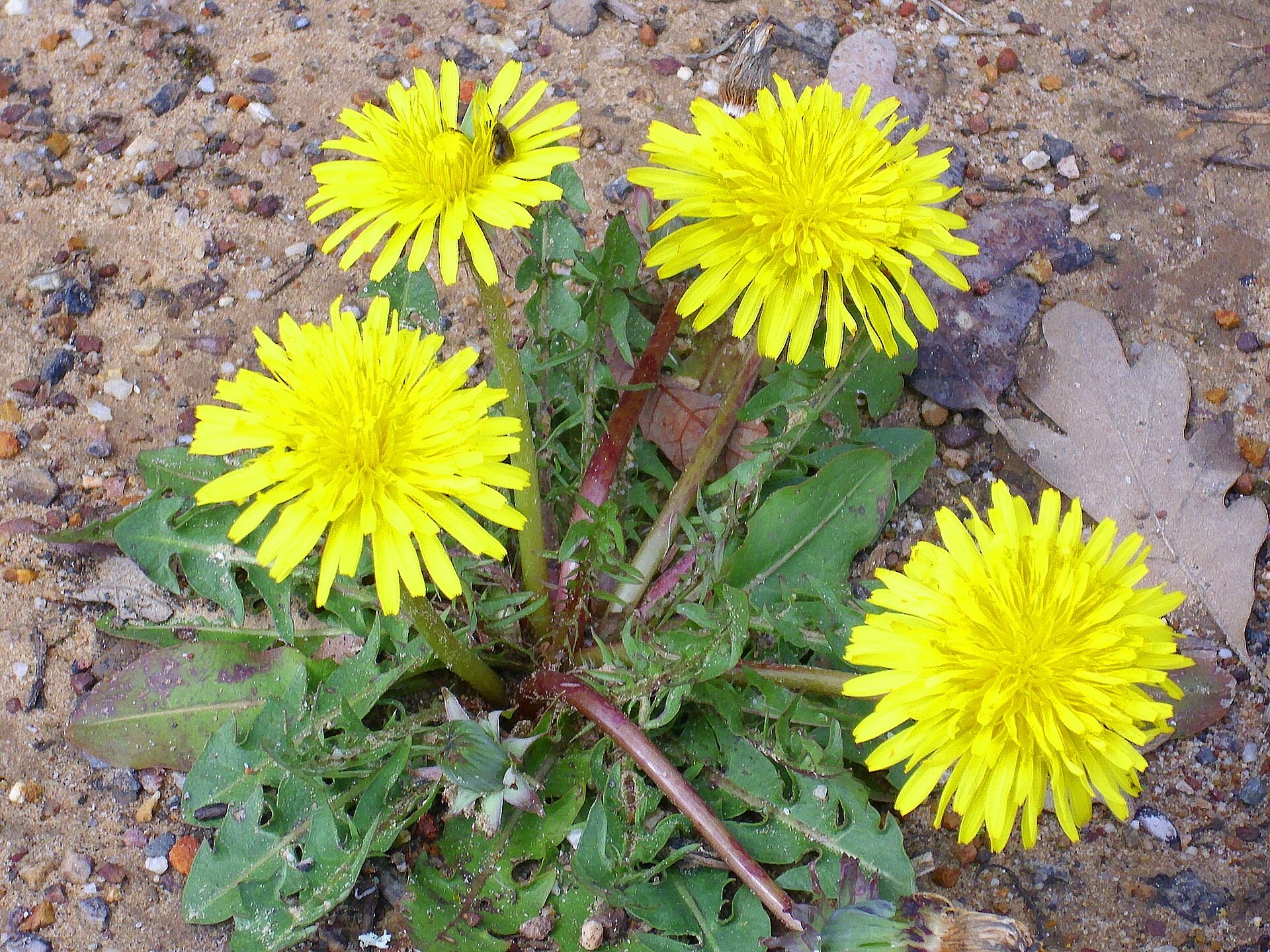
LATIN NAME: Taraxacum laevigatum
COMMON NAME: Red-seeded Dandelion
Plant Profile
Most people have seen this dandelion and never noticed it was not the common one. Taraxacum laevigatum, the red-seeded or rock dandelion, is a perennial rosette plant of Europe and Siberia, matching its weedy cousin in silhouette but differing in every detail that matters to a botanist.
The achenes are the giveaway and the name: brick-red to reddish-brown where the common dandelion’s are grey-olive, and produced on distinctly conical receptacles. The leaves are narrower, deeply and repeatedly cut almost to the midrib, the outer bracts of the bud bend downward early, and the flower is a slightly deeper, more orange yellow. Once seen, the difference is permanent.
Named by Willdenow and combined by de Candolle around 1810, the species has a tangled identity: many European floras prefer the name Taraxacum erythrospermum for the same plant, and the two names track each other through every checklist. Its range runs across central and southern Europe through Russia and Siberia, on dry pastures, sandy heaths, rocks and walls.
It is a dandelion of lean places, exactly as its alternative English name suggests: dry, often calcareous ground where the common dandelion of rich lawns cannot follow. From Europe it has spread through most of temperate North America, reaching Alaska and the Yukon, and it appears across temperate Asia as a weed of the same dry niches. Three more Asteraceae sit in the same catalogue: Taraxacum mongolicum, Doronicum orientale and Aster alpinus.
Science & Biotechnology
The dandelion genus runs on a reproductive oddity: most species set seed without pollination, an asexual process called apomixis, so every plant is a clone of its mother and taxonomists have named thousands of lookalike microspecies. The red-seeded dandelion sits inside this system, with field populations built on a handful of cloned lineages dressed up as a species.
Field records peak in April and May, slightly earlier and leaner than its weedy relative, matching its dry-ground strategy. Its seed biology is the family standard: the plumed achene needs no after-ripening, germinates within days at almost any temperature, and builds a deep taproot through its first summer that carries the rosette through drought and winter alike.
Chemically it shares the genus latex, bitter sesquiterpene lactones that deter grazers, and root inulin, the fructose polymer that made dandelion roots a coffee substitute in hard times. As food it stands where all dandelions stand: entirely edible when young, entirely bitter when old, and for this species the culinary tradition is thinner simply because the common dandelion outnumbers it wherever kitchens are.
Uses & Benefits
In the garden its role is narrow but real: a dandelion for rock gardens, sand beds and dry banks, where its smaller build, cut leaves and earlier bloom make it a deliberate subject rather than a weed. Rock gardeners grow it as the honest wild plant it is, and it flowers reliably in the poorest grit.
For pollinators it performs the genus’s great service, an early and generous nectar source at a season when little else blooms, and its asexual seed set means flowers guarantee seed regardless of weather or insect scarcity. In dry-lawn ecology it fills the niche the common dandelion cannot, on thin soil over chalk and sand.
The honest limitation is that most gardeners already have a dandelion problem and do not need a second species. It is worth introducing only where the aim is a dry wild garden or a botanical collection. Elsewhere its seed arrives on its own, riding the wind the way the genus has always travelled.
Growing from Seed
Sow on the surface at any mild temperature; germination is days, not weeks, with no pretreatment and no light requirement worth fussing over. Seedlings grow fast and can flower within two months. Thinning is the only labour, and a deep pot or direct sowing spares the taproot its only real objection.
Plant out into full sun and dry, gritty or calcareous soil, twenty-five centimetres apart. No watering after establishment, no feeding ever. The plant manages drought through its root and shrugs off pests; its main enemy in gardens is favour, which turns it fat, soft and slug-prone.
For seed, catch the heads the day they turn to clock and bag them, since a gust empties them in seconds. Rub the plumes free or sow chaff and all; the plume detaches once wet. Seed keeps a few years cool and dry, though there is little reason to store what germinates on contact with soil.
Our Take
Our take: the red-seeded dandelion is a plant for people who read keys, and unapologetically so. In a dry rock garden it is a neat, early, hand-sized dandelion with brick-red seed and a clear identity, and it costs nothing to try from a packet.
The honest verdict: grow it as a subject, not a crop. Its cousin owns the kitchen and the lawn; this one owns scree and botany. If a dandelion that flowers on gravel in April and sets seed without a bee sounds like a curiosity worth having, this is the species that earns the corner of the garden.
Related Reading
Continue exploring with these related plants: