


Yucca baccata Seeds | Banana Yucca
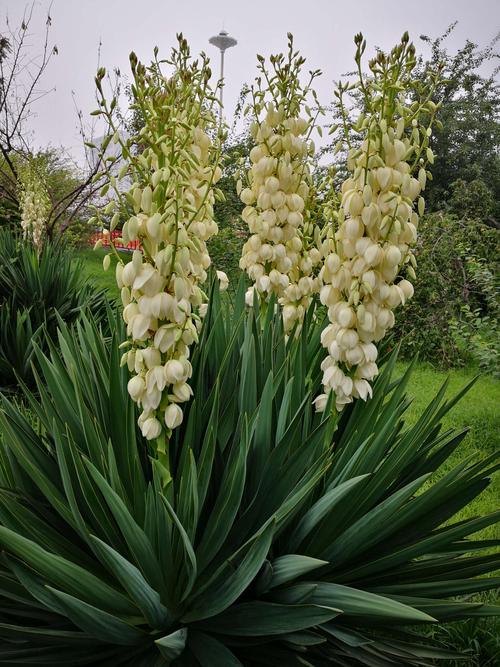
LATIN NAME: Yucca baccata
COMMON NAME: Banana Yucca, Spanish Bayonet, Datil
Plant Profile
Banana yucca is a trunkless or short-trunked yucca of the deserts of the southwestern United States and northern Mexico, forming a rosette of stiff, blue-green leaves forty to eighty centimetres long, each with a sharp terminal spine and curling white fibres along the margin. In spring it sends up a stout stem of creamy white, bell-shaped flowers that open in a mass and are pollinated by a single species of small moth. The fruit is the reason for the name: a thick, fleshy, banana-shaped capsule, ten to fifteen centimetres long, that turns yellow and soft in late summer and tastes of sweet potato and banana. It grows on rocky slopes and mesas from Nevada to Texas, where it tolerates heat, drought and cold, and it is one of the most cold-hardy yuccas.
Science & Biotechnology
Yucca baccata is one of the yuccas with fleshy, indehiscent fruit, a trait that separates it from the dry-fruited species, and the fruit is dispersed by mammals rather than by wind. The plant is pollinated by a small moth of the genus Tegeticula, which lays its eggs in the ovary and whose larvae eat some of the developing seed, a relationship that is one of the classic examples of obligate mutualism. The moth is species-specific, which means that a yucca planted outside the range of its pollinator will flower and set no fruit. The species is polyploid in part of its range, with diploid and tetraploid populations that differ in size and leaf shape. Its roots contain saponins that lather in water, and the leaves yield strong fibre. It is extremely drought-tolerant and survives on less than two hundred millimetres of rain.
Uses & Benefits
The fruit is edible, raw or roasted, and it was an important food for Native American groups in the Southwest, who also used the flowers, seeds and young stalks. The roots are used as soap, and the leaves for fibre, baskets, sandals and rope. In the garden it is a bold architectural plant for a dry border or a gravel garden, with the bonus of edible fruit where the pollinator is present. It needs full sun, sharp drainage and room for the leaf spread, and it tolerates cold to about minus twenty degrees. It is not a plant for a small garden or for rich, wet soil, and the leaf tips are genuinely sharp, so keep it away from paths. The flowers are edible and are fried in the Southwest.
Growing from Seed
Sow the seed in spring in a gritty mix, one centimetre deep, and keep at twenty-five degrees; germination takes three to six weeks and is often uneven. The seedling is slow and should be grown in a deep pot for two years, since it makes a substantial root system. Set it in gravel or sand in full sun, and give water for one summer only. Do not enrich the soil, which makes the leaves soft and the plant short-lived. Remove the dead flower stalk after flowering. It can be propagated from offsets, which is faster than seed, and the offsets should be allowed to callus before potting. Protect from winter wet, which rots the crown.
Our Take
A cold-hardy yucca with edible banana-shaped fruit, if its moth lives nearby. Sharp leaves, sharp drainage and full sun all day.
Related Reading
More species in the same orbit as Banana Yucca: