


Pyrenacantha volubilis Seeds | Twining Firevine
LATIN NAME: Pyrenacantha volubilis
COMMON NAME: Twining Firevine
Plant Profile
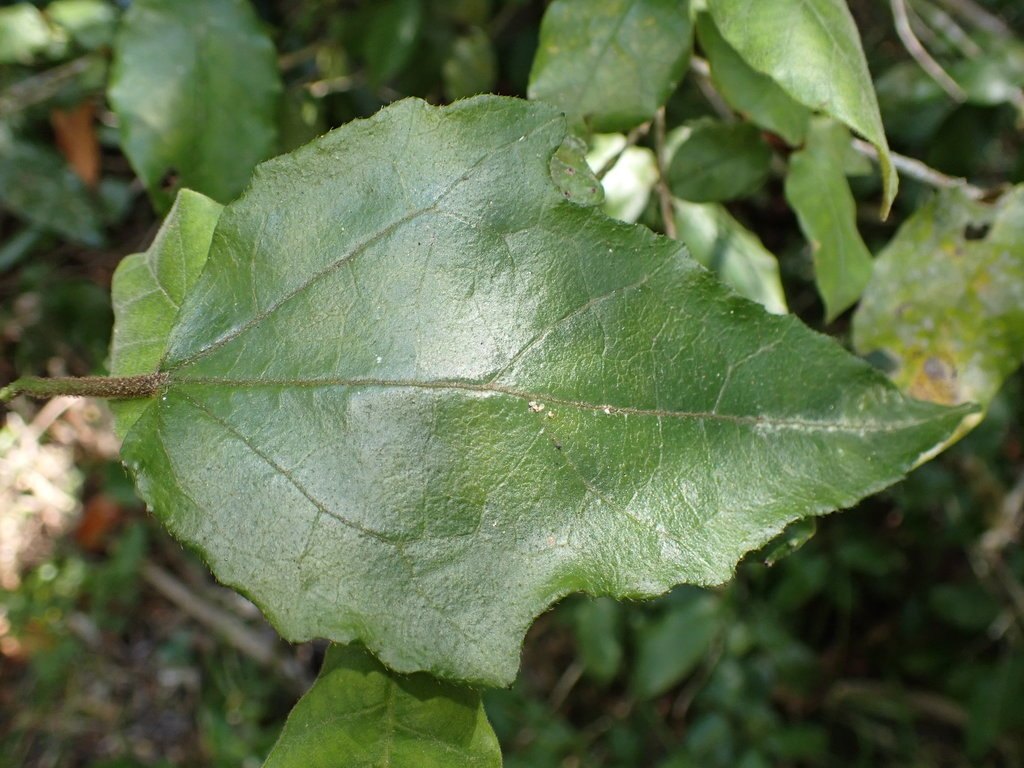
Pyrenacantha volubilis is a twining climber of the Icacinaceae, described by Robert Wight in 1830 and chosen as the type of the genus he named from the Greek for stone thorn. It has a tuberous rootstock, hairy stems, lobed leaves and small greenish flowers, and the name refers to the spiny stone inside the fruit.
The genus is best known for its tubers. Several African species produce large underground tubers eaten in times of scarcity, and Pyrenacantha kaurabassana is a famine food of some importance in the dry savannas. The genus holds about 20 species, mostly African, with a handful reaching tropical Asia; this one has a small tuber that is not used.
Its range is disjunct and odd: Hainan, southern India, Sri Lanka, Thailand, Laos, Cambodia and Vietnam, with nothing recorded in between. International databases carry only about 70 records in total, most of them from India and Thailand. That thin trail is typical of a group fragmented by climate and geology, and it is why the genus interests biogeographers.
The family has been reduced and rebuilt, and Pyrenacantha sits in a small Icacinaceae alongside Iodes and Natsiatum. The old family was a catch-all for tropical woody plants with a single seed and a disc; the new one is a much tighter group, defined by DNA as much as by morphology. The Icacinaceae thread continues with Pyrenacantha klaineana, Iodes cirrhosa and Natsiatum herpeticum.
Science & Biotechnology
The plant is dioecious, with male and female flowers on separate plants, which is unusual in a family where most genera are bisexual. The flowers are small and greenish, and the males produce pollen that is carried by small insects; the females set a single-seeded fruit if they are visited.
The fruit is a drupe about 1.5 cm long and 1 cm wide, flattened, light red or orange, with a pointed tip and a little hair. Inside, the endocarp carries spines about 1 mm long that penetrate the endosperm, and that is the stone thorn of the name. A single pendulous seed, about 8 mm, sits in ruminate endosperm, and the fruit ripens from September into January.
The tuber is the plant’s storage organ, and it is what allows a climber to survive a dry season and to resprout after the stems are cut or burnt. In the African species the tuber can be the size of a football; in this one it is smaller, and the plant relies more on seed.
Uses & Benefits
In India and Southeast Asia the tuber and the leaves are used in local medicine, and the stems are used for cordage. The plant is not a major item in any pharmacopoeia, and the documentation is thin. It ranks among the many forest climbers with a small place in local practice.
The African relatives are more important as food. The tubers are dug, peeled and cooked, and in drought years they are a buffer against famine. The Asian species has not been used that way, and the difference is a matter of size and of local tradition rather than of chemistry.
In the garden it is a curiosity for a warm climate, grown for the foliage and the odd fruit. It is not in the trade, and it is likely to remain a plant of botanic gardens and of the forest itself, which is a reasonable place for it.
Growing from Seed
Seed is the usual route, sown fresh at warm temperatures in a free-draining mix, with germination over several weeks. Cuttings are unreliable and the tuber is slow to divide. On Hainan the plant flowers from May to August and the fruit hangs on into the next year, which gives a long window for collecting.
Plant in light shade in a well-drained soil, with a support to climb and space for the tuber to develop. It is drought-tolerant once established and it resents waterlogging, which rots the tuber faster than any pest or frost. In a pot the tuber should sit high in the mix, with the crown just above the surface of the compost.
The stems die back in the dry season and the plant resprouts from the tuber when the rains come, which is a habit that takes some getting used to in a garden. Mark the spot, keep the soil dry while it is dormant, and do not dig.
Our Take
This is a plant with a disjunct range, a tuber, a stone fruit and a family history, and it is worth knowing for all four. It is not beautiful, and it is not useful in any large sense, and it is exactly the kind of plant that a flora is for.
Grow it if you can find it, in a warm climate with a dry season, and let it die back without worry. The tuber is doing the work, and the next wet season will bring the stems back, as it has for a very long time.
Related Reading
More species in the same orbit as Twining Firevine: