


Maerua crassifolia Seeds | Desert Maerua
LATIN NAME: Maerua crassifolia
COMMON NAME: Desert Maerua
Plant Profile
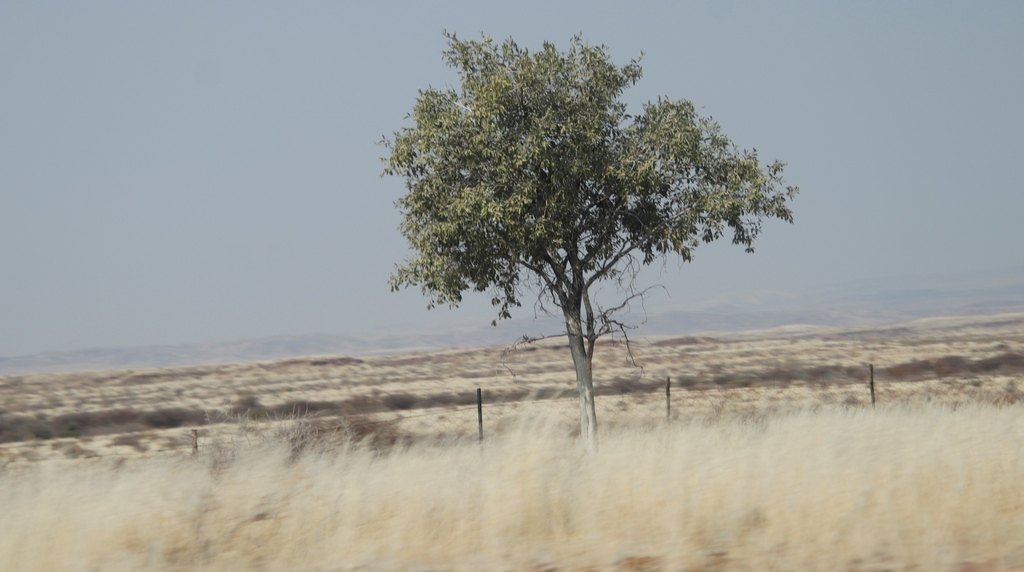
Maerua crassifolia is a small to medium tree of the Capparaceae from the Sahel and the Arabian drylands, four to eight metres tall, with thick pale bark, sparse gnarled branches and thick, leathery, grey-green leaves. It is drought-deciduous in the strict sense: it sheds its leaves entirely in the worst months and flushes again before the rains, so the crown is bare for part of the year and green at the very time everything else is dry.
The flowers are greenish and inconspicuous, with a mass of stamens and no petals worth speaking of, and they are pollinated by insects that are prepared to look. The fruit is a berry that ripens reddish and is eaten by people and birds alike, and the seed inside is dispersed by whatever eats it.
The genus name comes from the Arabic meru, the name used for the plant in Yemen. Peter Forsskål, the Swedish pupil of Linnaeus who travelled in Yemen in the 1760s, took the word for the genus, and he died there in 1763 before he could finish the account of what he had found.
Science & Biotechnology
The Capparaceae is the family of the caper, and it is a family of dry-country plants with a chemistry to match: glucosinolates, the mustard-oil compounds, and a set of alkaloids and flavonoids that have made several species medicinal. Maerua carries the same defensive kit, which is one reason livestock browse it lightly when there is anything else.
The tree’s real strategy is water, not chemistry. A deep root system and a leaf that is thick, waxy and small in area per unit of mass let it keep photosynthetic tissue alive on a rainfall of two hundred millimetres. The pale bark reflects light and the sparse crown reduces the leaf temperature that the tree has to pay for in transpiration.
It ranks among the few trees that stays green at the start of the dry season across its range, and that timing is what makes it important. When the annual grasses have set seed and died, the maerua is still in leaf, and it is the last browse available to camels and goats before the rains come back. In a good year it flushes a second time after the first storm, and that flush is the one the herders count on. Nearby in the classification: Aubrieta deltoidea, Malcolmia maritima and Lobularia maritima.
Uses & Benefits
It is a fodder tree of the first importance in the Sahel, one of the few species that animals can reach and use at the end of the dry season. The leaves are cut and carried to stock, and the pods and fruit are collected and sold in markets as a famine food.
In central Africa the leaves are cooked into soups and mixed with goat milk, and the Kel Ewey Tuareg of the Aïr Mountains in Niger were still using it as part of the daily diet in the 1980s. It is not a crop and never will be, but it is a reliable part of the larder in a place where reliability is everything.
The bark, root and leaves have medicinal uses across the range, for fevers, wounds and digestive complaints, and the wood is carved and burned as fuel. In the great green wall plantings across the Sahel it ranks among the natives worth including, because it survives the first decade without help.
Growing from Seed
Sow fresh seed, scarified or soaked, in a deep pot in a mix that drains like sand. It resents disturbance and it resents wet compost, and the commonest cause of failure in cultivation is a rich soil that holds water. Use grit, keep it on the dry side, and give it full sun from the first week.
The seedling is slow and it looks like a stick for a year. Do not feed it, do not shade it, and do not move it. Once the taproot has reached the bottom of the pot it will begin to grow, and the first branching is the sign that it has settled.
Plant out into dry ground in the warm season, with no irrigation after the first month. In a climate with wet winters it needs a raised bed, a gravel mulch and a rain shadow, or it will rot at the collar in its second year.
Our Take
Maerua is not a garden plant in any conventional sense. It is a working tree of the drylands, and its value is measured in what it keeps alive in March rather than in what it looks like in June. Grown by a collector in a dry climate it is a curiosity. Grown in the Sahel it is infrastructure.
Related Reading
More species in the same orbit as Desert Maerua: