


Natsiatum herpeticum Seeds | Creeping Natsiatum
LATIN NAME: Natsiatum herpeticum
COMMON NAME: Creeping Natsiatum
Plant Profile
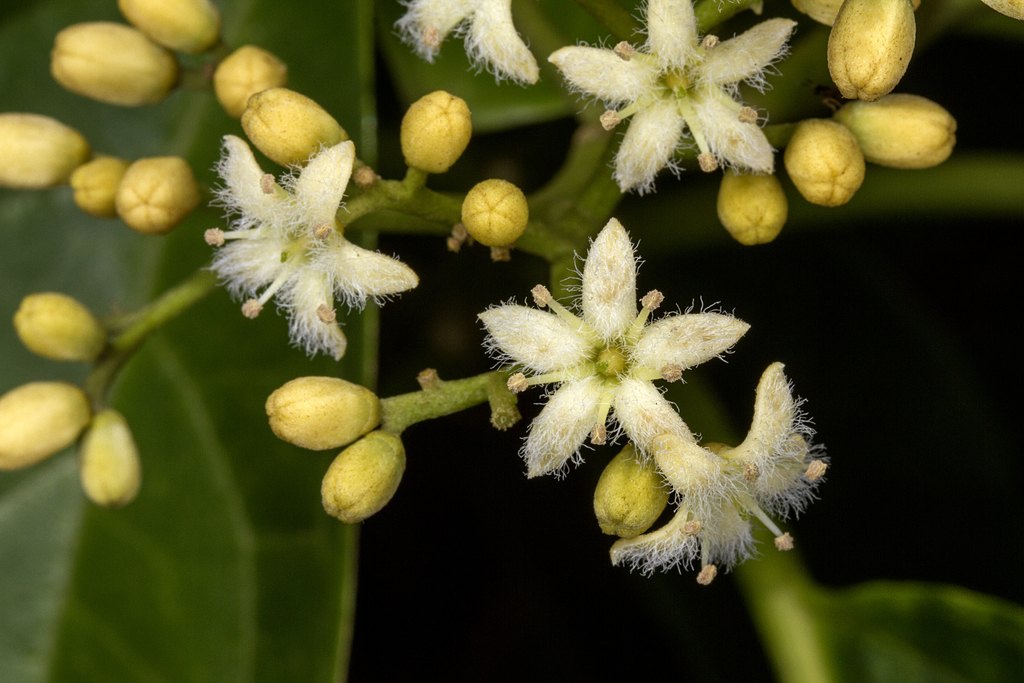
Natsiatum herpeticum is a slender climber of the old Icacinaceae, with soft, hairy stems, heart-shaped leaves and small greenish flowers that are easy to overlook. The epithet means creeping, from the Greek word for a serpent, and it describes a plant that spreads over the ground and through low vegetation rather than climbing high.
It was described by Hamilton, the Scottish botanist who worked in Nepal in the early nineteenth century and whose name is attached to a long list of Himalayan plants. The genus is small, with a handful of species in South and Southeast Asia, and this is the one with the widest range.
Its range runs from Nepal and northeastern India through Myanmar and Thailand into southern China, where it is recorded from Yunnan and Guangxi. It grows in forest shade, along streams and in thickets, and it is one of those plants that a botanist finds by accident while looking for something else.
The family has been rebuilt, and the plant’s position has moved with it. The old Icacinaceae held hundreds of genera with a single seed and a fleshy disc; DNA work has scattered them across several families, and Natsiatum has stayed in a much smaller Icacinaceae alongside Iodes and Pyrenacantha.
Science & Biotechnology
The flowers are small and greenish, with five petals, five stamens and a lobed disc, and they are pollinated by small flies and bees that are after the nectar. The plant does not invest in display, and the fruit is where the energy goes: a small drupe, black at maturity, with a single stone.
The family’s chemistry is a subject in its own right. Several genera accumulate camptothecin and related alkaloids, and the discovery that the pathway is widespread has made the Icacinaceae a model for studying convergent biosynthesis. Natsiatum has not been reported as a source, and it should not be assumed to be one.
The climbing habit is built on twining stems rather than tendrils, and the stems are soft and quick-growing, which is what makes the plant a colonist of gaps and edges. It flowers in the wet season and fruits through the dry one, and the seed is dispersed by birds that take the drupe.
Uses & Benefits
In Himalayan and Southeast Asian practice the plant is used in decoctions for skin complaints and fevers, usually as a whole-plant preparation. The documentation is thin and local, and the plant is not a major item in any pharmacopoeia. It is a folk medicine of the forest margin rather than a trade commodity.
The stems are used for small cordage and for tying bundles, and the plant is sometimes gathered as a green manure because it grows fast and is easy to pull. Its main ecological role is as a quick cover of disturbed ground in humid forest, and it ranks among the species that holds a gap together.
In the garden it is a curiosity for a warm, humid climate, grown for the foliage and the habit rather than the flowers. It is not in the trade and is unlikely to be, and it belongs to the category of plants that are interesting to botanists and invisible to everyone else. Three other Icacinaceae are catalogued alongside it: Pyrenacantha volubilis, Miquelia dentata and Miquelia kleinii.
Growing from Seed
Seed is the usual route, sown fresh at warm temperatures in a humus-rich mix, with germination over several weeks. Cuttings of soft wood root readily in a humid bed, and they are the quicker way to a plant if you have access to material.
Plant in shade or light shade in a soil that stays moist, with a support or a low bank to scramble over. It is not drought-tolerant, and it will scorch in full sun; the forest floor is its model, and the garden should imitate it rather than improve on it.
The plant is tender and will be cut by frost, though it may resprout from the base. In a cool climate it is a greenhouse subject, and it needs a large pot, a moist mix and a shaded position. Prune it back when it gets straggly, and it will shoot again from the base.
Our Take
This is a plant for the shade house and the flora, and it is worth knowing for the family it belongs to. The Icacinaceae is a small group with a large chemical story, and this species is one of its quiet, unremarkable members.
Grow it for the leaves and the oddity, keep it moist and shaded, and do not expect it to perform. It is a plant that repays attention rather than admiration, and there is a place for those in any collection.
Related Reading
Continue exploring with these related plants: