


Merrilliodendron megacarpum Seeds | Pacific Megacarp Tree
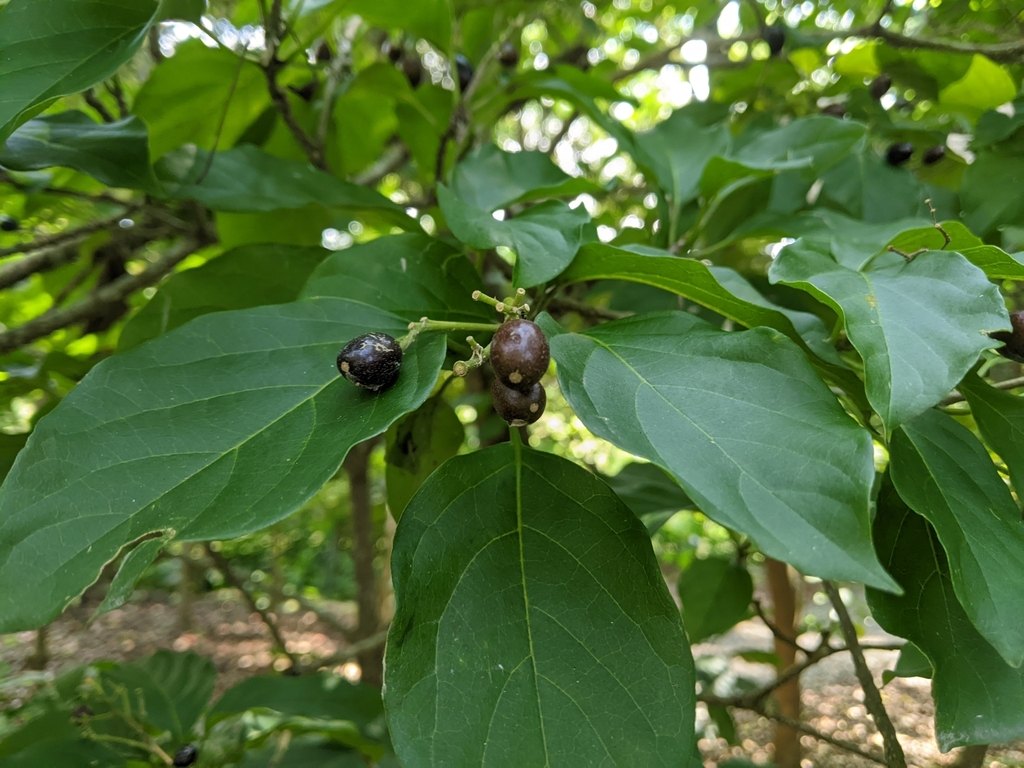
LATIN NAME: Merrilliodendron megacarpum
COMMON NAME: Pacific Megacarp Tree
Plant Profile
Some plants arrive in a seed catalogue with a history of cultivation behind them; this one arrives with almost nothing. Merrilliodendron megacarpum is a rainforest tree of the western Pacific, the single species of its genus, and it has no established common name in English, which says something about how rarely anyone has grown it from seed.
The genus name honours Elmer Drew Merrill, the American botanist who spent his career cataloguing the flora of the Philippines and the Pacific, and dendron is the Greek for tree. The species epithet megacarpum means large-fruited, and the fruit is the character that gives the plant its recognisability in the field.
The tree was first described by Hemsley, and the modern combination was published in 1940 in the Berlin botanical periodical. An earlier genus name, Peekeliodendron, was proposed for the same plant and is now treated as a synonym, which is a polite way of saying that two sets of authors found it independently.
Its range is a chain of islands rather than a continent: Sulawesi and Palawan, the Philippines, New Guinea, the Bismarck Archipelago, the Solomons, Santa Cruz, Vanuatu, and out as far as the Caroline and Mariana Islands. It is a plant of lowland forest edges and secondary growth on those islands. The same family turns up again in Natsiatum herpeticum, Sarcostigma kleinii and Pyrenacantha volubilis.
Science & Biotechnology
Icacinaceae has been a difficult family for two centuries. It once swallowed dozens of unrelated tropical genera, and molecular work has stripped it down to a smaller, coherent group of trees and lianas, mostly of the Old World tropics. Merrilliodendron sits comfortably in the reduced family and remains alone within it.
The island distribution is the interesting biology. A tree with large fruits does not cross ocean by chance, and the pattern from Sulawesi east through Melanesia into Micronesia suggests an animal disperser rather than a floating fruit. Fruit bats and imperial pigeons are the usual candidates for seeds of this size, and both are present across the range.
Public observation records amount to about twenty, scattered across the islands and across the year with no seasonal signal. For a widespread tree that is remarkably thin, and it reflects the reality that few botanists have worked on these islands rather than any rarity of the plant itself.
Uses & Benefits
There is no horticultural history worth recording. The tree has never been in the nursery trade in any serious way, and the handful of living specimens outside the tropics sit in botanic gardens as research material rather than as ornamentals. Anyone selling its seed is selling a collector’s item.
Locally the wood may be used in construction, as the wood of small island trees generally is, but there is no documented trade and no particular property that would make it valuable. The fruits are not eaten, and no medicinal use is recorded in the standard references, which for an Icacinaceae is slightly unusual.
The honest answer about uses is that there are none yet. A monotypic genus with a wide island range and an unexplored chemistry is exactly the sort of plant that might repay study, and it is exactly the sort of plant that gets studied last, because nothing about it is urgent.
Growing from Seed
The fruit is a large drupe, and that fact shapes everything about propagation. Seeds of tropical drupaceous trees generally lose viability in dry storage, and this one is no exception: the seed must be fresh, the pulp must be removed promptly, and a seed that has spent weeks in a mail bag is usually dead on arrival.
Sow immediately after cleaning, in a warm, humid, free-draining mix, with half the seed buried and the eye downward. Temperatures of twenty-five to thirty degrees are the norm in its habitat, and a propagator or a shaded frame is necessary outside the tropics. Do not let the compost dry at any point.
Germination is slow and staggered, over weeks rather than days, and the seedlings are slow afterwards. Grow them shaded for the first year, pot on before the roots hit the container base, and expect a sapling worth planting out in its second or third year rather than its first.
Our Take
This is not a tree anyone needs, and it would be misleading to pretend otherwise. It is a tree for the collector who wants a piece of Pacific botany in a tub, or for the institution assembling a representation of an island flora that is being cleared faster than it is being recorded.
The seed trade around plants like this runs on a handful of collectors and a lot of patience. If you buy it, buy it fresh, sow it warm, and treat the long wait as part of the point; the tree itself will outlast any impatience you bring to it.
Related Reading
Readers interested in Pacific Megacarp Tree frequently explore these as well: