


Anthemis arvensis Seeds | Corn Chamomile
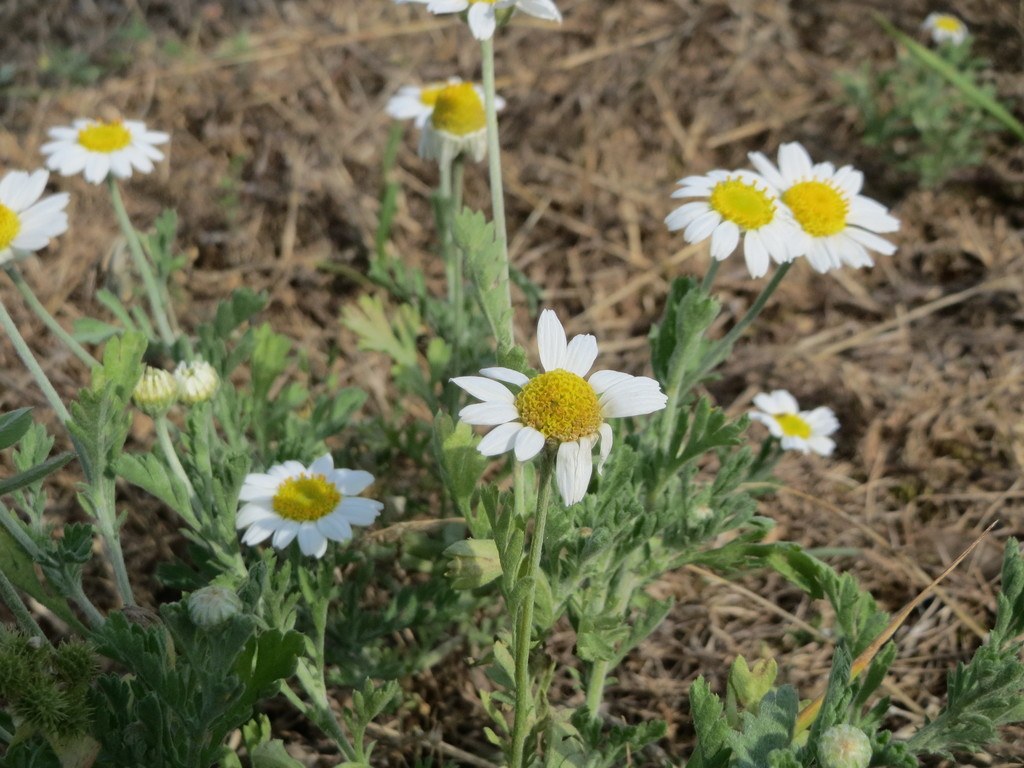
LATIN NAME: Anthemis arvensis
COMMON NAME: Corn Chamomile
Plant Profile
Corn chamomile is an annual of the aster family with finely divided, feathery foliage and white-rayed daisy heads over a yellow disc, carried on branched stems through early summer. Its common names pile up: mayweed, scentless chamomile, field chamomile. The corn in the first name refers to grainfields, the old sense of the word, and that is where the plant belongs.
Its native range is Palearctic and wide: Macaronesia from the Azores to the Canaries, North Africa in Algeria and Tunisia, western Asia from Sinai through Iran, Iraq, Saudi Arabia and Turkey, the Caucasus, and most of Europe from Ireland and Scandinavia to the Mediterranean islands. From there it has naturalised in North and South America, Africa, Australia, New Zealand and parts of Asia.
Six subspecies are accepted, and several hold startlingly small territories: subsp. acrochordona grows in France, Italy and Sardinia; cyllenea in Greece including the Cyclades; glabra on Corsica; incrassata in Morocco and Mediterranean Europe from Portugal to Crete; sphacelata in southern Italy and Sicily. The typical arvensis covers the rest of the range.
Scentlessness is the identification point. Crush a leaf and you get green, nothing more, which separates it at once from the aromatic Roman and German chamomiles it resembles. It is a calcicolous plant of arable land and waste places, meaning it tracks lime, and it is grown as an ornamental for exactly that unbothered, cornfield look.
Science & Biotechnology
The head structure is the family standard: a dome of yellow disc florets ringed by white rays, pollinated by small bees, hoverflies and beetles that work open ground. The species is listed with weed potential in agricultural databases, which is the technical way of saying it follows cultivation, riding in with grain and hay for as long as people have moved both.
Hardiness is rated around USDA zone 4 to 8, and the old herbal literature records a mild medicinal use, a weaker cousin of true chamomile that was used when the scented plant was not at hand. Nobody grows it for medicine now, and the plant makes no argument for a revival; its interest is ornamental and ecological.
The subspecies pattern is the scientific curiosity. A plant that is common and weedy across a continent holds, at its southern edges, a set of small, localised forms pinned to single islands and coastlines, from Corsica to the Cyclades. Weedy ranges and narrow endemism sit side by side in one species, and seed collectors in the Mediterranean find the local forms worth looking at.
Uses & Benefits
In the garden its use is the naturalistic one: scattered through a gravel bed, sown into a wildflower strip, or floated above a poor sandy bank where its ferny grey-green leaves and clean white heads do the work that richer soil would ruin. It fits native-style and pollinator plantings without any fuss.
It earns its keep with pollinators in the hungry weeks of early summer, when its heads are open and most meadow plants are not yet. In restored cornfield mixes it supplies the historical component, the weed-of-the-grain that agronomists once fought and conservationists now sow deliberately.
The honest caveat belongs here too: it is not a tea plant. Scentless means flavourless in the cup, and a harvester who gathers it for chamomile will get an infusion of nothing much. Grow it for the look and the insects, and leave the teapot to its scented relatives. The rest of the Asteraceae here runs to Anthemis tinctoria, Felicia amelloides and Osteospermum ecklonis.
Growing from Seed
Sow it direct where it is to flower, in autumn or early spring, covering the seed only lightly. It germinates in cool soil and the seedlings overwinter as small rosettes in the autumn-sown version, then move fast in spring. Transplanting is possible but unnecessary; this is a plant that expects to be scattered.
Full sun and lean, well-drained, preferably limy ground are what it asks for. Rich soil grows lush ferns and few flowers, the classic failure of cornfield annuals in good garden ground. If your soil is heavy, add grit rather than compost and let the lime do its quiet work.
Flowering runs into early summer. Either cut the plants to the ground as the heads fade, which tidies them and may squeeze out a second, weaker flush, or let them set seed if you want the colony to renew itself on the same bare ground next year. It self-sows onto open soil and declines where mulch closes the surface.
Our Take
Corn chamomile is a plant for gardeners who like their flowers with a history: the white daisy that followed ploughs across continents, kept a set of island forms in its pocket, and still opens exactly where the ground is poor and limy. That biography is the recommendation, and it comes free with the seed.
Sow it in the poorest corner you cannot water, and it will look deliberate. The only real failure is kindness, and the second is confusion with the tea chamomiles, which it will not forgive in the cup. Everything else is a matter of timing the sowing to cool soil and leaving the plant to its cornfield instincts.
Related Reading
If Corn Chamomile appeals to you, these related plants are worth a look: