


Plectranthus Seeds | Silver Spurflower
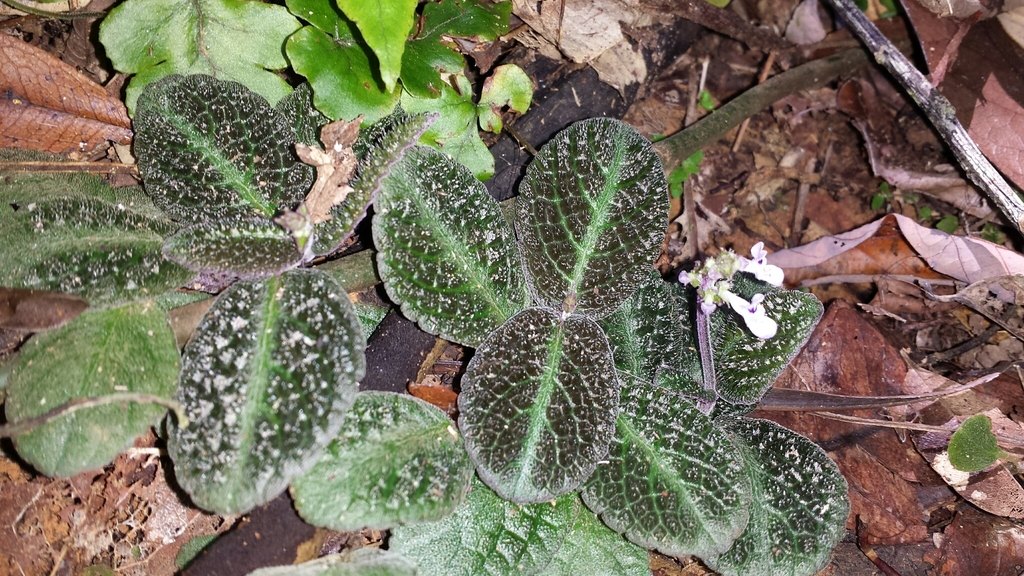
LATIN NAME: Plectranthus
COMMON NAME: Silver Spurflower
Plant Profile
Plectranthus is a genus of about 85 species in the Lamiaceae, found mostly in southern and tropical Africa and Madagascar, with a few species extending into Asia and Australia. They are herbaceous perennials, rarely annuals or soft-wooded shrubs, sometimes succulent and sometimes with a tuberous base, and they are grown mainly for their foliage rather than their flowers.
The leaves are opposite, often thick and fleshy, and covered with hairs that give them a felted or metallic sheen. Silver Shield, one of the most widely sold forms, has rounded, silver-grey leaves with a metallic lustre and a scalloped edge, and it makes a low mound 30 to 40 cm high and twice as wide.
The genus is closely related to Coleus, and for a time the two were merged: coleus was placed in Plectranthus as Plectranthus scutellarioides, and many catalogues still use that name. Molecular work in 2019 separated them again, and the coleus is now back in Coleus, while the silver-leaved spurflowers have stayed where they were.
Science & Biotechnology
Plectranthus is one of the genera in the Lamiaceae that has been most affected by molecular taxonomy. The old genus was polyphyletic, containing plants that were not closely related, and the 2019 revision split it into several genera, including Coleus, Equilabium and Coleus. That work is a good example of how DNA evidence can overturn a classification based on flower shape.
The silver colour of the leaves is structural rather than pigmentary: the hairs on the leaf surface reflect light across the spectrum, which produces a metallic sheen rather than a flat white. The same mechanism gives the leaves of some lavender and santolina their colour, and it is more pronounced in dry, bright conditions.
The genus is notable for its chemical diversity. Many species contain diterpenes, including forskolin in Coleus forskohlii, which is used in medicine for glaucoma and for heart conditions, and a range of essential oils that give the leaves their scent. That chemistry is one reason the genus has been studied more than most ornamental groups.
The genus is also notable for its aromatic foliage, which contains a wide range of essential oils. Some species smell of camphor, some of mint and some of oregano, and the scent is strongest when the leaves are crushed or brushed.
Uses & Benefits
It is used as a foliage plant for shade, in containers, in hanging baskets and as a bedding plant in mild climates. Its silver leaves light up a dark corner, and it combines well with ferns, heucheras and dark-leaved coleus, all of which share its taste for filtered light and constant moisture.
In a hanging basket it makes a dense cascade, and in a border it works at the front, where its low mound and its metallic leaves contrast with upright plants. It is also one of the easiest plants to propagate: a cutting in water roots in ten days, and a plant brought indoors in autumn will supply cuttings all winter.
Several species are used medicinally in Africa and Asia. Plectranthus amboinicus, the Cuban oregano, is a culinary herb in the Caribbean and in Southeast Asia, with a strong oregano-like flavour, and P. barbatus is used in traditional medicine in India and China. The ornamental species are not used medicinally and are not edible in quantity. Its Lamiaceae company here includes Perovskia atriplicifolia, Mentha piperita and Salvia farinacea.
Growing from Seed
Under cover at 21 to 24 °C, on the surface and barely covered, because light is what starts it. Three weeks at most, and usually less. Seed is available for some species, but named cultivars must be grown from cuttings, since they do not come true.
Move them into small pots at 18 to 20 °C, in bright light out of direct sun. Pinch once or twice to encourage a bushy shape. Plant out after the last frost, 30 cm apart, in shade or partial shade, in soil that holds moisture but drains.
Keep the compost moist but not wet, and feed every two weeks in summer. In a container the plant needs regular water, since it wilts quickly when dry, and it recovers just as quickly when watered. In a border it needs a mulch to hold moisture through summer.
Our Take
The silver plectranthus is one of the best foliage plants for shade, and one of the easiest to keep. It is not hardy, it is not scented in a way that everyone likes, and it is not fashionable, but it fills a dark corner with light and it asks for nothing but water. Grow it in a pot by a shady door, take cuttings in autumn, and treat it as an annual if you have no frost-free place. It will earn its space in a single season.
Related Reading
Continue exploring with these related plants: