


Papaver croceum Seeds | Iceland Poppy
LATIN NAME: Papaver croceum
COMMON NAME: Iceland Poppy
Plant Profile
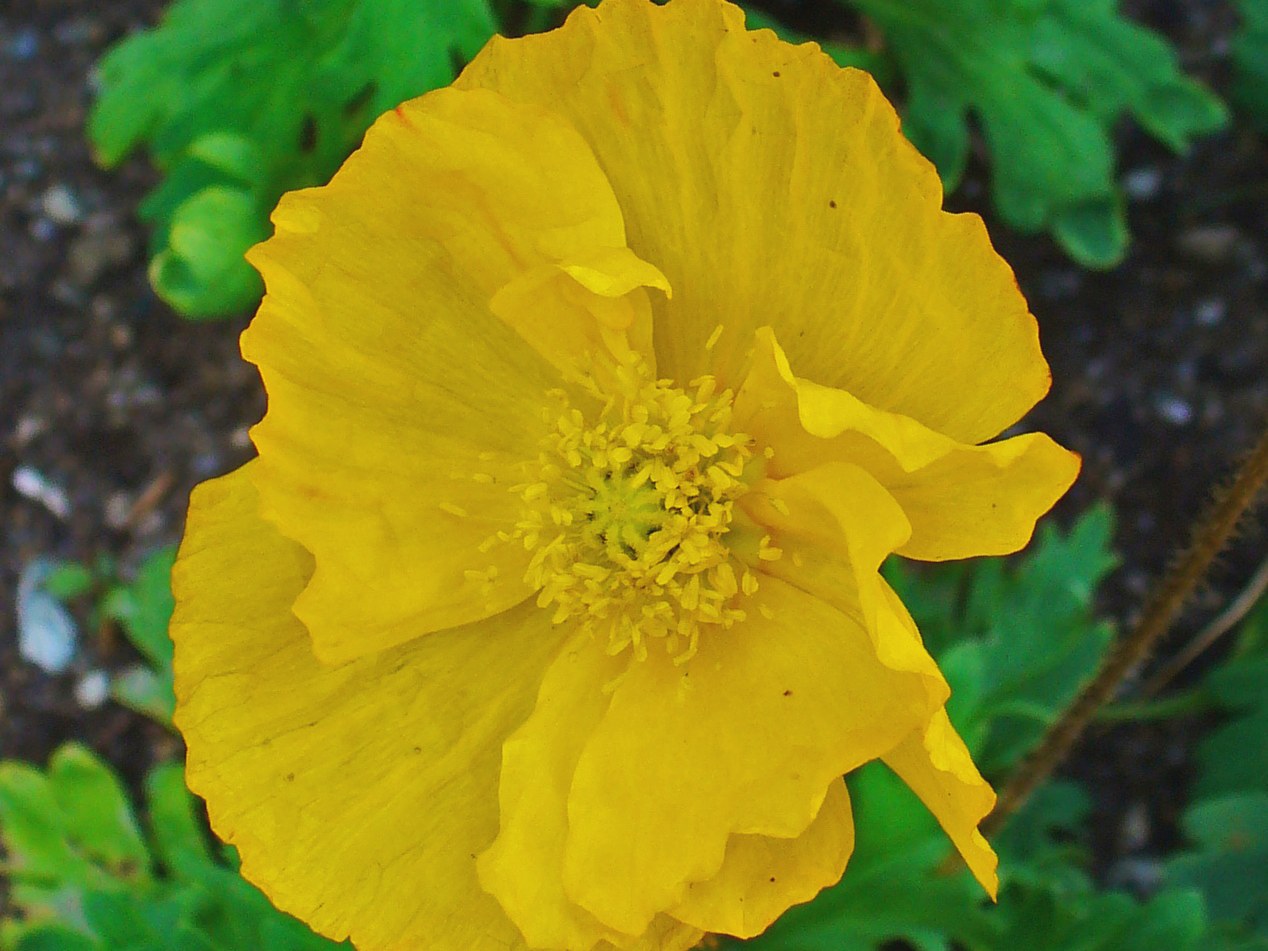
The ice poppy is a plant of about thirty to forty centimetres, with a basal rosette of long-stalked, bluish-green lobed leaves and leafless, hairy stems that carry a single flower each. The blooms are five to six centimetres across, radially symmetrical, with four petals in yellow, orange, reddish or white, and they open from June to August.
The structure repays a close look: the flower sits on a scape rather than a leafy stem, so all the leaves are gathered at the base and the bloom is presented clear of the ground. That arrangement is typical of plants whose pollinators hunt by sight across open ground, and it also keeps the foliage out of the wind that runs over alpine turf.
Its native range is southern Siberia, Central Asia and Mongolia, where it grows in pasture, meadow, rocky slope and, revealingly, on landfill areas and other disturbed ground. That last habitat is the honest clue to its temperament: this is not a delicate alpiner but an opportunistic perennial of open, broken, sunlit places.
The naming history is a small comedy. The species was described as Papaver croceum by Carl Friedrich von Ledebour in 1830, later treated as a variety of Papaver nudicaule or of Papaver alpinum, and moved in 2021 into the new genus Oreomecon. Plants of the World Online records twenty-five synonyms, which is a fair measure of how long botanists argued about it.
Science & Biotechnology
The trade name is the practical problem: for most of a century this plant has been sold as Papaver nudicaule, the Iceland poppy, which is a genuinely different species. Gardeners who order Iceland poppy seed and receive Oreomecon crocea are not being cheated so much as handed the wrong label on a real plant, and the confusion runs through catalogues, seed exchanges and island folklore alike.
Its lifecycle is flexible rather than fixed: biennial or perennial depending on conditions, flowering in the second year from an autumn sowing and often persisting for several seasons where drainage suits it. In the wild that flexibility buffers it against seasons when seed set fails, a common hedge among plants of unpredictable climates.
The seed pod is the dispersal mechanism. Poppy capsules open by pores beneath the stigmatic disc, and the tiny seeds are shaken out by wind through those holes like salt from a shaker. The design delivers seed only in gusts, which spreads the crop away from the parent without any need for fleshy fruit or animal transport.
Uses & Benefits
In the garden it belongs at the front of a well-drained border or in a gravel garden, where the bluish rosette and the papery bowls read well against stone. It flowers in the gap between the late spring bulbs and the summer perennials, a period when colour is scarce and any honest flower is welcome.
As a cut flower it is difficult: poppy petals are thin, bruise easily and drop within a day unless the stem ends are seared. Most gardeners treat it as a plant to look at in place, which suits the species and saves a vase. The seed heads, dried, are worth collecting for winter arrangements.
For pollinators the flower offers pollen rather than nectar, and the open bowl makes the reward easy to reach for early bees and hoverflies working the June gap. It is a modest contribution, but it arrives at a season when the meadow is still assembling itself, and modest contributions matter then. Alongside it in Papaveraceae: Papaver nudicaule, Papaver orientale and Corydalis incisa.
Growing from Seed
Sow in autumn for the natural biennial rhythm, or in early spring for flowers the following year. The seed is fine: scatter it on the surface of a gritty, free-draining mix, press it in, and do not cover, because light triggers germination. Keep the tray cool and just moist, never wet.
Seedlings transplant badly once the taproot has run, so sow in individual cells or in situ. Pot them on while small, grow them hard in full light, and plant out in early autumn so the rosette establishes before winter. A sheltered, sunny position with sharp drainage is the whole of the recipe.
After flowering, either let a few capsules ripen for self-sowing or cut the stems to keep the clump tidy. Division is rarely worth the trouble in a plant this short-lived; fresh seed is the reliable route, and a packet sown each second year keeps the colony young without any fuss.
Our Take
The ice poppy is a good plant with a bad label. Grow it as Oreomecon crocea or as Papaver croceum, but do not expect the Iceland poppy of the catalogues, and do not be surprised when a nursery insists they are the same thing. They are not, and the flowers are the better for it.
Sow it in autumn, plant the rosettes where the ground drains, and let a few pods seed themselves along the gravel. It asks for sun and air, gives four papery petals in the leanest weeks of June, and disappears politely when its season is over.
Related Reading
Continue exploring with these related plants: