


Onopordum acanthium Seeds | Cotton Thistle
LATIN NAME: Onopordum acanthium
COMMON NAME: Cotton Thistle
Plant Profile
Cotton thistle is a biennial, and it spends its first year doing very little above ground. Seed germinates after the first autumn rains and the plant sits as a flat rosette of spiny, silver-white leaves through the winter and the following summer, quietly building a fleshy taproot that can go down 30 cm or more.
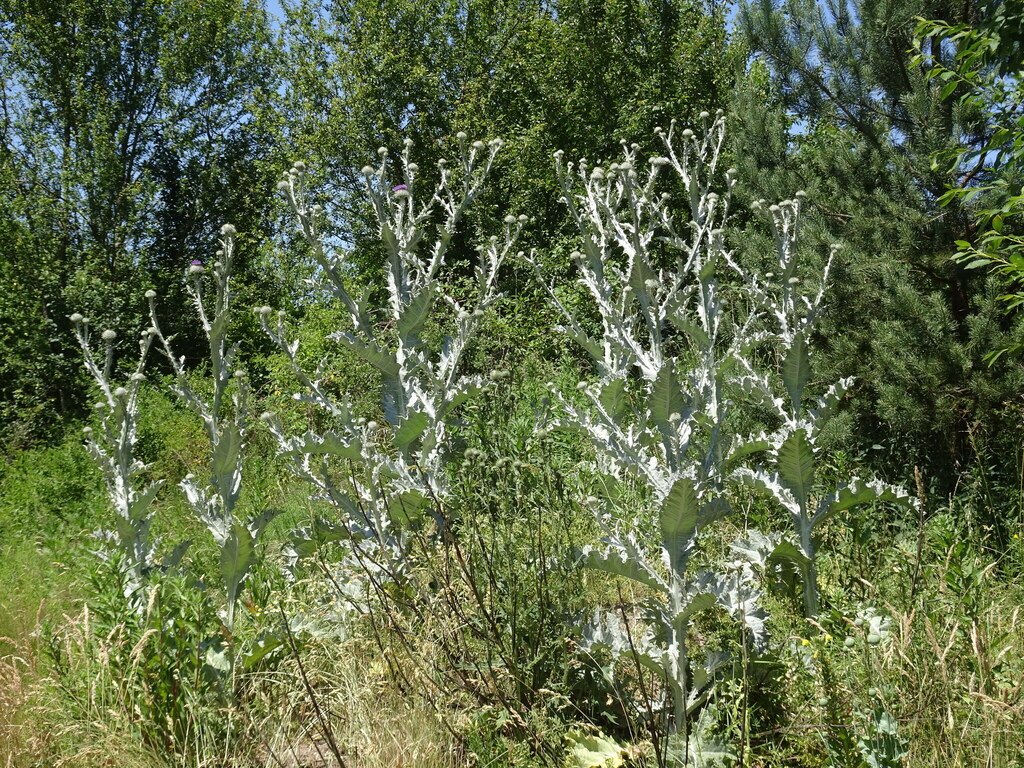
In its second year it goes up, and the change is startling. A plant can reach 3 m in height and 1.5 m across, with a stout stem whose leaves run down it as spiny wings. The whole surface is covered in dense white wool, which is where the common name comes from and why the plant looks lit from inside on a dull day.
It is not the thistle of Scotland. That honour belongs to Cirsium vulgare, the spear thistle, which is native to Britain. Cotton thistle is native from the Iberian Peninsula east to Kazakhstan and north to central Scandinavia, and in Britain it is an introduction. The confusion is old and the common names overlap, but the two plants are not close relatives within the tribe.
Science & Biotechnology
The spiny wings along the stem are not just armour. They are leaf tissue running down the stem, which increases the photosynthetic area of the plant without adding new leaves, and they make the stem effectively unclimbable for anything that might want to reach the flower heads. The wool does a different job: dense hairs reflect light, reduce water loss and trap a layer of still air against the surface.
It is monocarpic, flowering once and dying. A large plant can produce tens of thousands of seeds in a single season, each with a pappus that carries it on the wind, and the seed bank remains viable in the soil for years. That combination is why the plant is a serious pasture weed in Australia and parts of North America, where it has naturalised over large areas. Seed stays viable in the soil for years, so a buried seed bank will keep producing seedlings long after the parents are dead.
The taproot is the other half of the strategy. It stores water and carbohydrates through the rosette year, which lets the plant make its enormous second-year growth without depending on rainfall at the critical moment. Cut the root below the crown and the plant dies; cut the stem and it will regrow from the base. The Asteraceae thread continues with Centaurea macrocephala, Dimorphotheca sinuata and Helianthus angustifolius.
Uses & Benefits
As a garden plant it is architecture. Put a single specimen at the back of a dry border, or against a wall, and it holds the eye for a month in midsummer when everything else is at eye level. The silver foliage carries the winter and spring before the stem goes up, which is more than most biennials offer.
The flower heads dry well and keep their shape, and the receptacle at the base of the head is edible, treated like a small artichoke, though the spines make preparation tedious enough that few people bother twice. It is also a strong bee plant.
The heads are large, open and shallow, accessible to short-tongued bees as well as honeybees, and a flowering plant in July is audible from several metres away. The dried heads also hold their shape for months and take dye well, so they turn up in winter arrangements.
Growing from Seed
Sow in late summer or early autumn, on the surface and barely covered, because the seed needs light. Germination is fast in warm soil, often within two weeks, and the seedlings should be potted on before the taproot reaches the bottom of the tray.
Plant out in autumn where the plant is to flower. It will not move once established, and a plant left in a pot past Christmas will be stunted for life. Full sun and sharp drainage matter more than soil fertility: rich ground produces a tall plant that falls over under its own weight.
The plant dies after flowering, so let one head ripen if you want it to repeat, and pull the dead stem before it collapses across a path. Seedlings turn up within a metre or two of the parent, and they are easy to move while small.
Our Take
Grow it once, for the season when it goes up. There is nothing else in a temperate garden that puts on that much silver structure in a fortnight, and the bees will thank you. The catch is that it is a two-year commitment to a plant that dies just as it becomes spectacular, and it seeds itself with enthusiasm. If that trade sounds fair, it is a wonderful thing to have.
Related Reading
If Cotton Thistle appeals to you, these related plants are worth a look: