


Melampodium divaricatum Seeds | Butter Daisy
LATIN NAME: Melampodium divaricatum
COMMON NAME: Butter Daisy
Plant Profile
Gold medallion is the annual that treats a heatwave as encouragement. Melampodium divaricatum, a bushy plant of thirty to sixty centimetres from Mexico and Central America, clothes itself in small golden daisies from early summer until frost, so continuously that foliage barely shows beneath the bloom load.
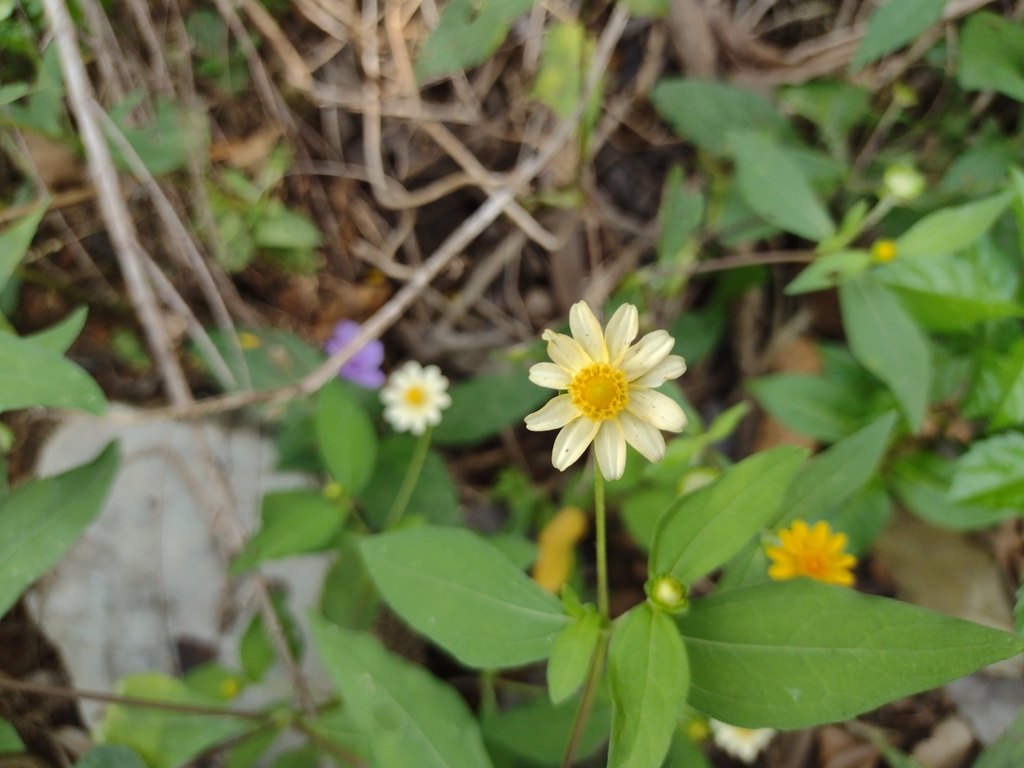
The heads are two and a half centimetres across, eight to thirteen golden rays around a darker disc, carried on branching stems with opposite, lance-shaped leaves. The name divaricatum describes the spreading, straggly branch angles of wild plants; modern garden strains have tightened the habit into compact mounds that hold their shape in wind and rain.
The genus name reaches back to antiquity: melampodion was the ancient Greek name for a black-stemmed medicinal plant, and botanists borrowed it for this New World group. The species was described from French material by the botanist Richard and combined by de Candolle in the 1830s, and it has been a garden subject in the Americas ever since.
Native ground covers nearly all of Mexico from Baja California to the Yucatan, plus Central America and northern South America, on roadsides, old fields and coastal scrub. It has slipped into the tropics worldwide, naturalising in Florida, the Caribbean, Southeast Asia and the islands of the Indian Ocean.
Science & Biotechnology
Its most elegant trick is the seed package. Each fertile head matures into an urn-shaped receptacle formed by the enlarged, persistent bracts, and the achenes sit inside like seeds in a cup, released together when the urn dries. The structure shelters ripening seed from rain and insects and gives harvested seed a clean, easy-to-handle form that few composites match.
Breeding has been unusually productive for so plain a plant. Selections from the 1980s and 1990s shortened the wild plant into uniform mounds, produced yellow and deep gold colour classes, and built the heat and wet tolerance that made it a standard in southern US bedding trials. Field observation records run from August to November at their peak, matching its late-season dominance.
The plant is a workhorse of generalist pollination: open discs, exposed pollen, no nectar tubes, serviced by everything small and winged. Research on the genus notes its role as a reservoir for native bees and butterflies in farm landscapes, and its seed set is so reliable that a single plant typically produces hundreds of viable packages. Fellow Asteraceae members here: Arnica chamissonis, Anthemis tinctoria and Aster tataricus.
Uses & Benefits
Its garden case is simple: it flowers when others quit. In humid heat that collapses petunias and marigolds, it holds flower and foliage clean, and it does this without deadheading, because the urn receptacle hides the spent blooms. For low-maintenance colour in the American South, Southeast Asia and similar climates, few annuals compete.
It serves as an edging plant, a mass bedding subject, and a filler in young perennial gardens where the second year has gaps to hide. Butterflies work it steadily through late summer. There is no culinary use and no particular toxicity; the plant is simply safe, dull to eat, and decorative by temperament.
The honest limitations are cosmetic. Old plants open up at the base by September, and in rich, wet soil the mound collapses into sprawl. Neither is fatal: a light trim restores shape, and lean soil is the correct planting medium. Where summers are cool it grows but never earns its keep.
Growing from Seed
Sow where it is to grow, or in modules at twenty to twenty-four degrees; germination takes one to two weeks and needs no pretreatment. The urn-carried seed is easy to handle and sow individually. Transplant after frost, spacing twenty-five to thirty centimetres; it covers that gap within a month.
Full sun, average to poor soil, water until established and rarely after. No feeding is needed or wanted. Pinch once if compact strains are not used. Its pest list is short to the point of emptiness, and in the tropics it behaves as a short-lived perennial replacing itself from self-sown seed.
For seed, shake dried urns into a bag; each yields its cluster of achenes. Store cool and dry for two to three years with little loss. In warm climates a bed left standing sheds enough seed to regenerate itself each spring, thinning being the only management task required.
Our Take
Our take: this is the definition of an honest annual. It costs a packet, survives weather that kills its rivals, and needs nothing between planting and September. For hot-humid gardens it is closer to infrastructure than ornament, and the gold is genuinely cheerful in the light.
The honest caveat is subtlety: individually the flowers are small and the colour is one-note, so it rewards mass planting and looks thin as a specimen. Buy two packets, not one, plant the whole bed, and let the sheer continuity of bloom make the argument.
Related Reading
If Butter Daisy appeals to you, these related plants are worth a look: