


Arnica chamissonis Seeds | Chamisso Arnica
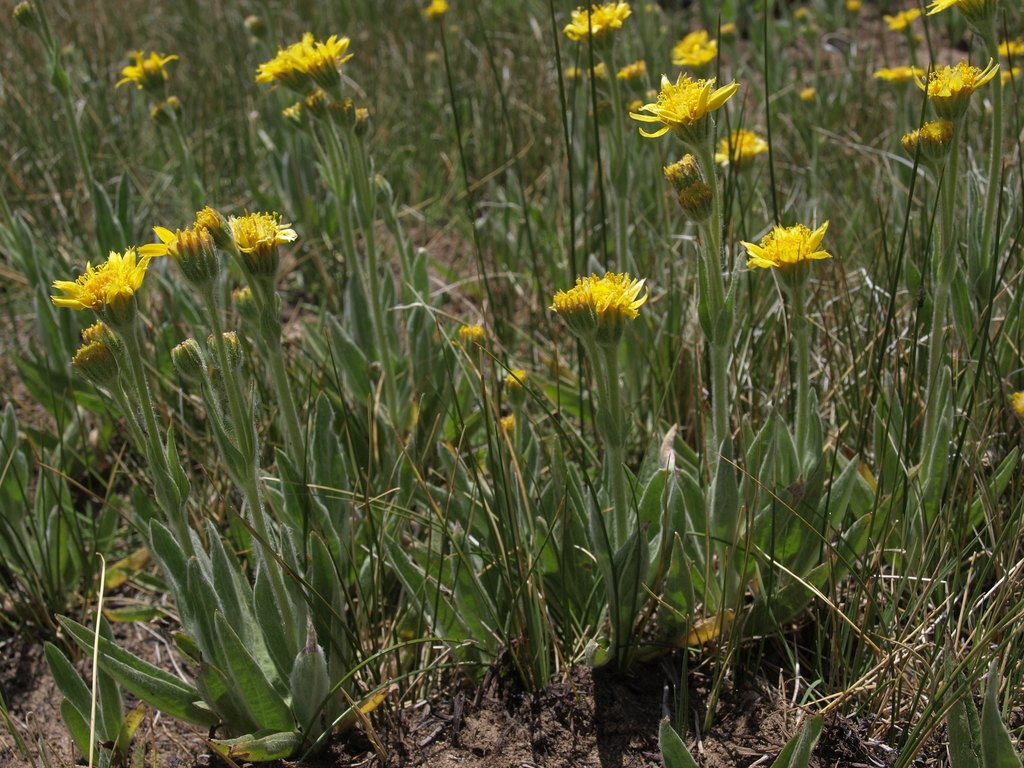
LATIN NAME: Arnica chamissonis
COMMON NAME: Chamisso Arnica
Plant Profile
Chamisso arnica is a North American perennial very similar in appearance to the European Arnica montana, and it is named for Adelbert von Chamisso, the German poet and botanist who sailed on the Kotzebue expedition and described the plant on his return. The name commemorates a man who wrote poetry and collected specimens, which is a combination that has gone out of fashion.
It grows about 76 cm tall, with yellow flowers and medium-green foliage, and the leaves are grouped in four to ten pairs along the stem. It spreads by rhizomes, at a moderate rate, and the rhizome carries small fibrous adventitious roots rather than a taproot. The active growth period is spring and summer, and the bloom period runs through the summer.
It is native to western North America including Alaska, and to most of Canada including the Yukon and Northwest Territories. It has been introduced to parts of Europe and is naturalised in Sweden and Austria, where it is grown for the herb trade and occasionally escapes.
Science & Biotechnology
Both this species and A. montana contain helenalin, a sesquiterpene lactone that is the reason arnica works and the reason it is dangerous. Applied to the skin it is anti-inflammatory; taken internally it is toxic, and it ranks among the commonest causes of contact dermatitis from a herbal preparation.
The compound works by reacting with thiol groups in proteins, which is a blunt mechanism and explains both the therapeutic effect and the allergic reaction. There is no dose at which it is safe for everyone, because the reaction is individual rather than proportional. That is why every serious herbal source restricts arnica to external use on intact skin.
The plant is adapted to a particular climate and the numbers are worth knowing. It tolerates a minimum of −36 °C, grows on coarse to medium soils at pH 6.0 to 7.2, and needs 36 to 61 cm of precipitation a year. It is a plant of montane and subalpine meadows and conifer forest, from sea level to 3,500 m, and it wants moisture rather than drainage. Other Asteraceae on the list: Arnica americana, Onopordum acanthium and Matricaria discoidea.
Uses & Benefits
The garden use is a yellow daisy in a damp meadow, and it is good at that. It flowers through the summer, it spreads into a patch without becoming a pest, and it is hardy enough for anything a European winter can do. In a wildflower strip with ragged robin and meadowsweet it looks as though it belongs.
The commercial use is as a substitute for A. montana, which is protected across much of Europe and cannot be wild-collected. A. chamissonis is easier to cultivate, yields a comparable extract, and is not subject to the same restrictions, so most arnica ointment on the market now comes from cultivated American plants rather than European ones.
Given a choice, grow it and do not eat it. The flowers can be infused in oil for a rub, which is the traditional use and a reasonable one, and the plant should not be taken as a tea or a tincture. The margin between a therapeutic and a toxic dose of helenalin is narrow, and it is not a margin to explore at home.
Growing from Seed
Sow in late winter at 18 to 21 °C, on the surface and pressed in. The seed needs light and it needs to be fresh; there are roughly 400,000 seeds to a pound, which means a pinch is a lot of plants. Germination takes two to four weeks and is usually uneven, with a second wave after three weeks.
Prick out into individual pots and grow on cool and bright. The seedlings have medium vigour and are not difficult, but they dislike being checked, and a tray left dry for a day will cost you half of them. Plant out in spring or early autumn at 30 cm, into moist but not waterlogged soil in sun.
Division in spring is the reliable way to keep a selected form, because seed varies in flower size and in the density of the rhizome. Lift a clump every three years, cut it into pieces with a spade, and replant the vigorous outer sections. The centre goes on the compost, as with most rhizomatous perennials.
Our Take
It is a plant with two audiences and it satisfies both reasonably. As a meadow flower it is a good yellow daisy in a damp place, and as a crop it is the reason arnica ointment still exists at a price people can pay. Neither use is glamorous and both are useful.
Grow it in the wettest part of the garden, where the asters sulk and the grass is rank, and it will do better than it does in a border. Pick the flowers in full sun, dry them fast, and infuse them in oil for a winter rub. Do not make tea with it, and do not give it to anyone who is pregnant.
Related Reading
Readers interested in Chamisso Arnica frequently explore these as well: