


Papaver rhoeas Seeds | Corn Poppy
LATIN NAME: Papaver rhoeas
COMMON NAME: Corn Poppy
Plant Profile
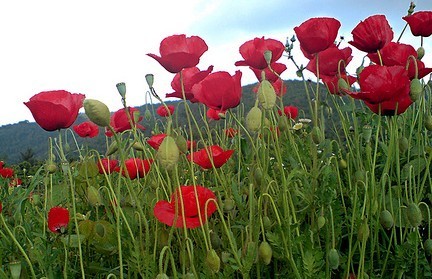
The corn poppy is a plant of disturbed ground, and it has followed human agriculture across Europe for as long as there has been ploughing. Papaver rhoeas is a slender annual 30-90 cm tall with bristly, deeply divided leaves and long-stalked flowers whose four scarlet petals are thin enough to look translucent in sunlight.
Each flower lasts a day or two, but the plant produces a succession of them over six weeks, and a single capsule can hold over a thousand seed. That combination of short-lived flowers and enormous seed output is what makes the poppy able to appear in a field one year and vanish for a decade, waiting in the soil for the next disturbance.
Science & Biotechnology
The corn poppy contains no morphine and no codeine. Its alkaloids belong to the rhoeadine group instead, which are far weaker and structurally different from the morphinans of Papaver somniferum, and this is why poppy petal tea is a mild traditional remedy rather than a narcotic. The distinction is frequently blurred in popular writing and it matters, particularly where children are concerned.
The red colour comes from cyanidin-based anthocyanins, and the petals have been used as a natural colorant and as a pH indicator in teaching. Research on the species has concentrated on its seed bank behaviour, since poppy seed can remain viable in soil for decades, and on the evolution of herbicide resistance, which appeared in European populations from the 1980s and made the plant a case study in agricultural selection.
Uses & Benefits
As a garden plant it is used in meadow sowings and annual wildflower mixes, where it provides the first big flash of colour in early summer. It is not a plant for a tidy border, because it needs bare ground to establish and it disappears once the ground closes over.
The symbolism is its other life: the corn poppy became the remembrance flower of the First World War because it colonized the disturbed soil of the battlefields, and the artificial poppy is now one of the most widely recognized symbols in the world. The petals are also used in traditional European medicine as a mild sedative for coughs and restlessness, usually as a syrup for children.
Growing from Seed
Poppy seed is small and needs light, so surface-sow onto bare, disturbed soil and press it in without covering. Sow in autumn or early spring; autumn sowings flower earlier and more heavily. Germination takes seven to twenty-one days at 15-20°C, and the seedlings need bare ground to survive.
Do not transplant, and do not mulch. Thin to 15-20 cm if the seedlings are dense. Water only while establishing; after that the plants manage on rainfall. Leave a few capsules to ripen and shed their seed, and the colony will maintain itself as long as the ground is disturbed occasionally.
Our Take
Sow it where you can leave the ground alone, and it will come back for years. The plant’s whole strategy is to wait for disturbance, so the worst thing you can do is be tidy.
Related Reading
Gardeners who grow Corn Poppy often pair it with these related subjects: