


Achillea filipendulina Seeds | Yellow Yarrow
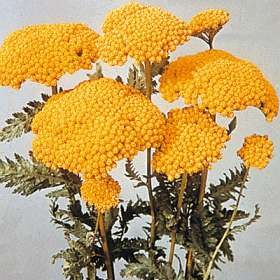
LATIN NAME: Achillea filipendulina
COMMON NAME: Yellow Yarrow
Plant Profile
The species name points to the leaf, which is divided again and again into narrow, fern-like segments that stay grey-green and aromatic all season. That fine foliage is the perfect foil for the heavy gold heads and keeps the plant from looking heavy even when it reaches above the knee.
Each broad head is a dense corymb built almost entirely from tiny disc florets, with at most a hint of ray, so the flower reads as a solid golden table rather than a daisy. The many small florets pack nectar and pollen into a flat landing pad that draws a steady stream of beneficial insects through the long bloom.
Achillea filipendulina is a plant of dry, stony, upland ground from the Caucasus across central Asia to Iran and the western Himalayas. It is built for cold winters and hot, rain-light summers, which explains its famous refusal to wilt in a dry border.
The proazulene content is the reason a yarrow oil can turn deep blue rather than clear. The precursors are colourless in the living plant but convert on heating, and breeders and distillers track the level because it marks both the aromatic quality and the traditional use of the herb.
The flat gold heads dry without losing their shape, which keeps ‘Cloth of Gold’ in demand for everlasting arrangements, while in the border it acts as a long-season anchor that ties hotter colours together.
The genus Achillea is named for Achilles, who in legend used yarrow to staunch the wounds of his soldiers, and the plant has a continuous record as a styptic and poultice herb across European practice. That martial name is a reminder that this border flower was once carried onto battlefields.
Science & Biotechnology
The foliage and flowers yield an essential oil whose character comes from a mix of sabinene, borneol, and 1,8-cineole, with the blue compound chamazulene appearing when proazulene precursors are broken down during distillation. This is the same blue-oil chemistry that makes yarrow distillate valuable, and it gives the crushed leaf its sharp, medicinal scent.
Alongside the volatiles, the plant carries flavonoids such as apigenin and luteolin and a bitter principle that made yarrow a classic bitter tonic. The bitterness is concentrated in the leaf and is the reason the herb was historically taken to steady digestion rather than for its looks.
Uses & Benefits
The single most striking thing about fern-leaf yarrow is the colour: a flat, solid plate of pure gold held high above finely cut foliage, and it holds that colour for months while hotter flowers fade around it. The ‘Cloth of Gold’ form pushes the yellow to a depth that reads almost metallic in strong light, which is why it has stayed a border standard for so long.
Growing from Seed
In its home range the plant sits in full sun on poor, free-draining soil, and it carries that tolerance into the garden. Give it rich, damp ground and it will flop; give it grit and neglect and it stands upright and blooms for months.
In a border this translates to near-total independence once established: the plant shrugs off summer heat and asks only for sun and a well-drained root run, and it keeps flowering while thirstier neighbours flag. That toughness is exactly why it earns a permanent place in dry, low-input plantings.
Raise the crop from the fine seed in a lean mix, because rich compost only produces weak, floppy stems. The seed is small and wants light contact with the surface rather than a deep cover.
Press the seed onto the top of a gritty tray and keep it bright and barely moist until the seedlings appear, then move them on as they grow. In the open ground pick the driest, sunniest bed and avoid any low spot that stays wet.
Cut the spent corymbs back to the foliage once the first flush fades, and a fresh set of gold heads usually follows. This shearing also keeps the clump tidy and prevents the centre from opening up as the season wears on. Near relatives worth growing alongside include white yarrow, Cerise Queen yarrow, and cornflower.
Our Take
I let ‘Cloth of Gold’ earn its place at the back of the dry border, where its height and colour carry the eye from midsummer into autumn. Shear promptly and it blooms again, and the first cut stems dry so well that I always keep a bundle back for winter arrangements.
Related Reading
More species in the same orbit as Yellow Yarrow: