


Corydalis incisa Seeds | Incised Fumewort
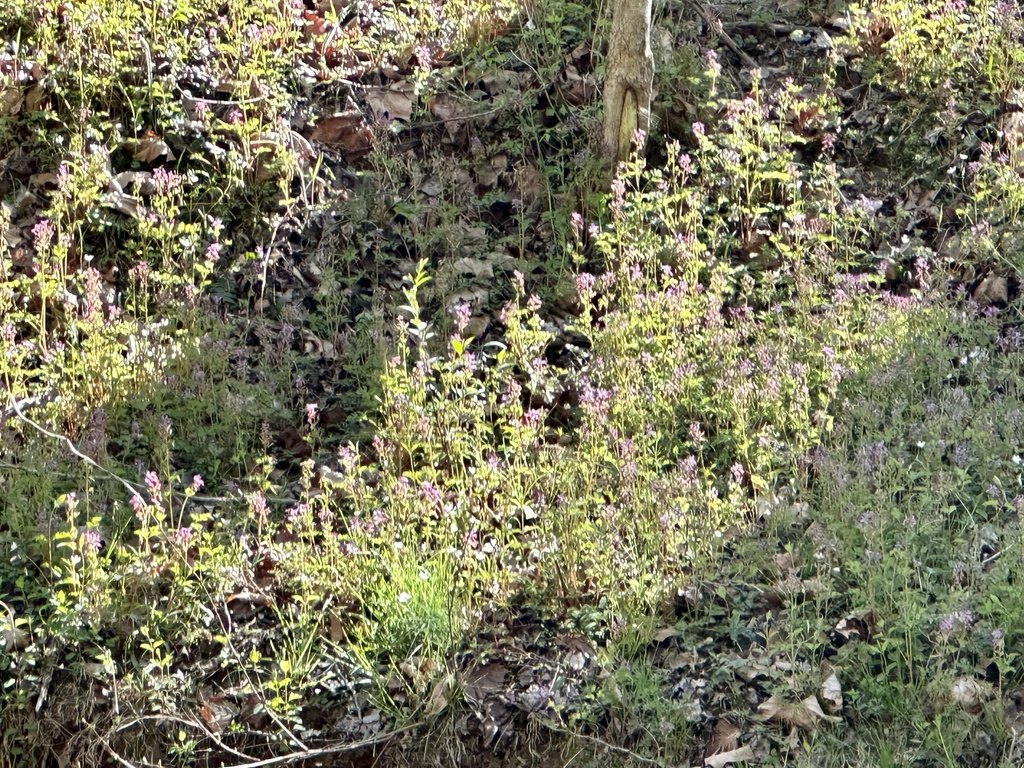
LATIN NAME: Corydalis incisa
COMMON NAME: Incised Fumewort
Plant Profile
Incised fumewort is an annual or biennial herb reaching 60 cm, with compound leaves divided into three leaflets and each leaflet divided again into three, the final lobes cut and serrated. The plant is soft and blue-green and comes out of a tuber no bigger than a pea, so it can appear in a wall and vanish again.
It sits in Papaveraceae, though for most of the last century it was placed in Fumariaceae, a family erected on the odd, two-sided flowers of the fumitories. Molecular work has shown that the fumitories sit inside the poppies, and the split is now rejected, so the plant is a poppy in the modern sense whether or not it looks like one.
The names are worth knowing because seed is sold under all of them. In Japanese it is murasa-kike-man, and the English common name refers to the deeply incised leaf margins. It is native to Japan, Korea, Taiwan and China, in forests, clearings and irrigation channels, and has been in the European trade since the nineteenth century.
Science & Biotechnology
The life cycle is the interesting part and the reason the plant is hard to place in a border. Seed germinates in spring and builds a small rosette on a tiny tuber; the leaves then go dormant for the summer, and the plant disappears completely; in autumn it re-emerges from the tuber and stays evergreen through the winter. Stems rise in February, flowers open from March to early May, ten to sixteen on a raceme, and by early summer the plant is dead.
Dispersal uses two agents in sequence, a system known as diplochory. First the capsule, an oblong pod, dries and its valves peel back from the base, flicking the seed away from the parent. Then the seed itself carries an elaiosome, a fatty appendage that ants collect; they carry the seed to the nest, eat the appendage, and leave the seed underground, where it germinates the following spring.
Ballistic ejection plus ant dispersal is a strong combination: the first moves seed out of the parent’s shadow, the second moves it into disturbed soil. The genus is alkaloid-rich, and Corydalis species are regarded as toxic in quantity; the tuber is where the concentration sits.
Uses & Benefits
As a garden plant it belongs in the winter gap, under deciduous shrubs and at the foot of a wall, where it can flower in March and then be forgotten. It ranks among the first things to open in shade, and it does it without any help, which is worth a lot in a garden that is bare until April.
The same qualities make it a problem elsewhere. It was first found in the United States in Bronx County in 2005 and in Westchester County in 2014, and it is now recorded from New York, Pennsylvania, Maryland, Virginia, West Virginia, North Carolina, Tennessee, the District of Columbia and Indiana. It escapes cultivation readily, forms dense stands in fine alluvial sediment, and crowds out the native riparian understory.
The reason is the dispersal system described above, working in a country with no shortage of ants and plenty of disturbed riverbank. A plant that fires its seed several metres, hands the rest to ants, and completes its life cycle before the summer weeds have started is very hard to stop once it has a foothold along a stream. Other Papaveraceae on the list: Corydalis bungeana, Papaver orientale and Papaver croceum.
Growing from Seed
Sow fresh, and sow at once. The seed is short-lived and loses viability within weeks of being released, so a packet held over winter will give nothing and a plant allowed to self-sow will give more than you planted. Surface sow on a moist mix, press the seed in, keep at 10 to 15 °C, and leave the tray outdoors if the weather is mild; light and cool are what it wants.
The seedlings appear in spring, form a tuber in their first season, and then follow the plant’s own calendar, which means disappearing in July. Do not tip the pot out then; the tuber is alive and the leaves return in autumn. Pot on in their second autumn, and plant out while dormant, because a tuber in growth resents disturbance.
Where it is not wanted, deadhead before the capsules peel. That window is short, roughly three weeks from the first flower to the first seed, and a plant left for a fortnight will have already fired half its crop. Do not put the pods on the compost; bag them. In countries where it is listed, check the local rules before you plant it at all.
Our Take
It is a beautiful plant with a bad record, and the two facts do not cancel out. In its native range it is an ordinary woodland annual; in a new country with the right riverbank it is an invader, and the difference is not the plant but the absence of whatever holds it in check at home.
Grow it if you garden in a dry, closed site where seed has nowhere to go, and deadhead it as a matter of routine rather than good intentions. If you garden beside water, grow something else: there are plenty of spring flowers that will not take the bank.
Related Reading
Readers interested in Incised Fumewort frequently explore these as well: