


Thymus mongolicus Seeds | Mongolian Thyme
LATIN NAME: Thymus mongolicus
COMMON NAME: Mongolian Thyme
Plant Profile
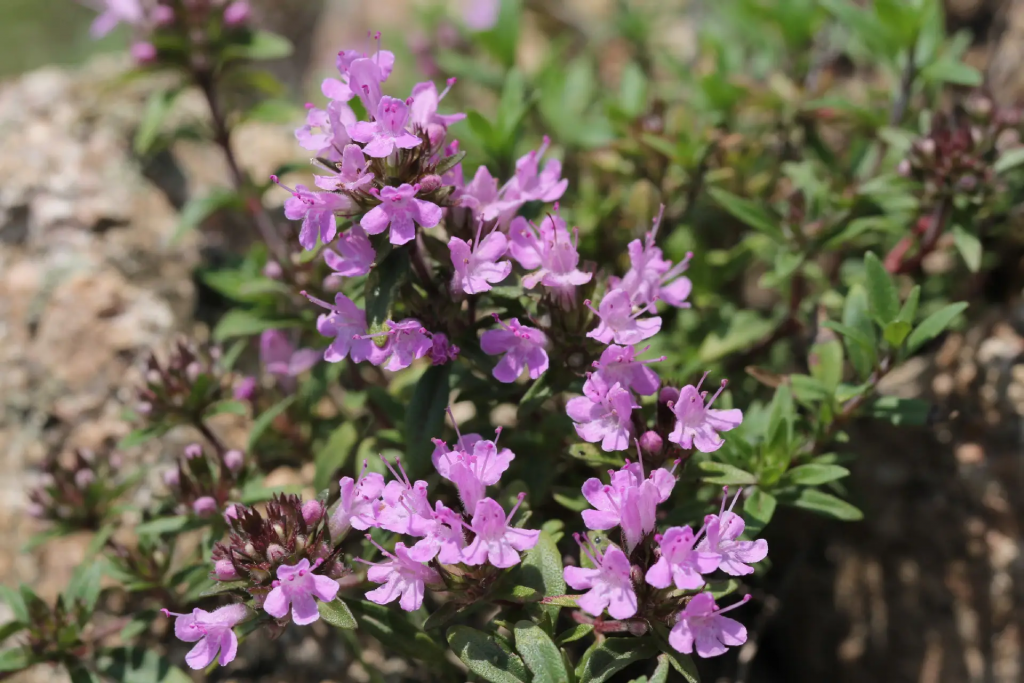
Mongolian thyme is a creeping subshrub of the Mongolian steppe and the hills of northern China, growing five to fifteen centimetres tall and spreading into a flat mat of thin, woody stems and tiny, dark green, oval leaves. In early summer it covers itself in whorls of pale lilac-pink flowers that are worked by bees and hoverflies, and the whole plant releases a sharp, clean thyme scent when walked on. It grows on stony slopes and dry grassland, where the soil is thin and the winters are severe, and it is one of the hardiest thymes in cultivation. It is used as a culinary herb in the region, as a tea and as a medicinal plant, and it is a good ground cover for a gravel garden or the gaps between paving.
Science & Biotechnology
Thymus mongolicus belongs to a genus notorious for hybridisation, and many of the thymes sold as species are garden hybrids of uncertain parentage. Mongolian thyme is distinctive in its combination of very small leaves, a creeping habit and a tetraploid chromosome count, and it is one of the species that has been used to improve hardiness in garden thyme breeding. Its essential oil is dominated by thymol and carvacrol, the same phenols that give common thyme its antiseptic properties, though the yield is lower and the aroma is sharper and more camphoraceous. Studies of the genus in Mongolia and northern China have found chemical varieties within what looks like one species, with some populations rich in linalool rather than thymol. That variation is a reason to grow plants from known wild seed rather than to assume uniformity.
Uses & Benefits
The leaves are used as a culinary herb, fresh or dried, in the same way as common thyme, and the flowering tops are brewed as a tea for coughs and for digestive complaints. In Mongolian and Chinese folk medicine the plant is used as a warming stimulant and as a wash for skin infections, and the essential oil is distilled in small quantities. In the garden it is a first-rate plant for a gravel bed, a rock garden or the crevices of a stone wall, where its mat habit and early flowers are shown to advantage. It tolerates drought, poor soil and hard frost, and it needs no feeding. It is also a useful nectar source in a dry garden, flowering before most other thymes are open.
Growing from Seed
Sow the fine seed on the surface of a gritty mix of sand, loam and limestone chips in spring, press it in and cover with a bare millimetre of grit. Keep at eighteen to twenty degrees and water from below; germination takes two to four weeks and is uneven. The seedlings are tiny and slow at first, and they should be pricked out into individual pots once they have four leaves. Grow on in full sun with sharp drainage. Plant out into a gravel bed or a wall crevice with poor, alkaline soil. Do not feed or water heavily, which makes the plant soft and short-lived. Trim lightly after flowering to keep the mat dense.
Our Take
A tough, low thyme from the Mongolian steppe with a sharp scent and lilac flowers. It wants grit, sun and no kindness.
Related Reading
Gardeners who grow Mongolian Thyme often pair it with these related subjects: