


Cressa cretica Seeds | Cretan Cressa
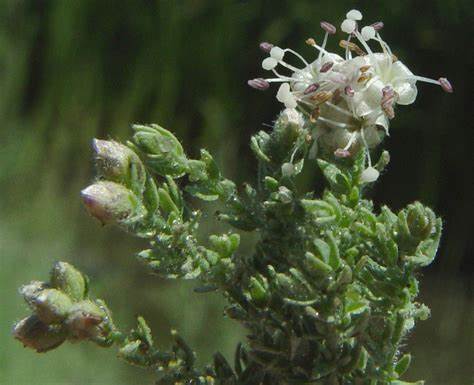
LATIN NAME: Cressa cretica
COMMON NAME: Cretan Cressa
Plant Profile
Cretan cressa is a small, grey-leaved subshrub of salt marshes and coastal flats around the Mediterranean, the Red Sea, India and parts of Australia. It grows ten to thirty centimetres tall, with a woody base, many wiry stems and tiny, hairy, oval leaves that give the plant a silvery look. The flowers are minute, white and funnel-shaped, opening in the leaf axils through the warm months, and they are followed by small capsules with a few seeds. The plant grows where the soil is salty and periodically flooded, often in bare patches between taller salt-marsh grasses, and it is one of the few plants that can complete its life cycle in those conditions. It is easily overlooked, and it is a useful indicator of saline ground.
Science & Biotechnology
Cressa cretica is a halophyte that tolerates salt by accumulating ions in its vacuoles and by excreting excess through glands on the leaves, a strategy that allows it to grow in soils where most plants cannot. Studies in India and Egypt have measured its salt tolerance and its ability to accumulate sodium, and it has been proposed as a species for the revegetation of salt-affected land. The genus is small, with a handful of species, and its placement in the Convolvulaceae is supported by floral anatomy, though it looks nothing like a bindweed. Extracts of the plant have shown antimicrobial and anti-inflammatory activity in vitro, and it is used in Indian traditional medicine as a tonic and for skin conditions. Its seed is tiny and its germination is sensitive to salinity, which limits its spread.
Uses & Benefits
The plant is used in folk medicine in India and the Middle East as a bitter tonic, a diuretic and a treatment for skin diseases, and it appears in Ayurvedic and Unani formularies. It is also grazed by camels and goats in salt-marsh areas, though its small size limits its value as fodder. In the garden it is a curiosity for a coastal or saline garden, where its silvery foliage and tolerance of salt spray make it useful at the front of a border or in a gravel bed. It needs full sun and poor, sandy or salty soil, and it will not tolerate competition from taller plants. It is not a plant for rich soil or for shade, and it is short-lived in cultivation, so allow it to self-seed.
Growing from Seed
Sow the tiny seed on the surface of a sandy mix, press it in and cover with a bare millimetre of sand. Keep at twenty to twenty-five degrees with steady moisture, and water with slightly saline water if possible, since the species germinates better under mild salinity. Germination takes two to four weeks. The seedlings are small and slow and should be pricked out when they have four leaves. Grow on in full sun with sharp drainage, and plant out into sandy or saline soil at the front of a bed. Water with seawater diluted ten times, if available, once a month. Let a few plants self-seed to keep the stock going.
Our Take
A tiny salt-marsh subshrub with silver leaves and a long medicinal record. Grow it where the soil is salty and poor.
Related Reading
Readers interested in Cretan Cressa frequently explore these as well: