


Buddleja alternifolia Seeds | Fountain Butterfly Bush
LATIN NAME: Buddleja alternifolia
COMMON NAME: Fountain Butterfly Bush
Plant Profile
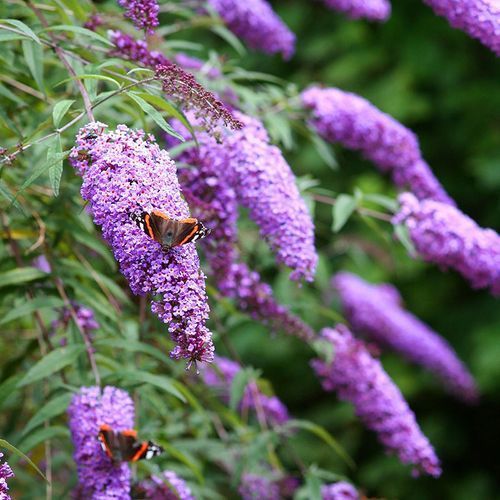
Fountain butterfly bush is a Chinese shrub of the figwort family, growing three to four metres with long, slender branches that arch outward and downward in a perfect fountain. It is the only common Buddleja with alternate leaves, a detail that separates it from every other species in the garden, and its leaves are narrow, grey-green and softly hairy. In early summer the previous year’s stems break into dense, rounded clusters of lilac flowers, set close against the wood rather than in long spikes, and the scent is sweet and heavy. It grows on dry hillsides in Gansu, Shaanxi and Sichuan, where it is hardy and drought-tolerant. The flowering habit is the key to pruning it: the buds form a year ahead, so cutting in spring removes the crop.
Science & Biotechnology
Buddleja alternifolia is one of the few species in the genus with alternate rather than opposite leaves, a character that led to its placement in a section of its own and that has been confirmed by molecular work. Its flowering on old wood is also unusual in a genus where most species flower on current-season growth, and the two habits have been used in breeding to extend the season. The species is diploid, unlike the tetraploid B. lindleyana, and the two cross readily, producing hybrids that inherit the arching habit. Its native habitat is dry, stony hillside at fifteen hundred to three thousand metres, and it tolerates cold and drought better than most buddlejas. In cultivation it is long-lived and needs little beyond sun and a hard pruning immediately after flowering.
Uses & Benefits
The shrub is grown as a specimen for a bank, a wall or the back of a border, where the arching stems can be seen in full. It is one of the best hardy shrubs for a dry site, and it is a heavy nectar source in early summer, when butterflies and bees are building up. The flowers are fragrant and are used in Chinese medicine, along with the leaves, for eye complaints. It is not invasive in temperate gardens, unlike B. davidii, because it sets little seed outside its native range and does not colonise disturbed ground. It can be trained against a wall, where the arching habit is shown to best effect, and it tolerates hard pruning, which should be done in July rather than spring.
Growing from Seed
Sow the fine seed on the surface of a light mix in spring, press it in and do not cover it, since light is needed. Hold the tray at 18 to 22 degrees in damp air, and expect seedlings within a fortnight to a month. Prick out the seedlings when they are large enough and grow them on in a cool, bright place. Plant out in autumn into well-drained soil in full sun, and water through the first summer. Prune immediately after flowering, cutting the flowered stems back by a third, and never in spring, since the buds are already formed. In cold gardens, mulch the crown, though the plant is hardy once established.
Our Take
The fountain buddleja that flowers on last year’s wood. Prune it in July, not in spring, or lose the whole season.
Related Reading
If Fountain Butterfly Bush appeals to you, these related plants are worth a look: