


Buddleja lindleyana Seeds | Weeping Butterfly Bush
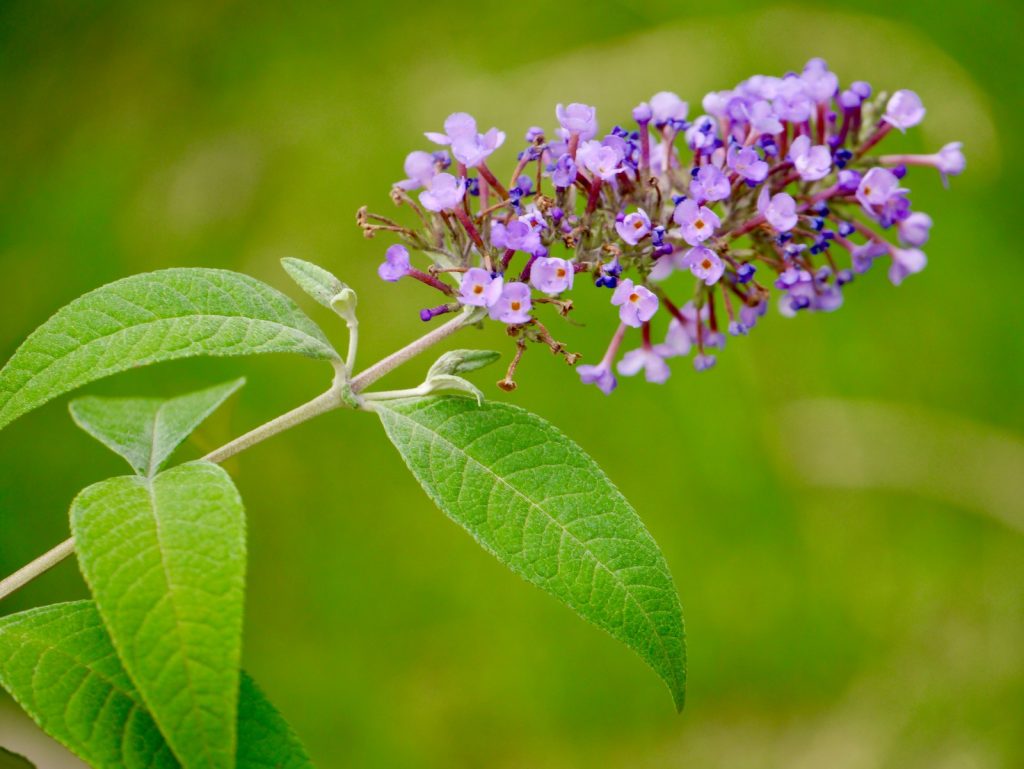
LATIN NAME: Buddleja lindleyana
COMMON NAME: Weeping Butterfly Bush
Plant Profile
Weeping butterfly bush is a Chinese shrub of the figwort family, growing one to two metres with long, arching branches that droop at the tips and give the plant a fountain shape. Its leaves are narrow, opposite and grey-green beneath, and from midsummer the shoots carry dense, curved spikes of violet-purple flowers that open from the base upwards over several weeks. The scent is sweet and faintly honeyed, and the flowers are worked by bees and by the day-flying moths that the genus is named for. It grows on rocky hillsides and stream banks in eastern and central China, where it is hardy and long-lived, and it is one of the parents of the garden butterfly bushes. Unlike the common Buddleja davidii, it flowers on the current season’s growth and can be cut hard in spring.
Science & Biotechnology
Buddleja lindleyana was one of the first Chinese buddlejas to reach Europe, sent by Robert Fortune in the 1840s, and it was crossed with American and Himalayan species to produce many of the hybrids grown today. The genus sits in Scrophulariaceae after being moved out of its own family on molecular evidence, a change that surprised gardeners but is now well supported. The flowers produce nectar in a narrow tube, which restricts visitors to long-tongued bees, moths and butterflies, and the flower colour changes as the flower ages, a signal that guides pollinators to fresh flowers. The species is tetraploid, which may explain its vigour and its ability to cross with diploid relatives. Unlike B. davidii, it does not seed freely in temperate gardens and is not considered invasive.
Uses & Benefits
The shrub is grown for its fountain habit, its late flowers and its scent, and it is particularly useful at the back of a border or on a bank, where the arching stems can spill over a wall. It is hardy in most of temperate Europe and North America, dies back in severe winters and regrows from the base. The flowers are excellent for cutting, and the plant is a good nectar source for butterflies in late summer, when the first brood is on the wing. In Chinese medicine the flowers and leaves are used for eye complaints and for coughs, and the plant appears in regional pharmacopoeias. It is not edible, and the leaves are mildly toxic. It tolerates drought and poor soil but flowers best in sun.
Growing from Seed
Sow the fine seed on the surface of a light seed mix in spring, press it in and do not cover, since light is needed. Keep at eighteen to twenty-two degrees with high humidity; germination takes two to four weeks. Prick out when the seedlings are large enough to handle and grow on in a cool, bright place. Plant out after the last frost into well-drained soil in full sun. Cut the stems back to thirty centimetres in early spring, since the plant flowers on new wood, and feed lightly. Water through the first summer. In cold gardens, mulch the crown with leaf mould to protect it through winter.
Our Take
A fountain-shaped butterfly bush that flowers on new wood and can be cut hard. Give it sun and room to arch.
Related Reading
Continue exploring with these related plants: